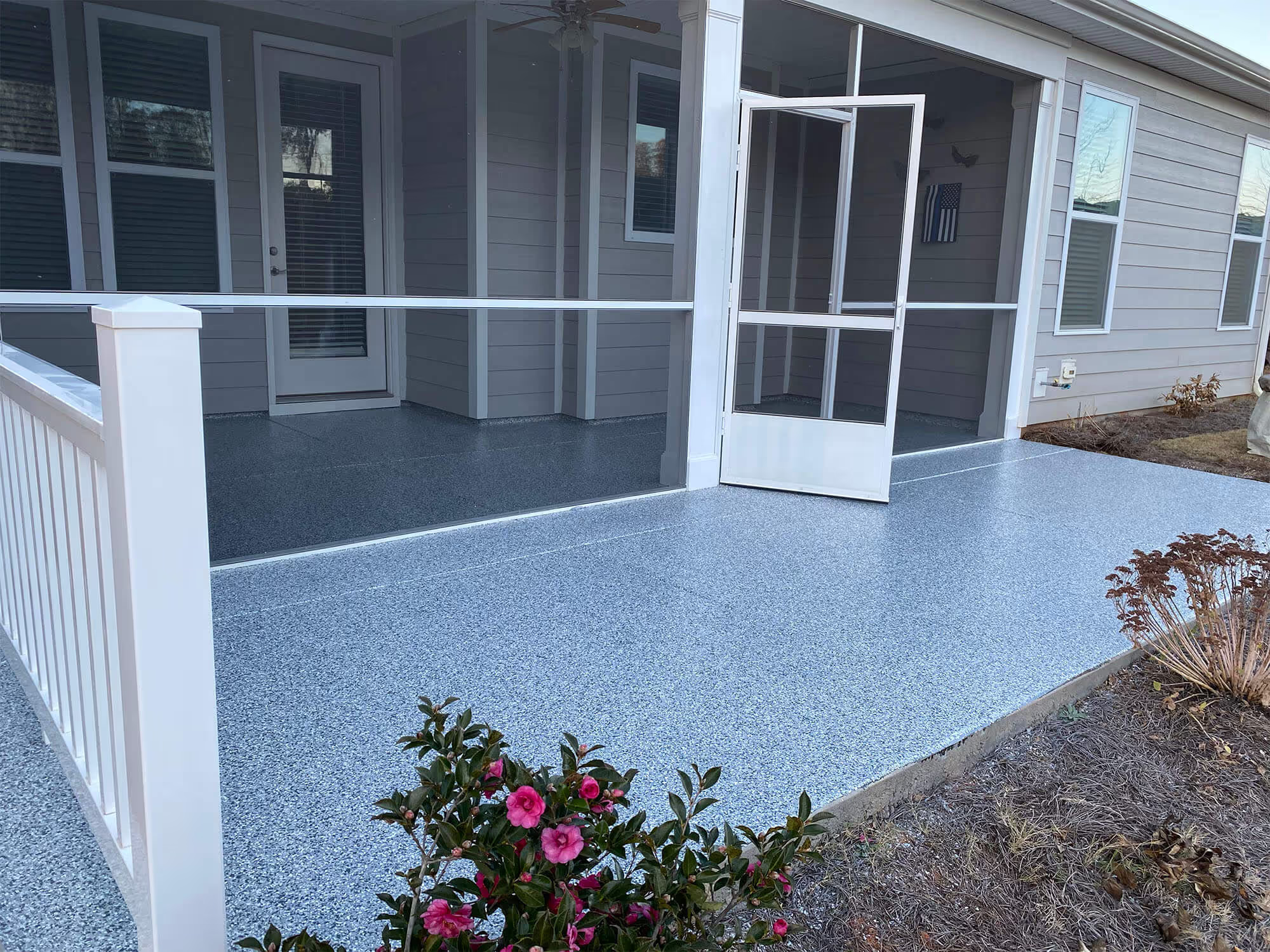
Garage Floor Stain vs Epoxy Pros & Cons
Garage floor stain vs epoxy are two legitimate options for finishing a concrete floor, but they perform differently in cost, durability, and long-term upkeep. Stain tints the concrete surface without adding a protective layer, while epoxy bonds to the slab and seals it completely. Titan Garage Floors helps Charlotte, NC homeowners weigh both options before any work begins.
A homeowner in Waxhaw called us last spring with a question we hear often: she'd gotten one quote for concrete staining and one for epoxy, and the stain quote was 40% lower. She wanted to know if she was overthinking it. By the time we walked through her two-car garage, the answer was clear. The real comparison isn't just about price; it's about what you're getting for the money.
What You're Actually Paying For

Upfront cost is where stain has the obvious edge. A professional stain job typically runs $2 to $4 per square foot, while a full epoxy garage floor runs $5 to $8 per square foot or more. On a standard two-car garage around 450 square feet, that gap can be $1,000 to $2,000.
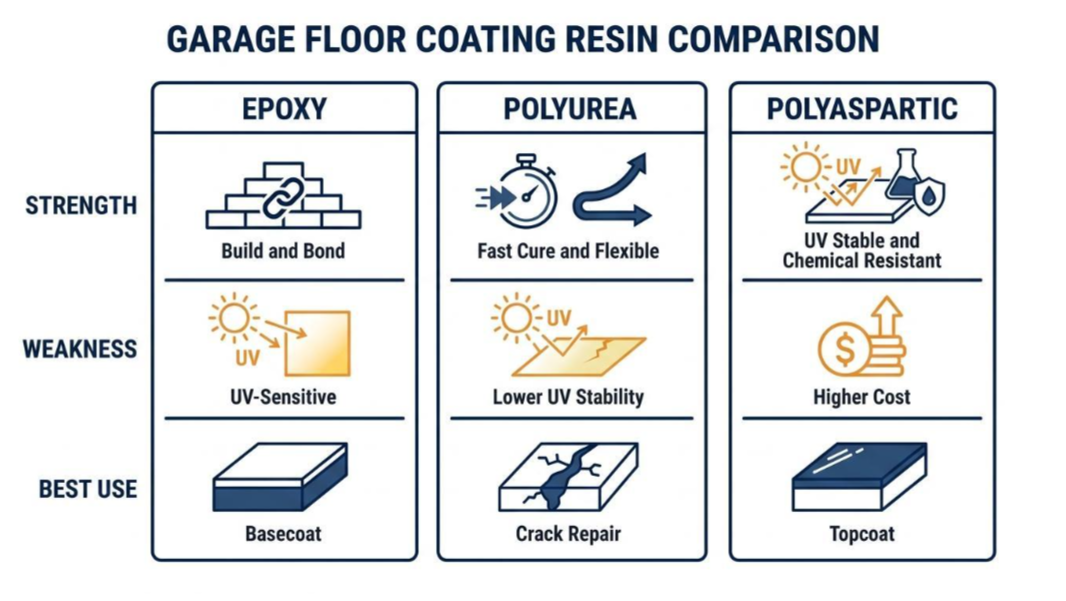
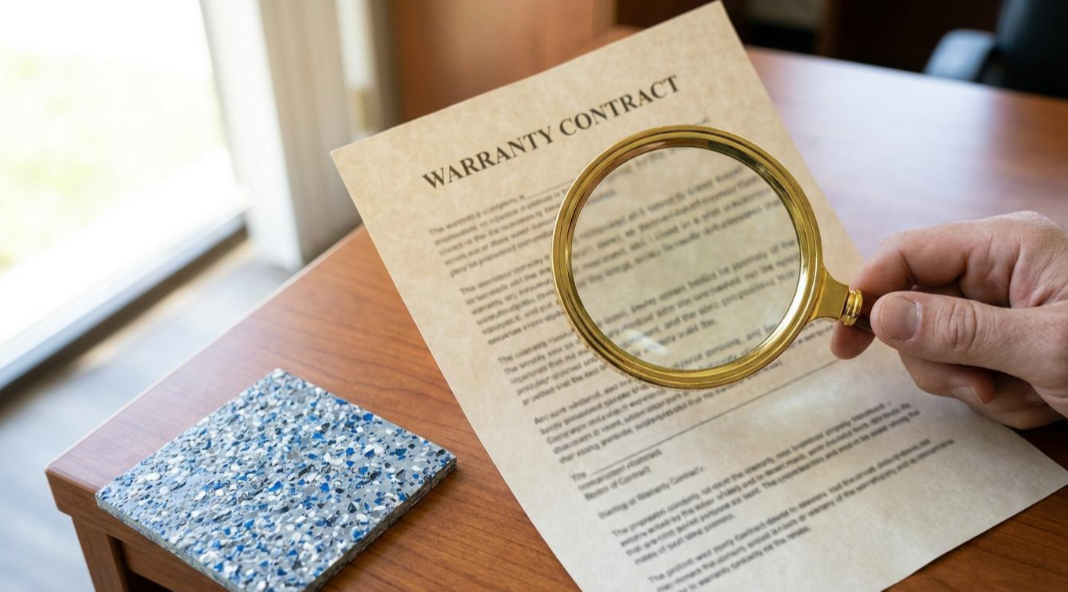
The cost of ownership is a different calculation. Stained concrete needs to be resealed every one to three years. Resealing materials alone run $70 to $150 per application, and over 10 years, that's five or more cycles. A professionally installed epoxy system, backed by Titan's 15-year warranty, requires no resealing. The polyaspartic urethane topcoat (a fast-curing, UV-stable protective layer) is built in from day one.
The DIY Factor: Who Should Attempt What

Staining is more approachable for DIYers. Concrete stains go down with basic equipment, and homeowners with concrete prep experience can get acceptable results. The limitation is durability. A DIY stain with a consumer sealer won't hold up to vehicle traffic, oil drips, or Charlotte's summer garage heat.
Epoxy is a different story. Professional epoxy floor coating in Charlotte requires diamond grinding, a mechanical process that opens concrete pores and creates the bond profile a coating needs to hold. Without it, adhesion fails. Box-store kits skip this step entirely, and consumer-grade epoxy isn't formulated to compensate. Brent Strickland, a former first responder and owner of Titan Garage Floors, diamond-grinds every slab personally, because prep determines whether a floor lasts five years or fifteen.
How Each Finish Looks and Holds Up
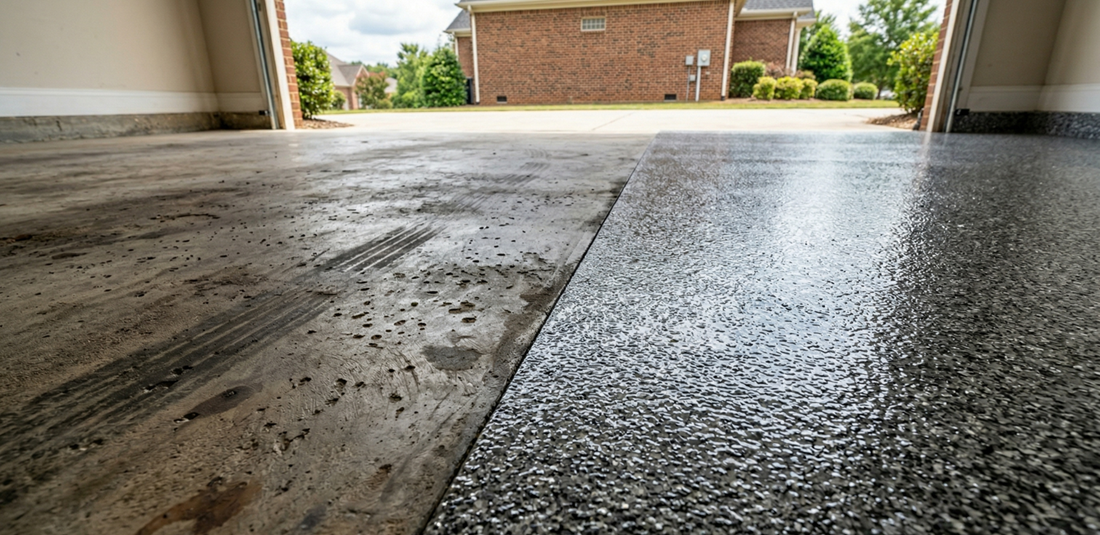
Stained concrete ages organically. The mottled color variation suits basements or foyers where a natural stone look is the goal, but in a working garage it gets harder to manage. Stain highlights imperfections rather than hiding them. Patched cracks and oil marks show through. Charlotte's high summer humidity accelerates surface wear on any stained floor that isn't meticulously resealed on schedule.
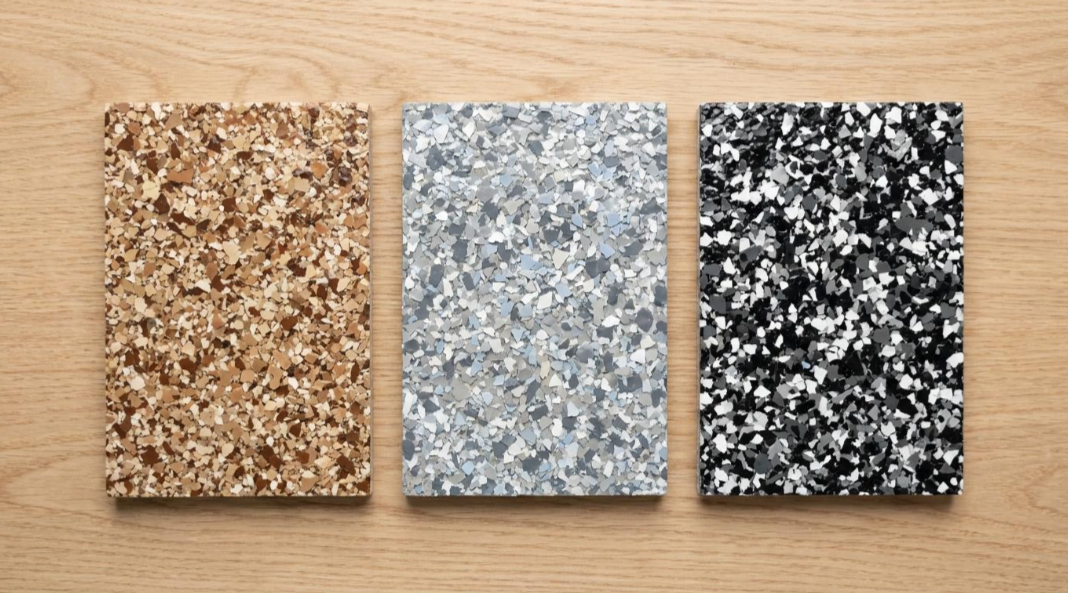
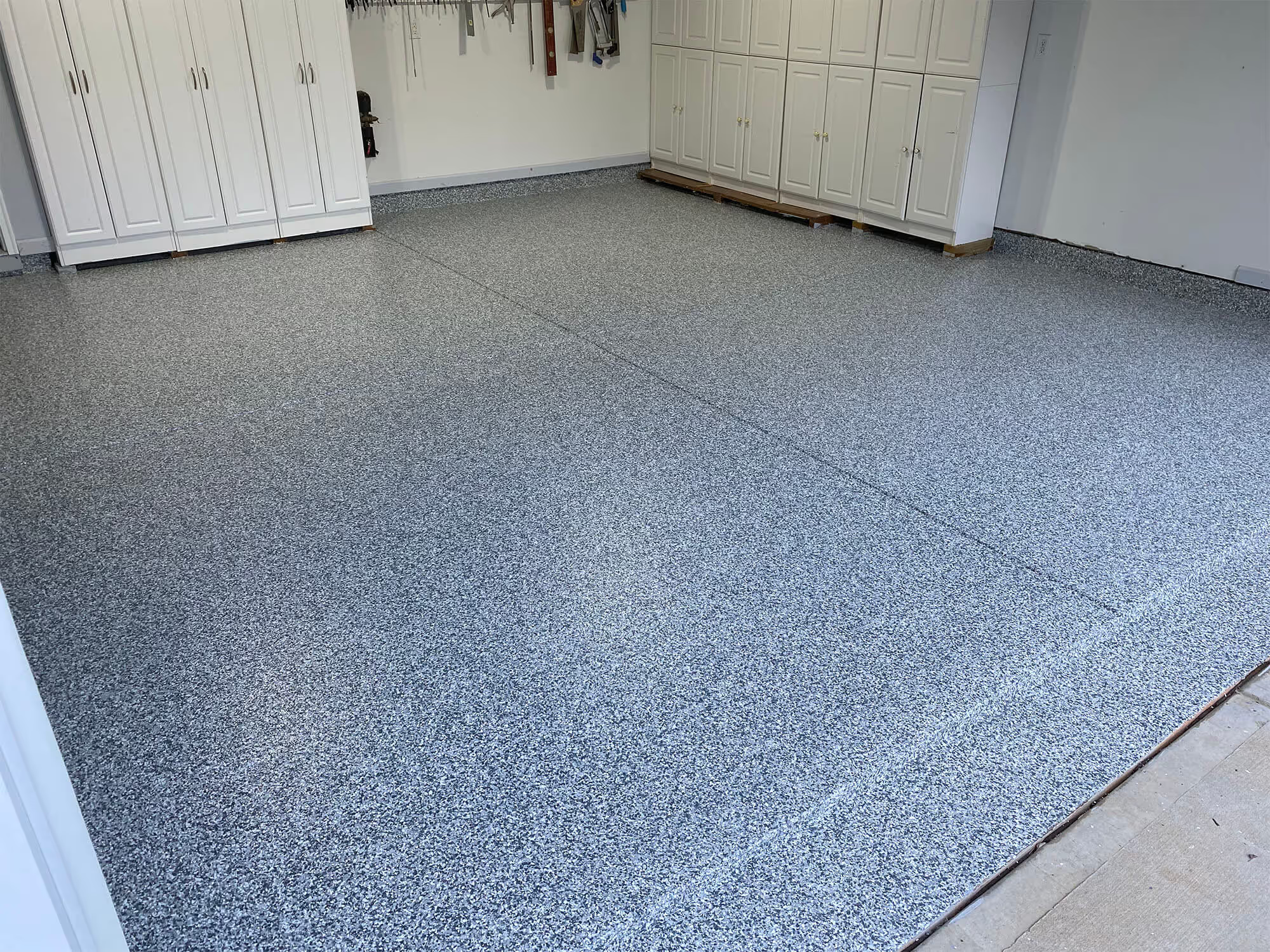
Epoxy flake systems age more predictably. The vinyl flake broadcast masks minor slab imperfections, while the gloss topcoat maintains its appearance for years without reapplication. Color blends like Outback, Shoreline, and Domino offer real design range.
Spills, pollen, and road salt tracked in from Charlotte's occasional winter ice events don't penetrate the sealed surface. Read more about how epoxy and stained concrete compare for a closer look at performance differences in our climate.
Concrete Stain Pros
- Lower upfront cost ($2–$4 per square foot)
- Natural, mottled aesthetic suits decorative indoor spaces
- DIY-friendly application with basic equipment
Concrete Stain Cons
- No protection against oil, chemicals, or hot tire pickup
- Requires resealing every 1–3 years
- Highlights cracks and surface imperfections rather than hiding them
Epoxy Flake System Pros
- Sealed, non-porous surface resists stains, chemicals, and moisture
- Vinyl flake broadcast hides slab imperfections
- UV-stable polyaspartic topcoat won't yellow
- 15-year warranty with no resealing required
Epoxy Flake System Cons
- Higher upfront cost ($5–$8+ per square foot)
- Requires professional diamond grinding for proper adhesion
Frequently Asked Questions

Can I stain my garage floor myself and get professional results?
DIY staining is achievable on clean indoor concrete, but garage floors are harder. Oil contamination, previous sealers, and patched areas all affect how stain absorbs, creating uneven color. The results vary significantly by slab condition, and professional surface preparation makes a meaningful difference in how the finish looks and how long it holds.
Is epoxy worth the higher upfront cost compared to stain?
For a garage where vehicles are parked daily, yes. Stain requires resealing every one to three years and doesn’t resist hot tire pickup or oil penetration. An epoxy system from Titan Garage Floors, backed by a 15-year warranty, eliminates that recurring maintenance and holds up to the demands of an actively used Charlotte garage.
Which option is better if I want a low-maintenance garage floor?
Epoxy is the lower-maintenance choice for garages. The non-porous sealed surface resists staining, chemical spills, and surface wear in ways that stained concrete can't match without regular upkeep. Stain works well for low-traffic indoor floors where the look of natural concrete is the priority and vehicle traffic isn't a factor.
Choose the Right Finish for Your Garage

Both options have legitimate uses. Stain suits indoor surfaces with light foot traffic where aesthetics are the priority. For a working garage in the Charlotte area, epoxy's sealed surface, long-term performance, and lower maintenance make it the stronger investment.
If you're ready to get a free estimate, reach out to Titan Garage Floors today. Our team serves homeowners throughout Charlotte, Waxhaw, Concord, Mooresville, and the surrounding region. We’ll walk you through which system fits your floor before any commitment is made.