Is Epoxy Flooring Slippery? Safety Tips for Homeowners
Epoxy flooring is slippery when wet if the topcoat is a smooth, high-gloss finish without anti-slip additives. Most professional installations include textured flake broadcasts or anti-slip agents in the polyaspartic topcoat, which significantly improve traction on wet surfaces. This is why Titan Garage Floors offers slip-resistant anti-slip additives on residential installations in Charlotte.
You pull into the garage on a rainy night, step out onto a glossy floor—should you be worried? It's the most common safety question homeowners ask before choosing an epoxy coating, and the answer depends entirely on what's in the topcoat.
Why Some Epoxy Floors Are Slippery and Others Aren't
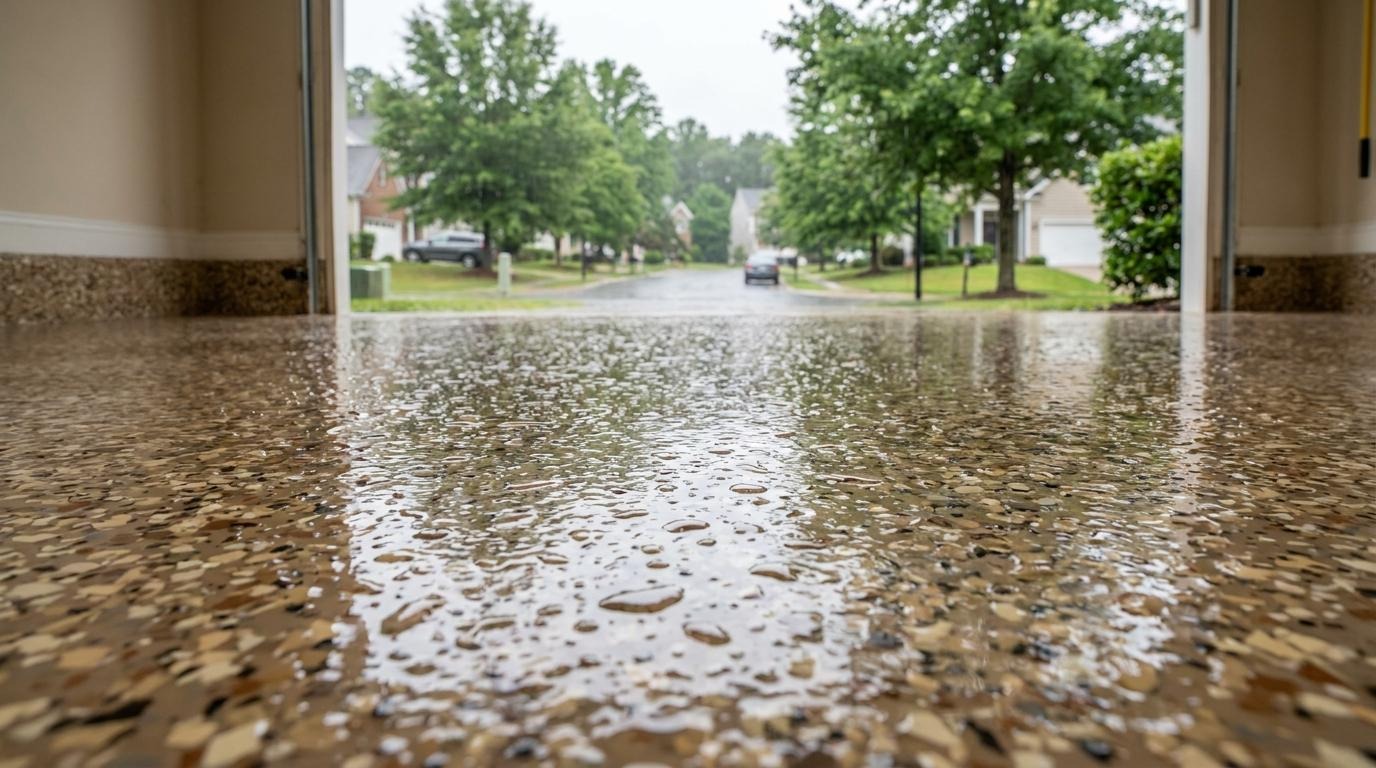
The slip factor comes down to the topcoat finish, not the epoxy itself. A plain, high-gloss epoxy surface without texture is comparable to polished tile when wet—smooth enough to lose traction under shoes, especially rubber-soled work boots.
Two features change this:
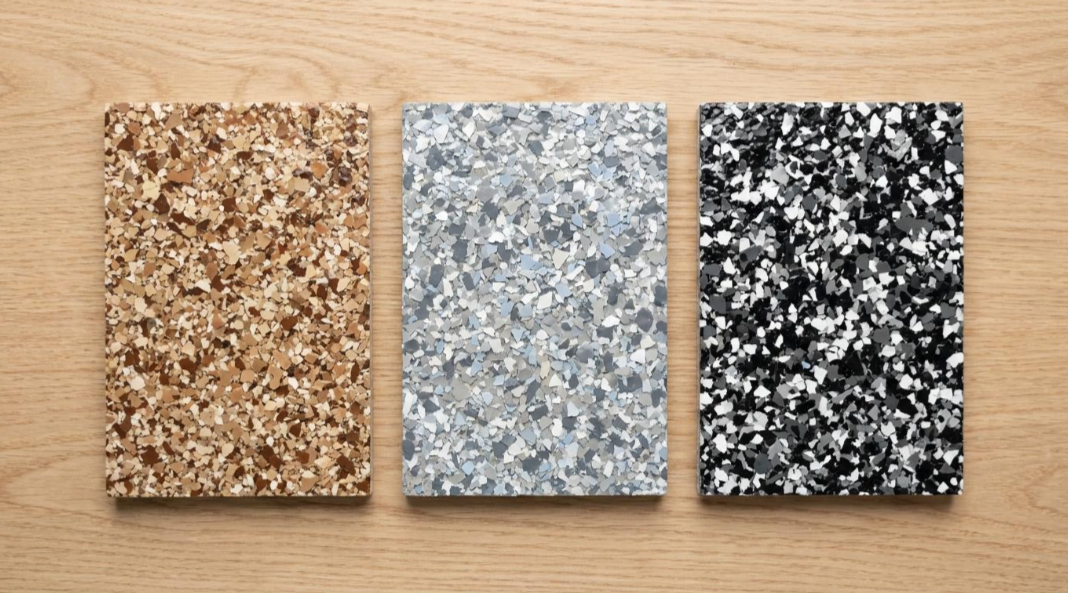
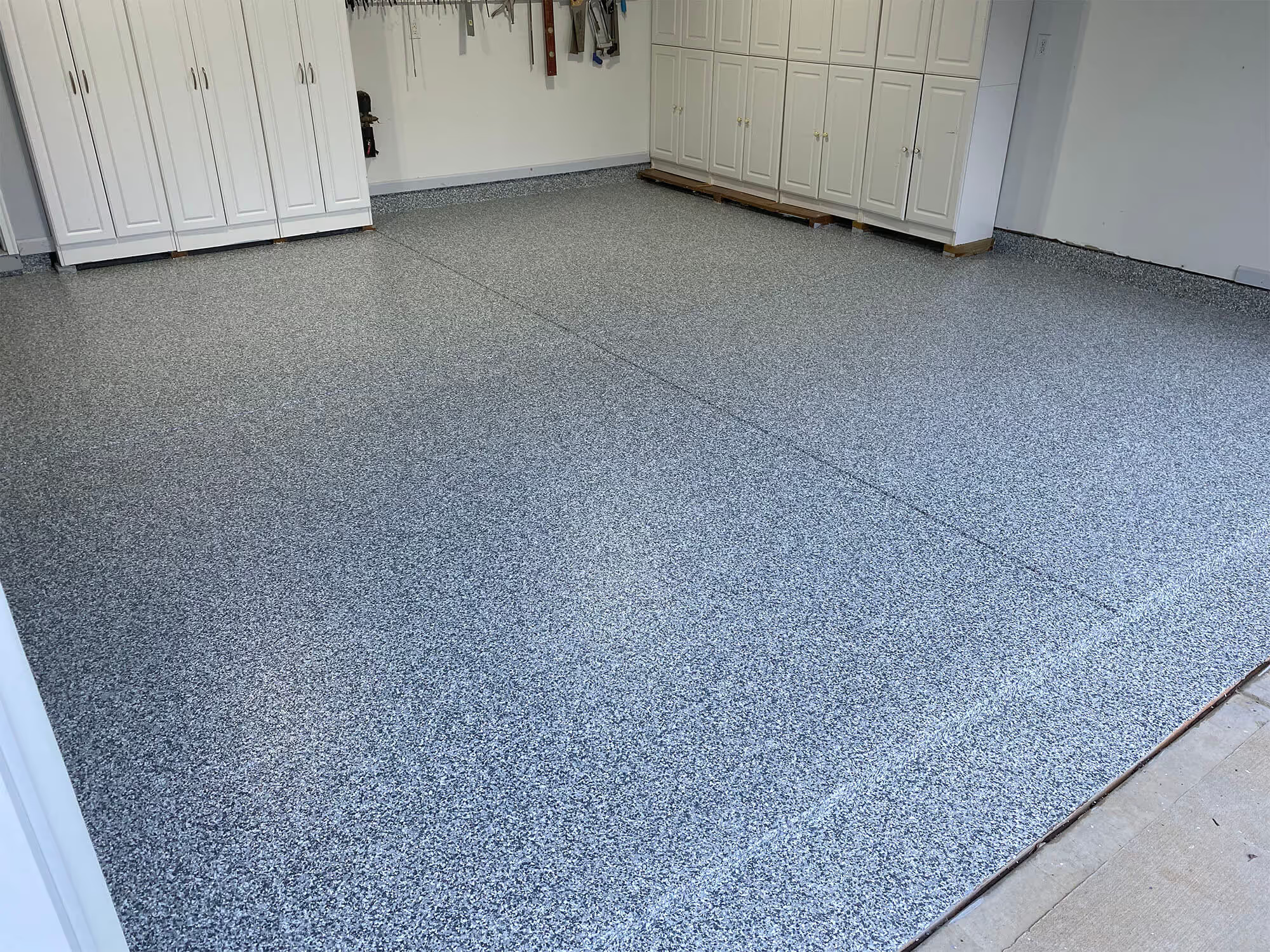
- Vinyl flake broadcast: The 1/4-inch vinyl flakes embedded in Titan's basecoat create a micro-textured surface even after the topcoat seals over them. This texture provides grip without sacrificing the high-gloss look.
- Anti-slip additives: Fine aluminum oxide or polymer grit mixed into the polyaspartic topcoat adds traction that's invisible to the eye but noticeable underfoot. Titan can include this on garage floor coatings when slip resistance is specified.
The combination of flake texture plus anti-slip additive creates a surface that handles wet shoes, damp tires, and Charlotte's frequent spring rain without becoming a hazard.
Where Slip Risk Matters Most in Charlotte Homes
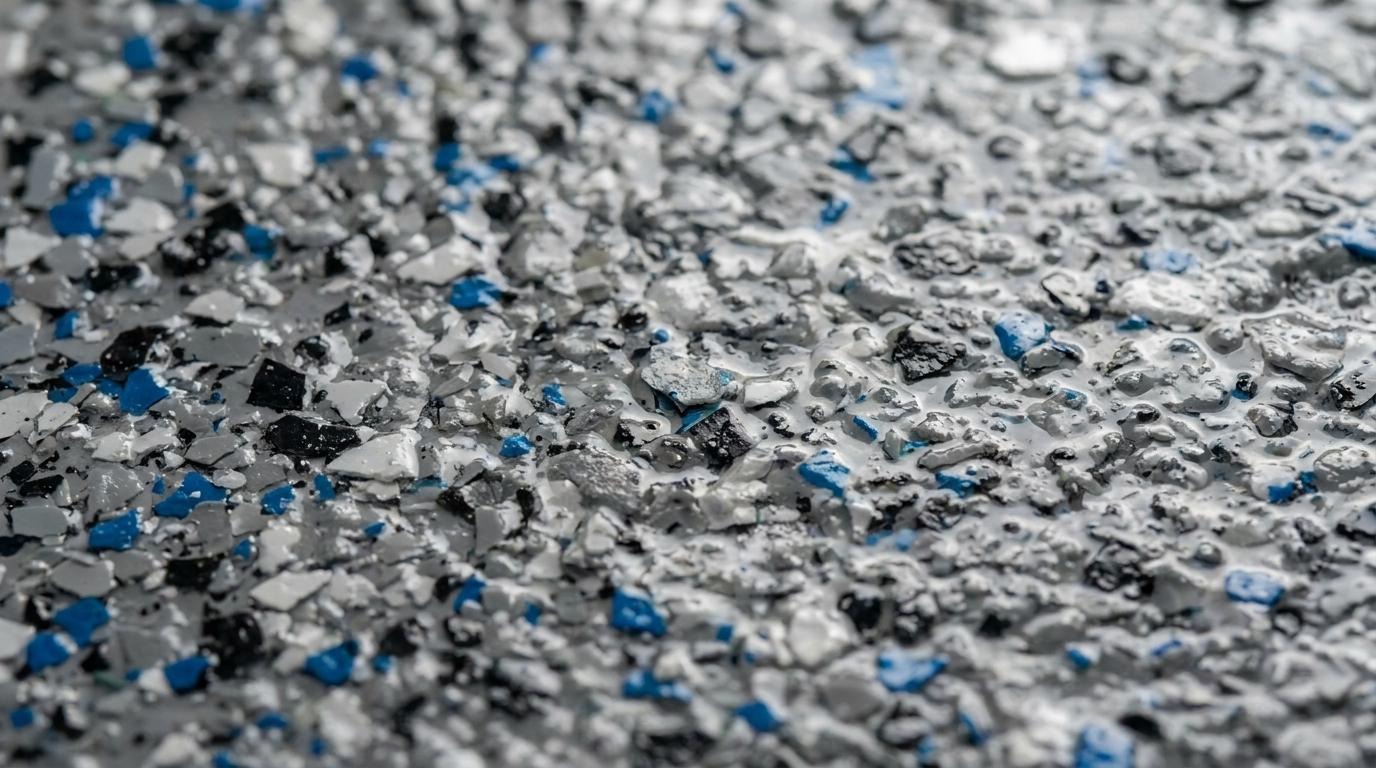
Rain, pollen, and humidity mean Charlotte garage floors encounter moisture more often than homeowners in drier climates realize. The highest slip-risk moments are:
- Walking in from rain on smooth-soled shoes
- Stepping near the garage door threshold where water pools during storms
- Moving around vehicles dripping with condensation on humid mornings
- Carrying items with both hands, when you can't grab something for balance
Garages that double as workshops, gym spaces, or home entries see foot traffic patterns that increase exposure to these scenarios. Homeowners in Fort Mill and Rock Hill—where many garages serve as primary home entries—benefit most from full anti-slip treatment across the entire floor surface.
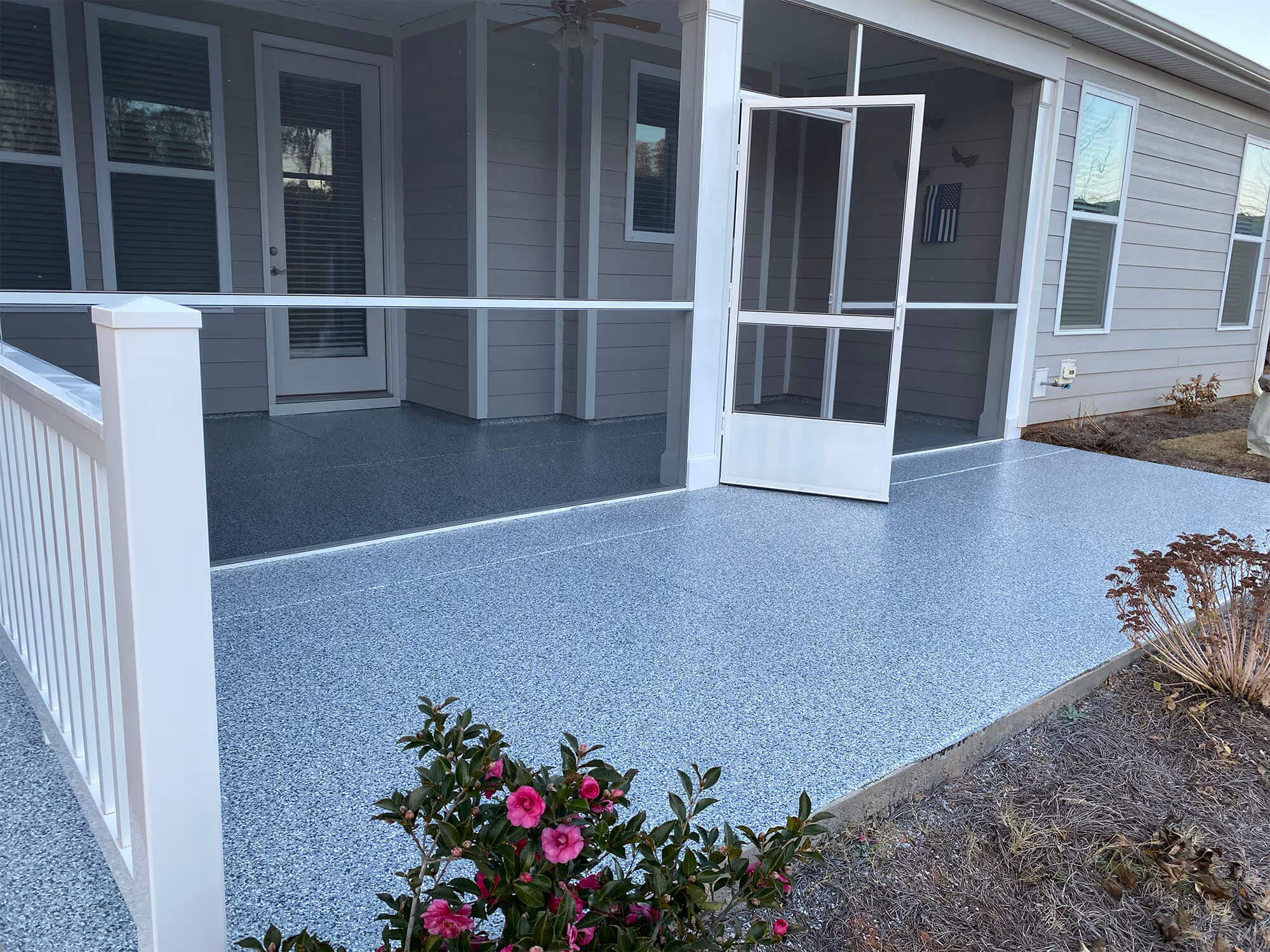
For outdoor surfaces like patios and pool decks, where bare feet and standing water are common, a heavier anti-slip additive concentration is recommended. Learn more about the benefits of professional epoxy flooring that includes these protective features from the start.
How To Make an Existing Epoxy Floor Less Slippery
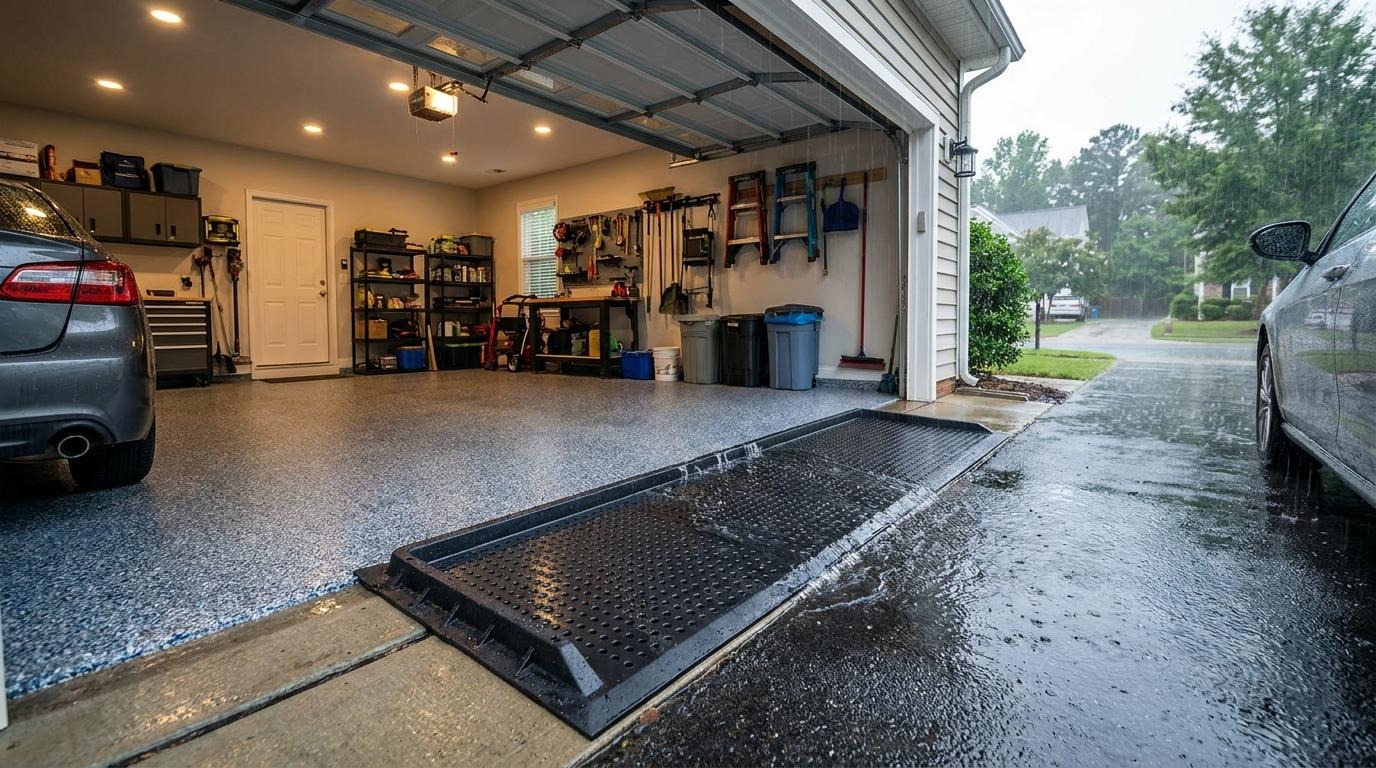
If your current epoxy floor feels slick when wet, a few options can improve traction without replacing the entire coating:
- Anti-slip mats at entry points: Rubber drainage mats near the garage door threshold catch water before it reaches the main floor surface
- Recoating with anti-slip additive: A professional can apply a new polyaspartic topcoat with aluminum oxide grit over the existing surface, restoring both traction and UV protection
- Keeping the floor clean: Dust, oil films, and pollen create a slick layer on top of the coating that makes any floor more slippery than the finish itself
The most effective long-term solution is specifying anti-slip additives during the original installation. Titan's polyaspartic urethane topcoat accepts anti-slip agents without affecting the floor's appearance or durability, and the 15-year warranty covers the complete system.
Frequently Asked Questions
Is epoxy flooring more slippery than bare concrete?
A smooth, uncoated epoxy surface can be more slippery than bare concrete when wet because concrete's natural porosity absorbs some moisture. However, epoxy floors with vinyl flake texture and anti-slip additives in the topcoat provide equal or better traction than bare concrete in most residential garage conditions.
What anti-slip additive does Titan Garage Floors use?
Titan Garage Floors mixes a fine anti-slip grit into the polyaspartic urethane topcoat when slip resistance is specified for the installation. This additive creates invisible micro-texture across the surface that significantly improves wet traction. The grit doesn't affect the floor's high-gloss appearance or make routine cleaning more difficult.
Can you add anti-slip treatment to an epoxy floor after installation?
Yes. A professional applicator can apply a new polyaspartic topcoat with anti-slip additive over an existing epoxy floor, provided the current coating is in good condition. This recoat adds traction and refreshes the protective seal. It's a common upgrade for floors originally installed without slip resistance.
Walk Confidently on Your Garage Floor
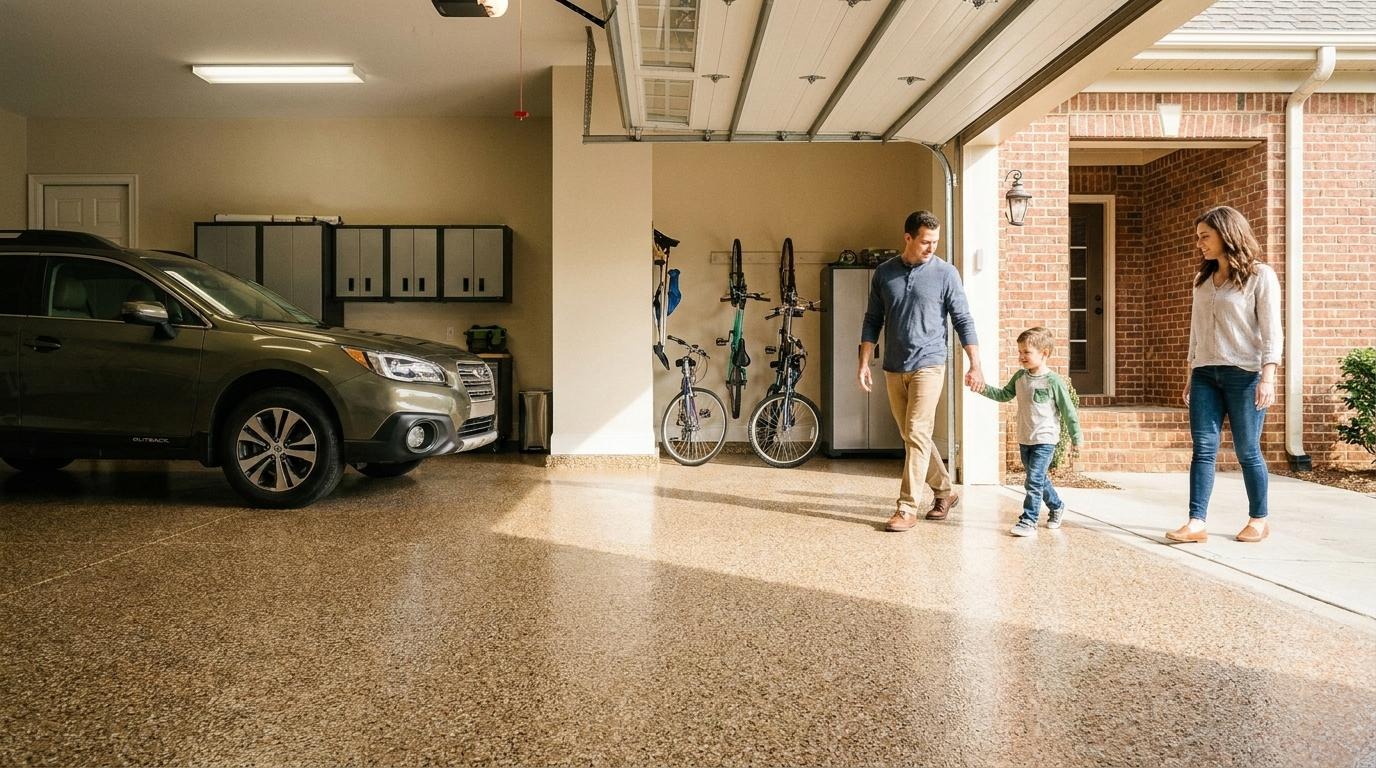
Epoxy flooring doesn't have to be slippery. The difference between a hazardous surface and a safe one is a textured flake system and an anti-slip additive in the topcoat, details that professional installers specify from the start. If your garage sees rain, humidity, or heavy foot traffic, slip resistance isn't optional in Charlotte.
Contact Titan Garage Floors for a free estimate on a slip-resistant epoxy garage floor built for our climate. Call (910) 852 9266 today.