Why Your Epoxy Floor Is Bubbling and How to Prevent It
Epoxy floor bubbling is almost always caused by moisture vapor trapped beneath the coating. When concrete slabs aren't properly tested and ground before application, vapor pressure pushes the epoxy away from the surface, creating visible bubbles and eventual peeling.
Most homeowners assume the epoxy itself failed. But the bubbles aren't a product defect; they're a surface prep failure. The concrete underneath was holding moisture that had nowhere to go once the coating sealed it in. Titan Garage Floors sees this pattern regularly on repair calls across the Charlotte metro.
What Actually Causes Epoxy Floor Bubbles
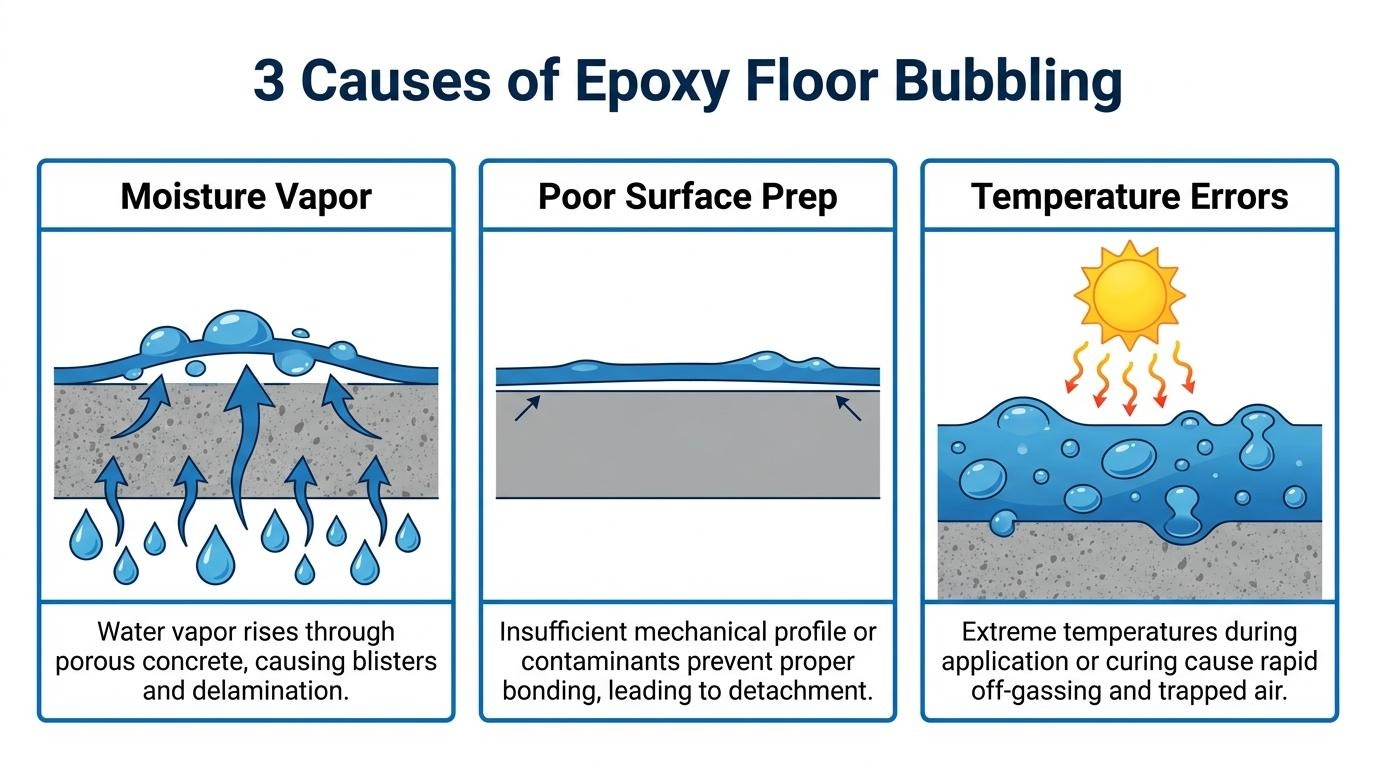
Three conditions cause nearly every case of epoxy floor bubbling:
- Moisture vapor transmission: Concrete absorbs ground moisture and ambient humidity. When a non-breathable coating seals the surface, trapped vapor pushes upward and lifts the epoxy. Charlotte's clay-heavy soil and summer humidity above 70% make this the most common local cause.
- Improper surface preparation: Skipping diamond grinding or relying on acid etching leaves the concrete too smooth for mechanical bonding. The epoxy sits on top of the slab instead of locking into it, making it vulnerable to any upward pressure.
- Temperature and application errors: Applying epoxy in direct sunlight or when concrete temperature exceeds 90°F causes the coating to cure too fast, trapping air and outgassing from the concrete beneath.
Each of these conditions is preventable with professional testing and proper surface prep before the first coat goes down.
How Moisture Vapor Causes the Most Damage

Moisture under an epoxy floor is the leading cause of bubbling in the Charlotte metro, where humidity combines with clay soil that holds water for weeks after rain. The vapor doesn't stop at the surface—it pushes upward continuously through the slab's pore structure.
Professional installers measure this with a calcium chloride test, which tracks moisture vapor emission over 24 hours. Slabs emitting more than 3 lbs per 1,000 sq ft need a vapor barrier or moisture-mitigating primer before coating. DIY kits don't include this step, which is why bubbling and peeling usually occur on DIY epoxy garage floors.
In neighborhoods like Concord and Harrisburg, where new construction often leaves concrete slabs less than 30 days cured, moisture testing is especially critical before any coating work begins.
How Professional Installation Prevents Bubbling
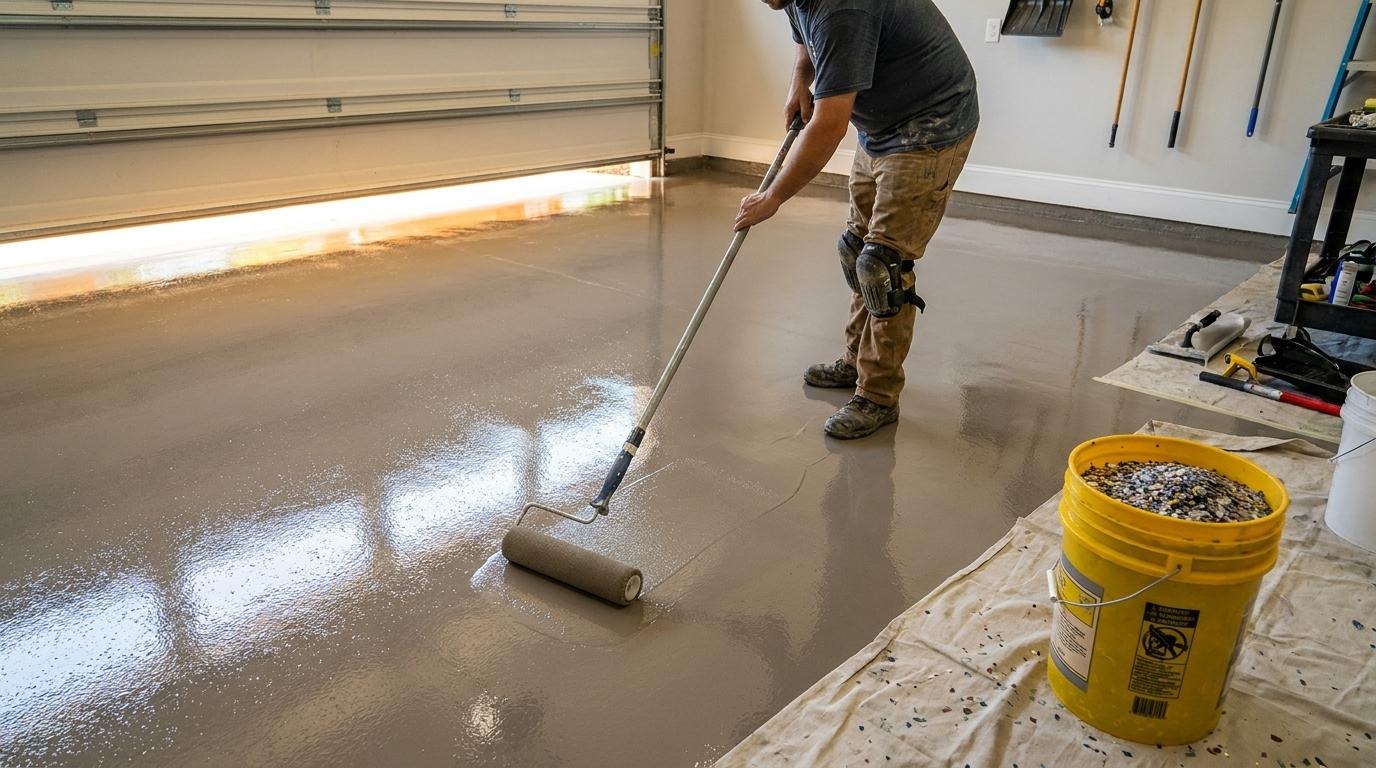
Titan Garage Floors follows a prevention-first process on every garage floor coating project:
- Moisture testing: Every slab is tested before work begins. If vapor emission rates are too high, the project is either rescheduled or a moisture-mitigating primer is applied first.
- Diamond grinding: Mechanical grinding opens the concrete's pore structure for a true mechanical bond. This is the single most important step for long-term adhesion.
- Controlled application: Coatings are applied when concrete surface temperature is between 50°F and 90°F, with humidity monitored throughout the process.
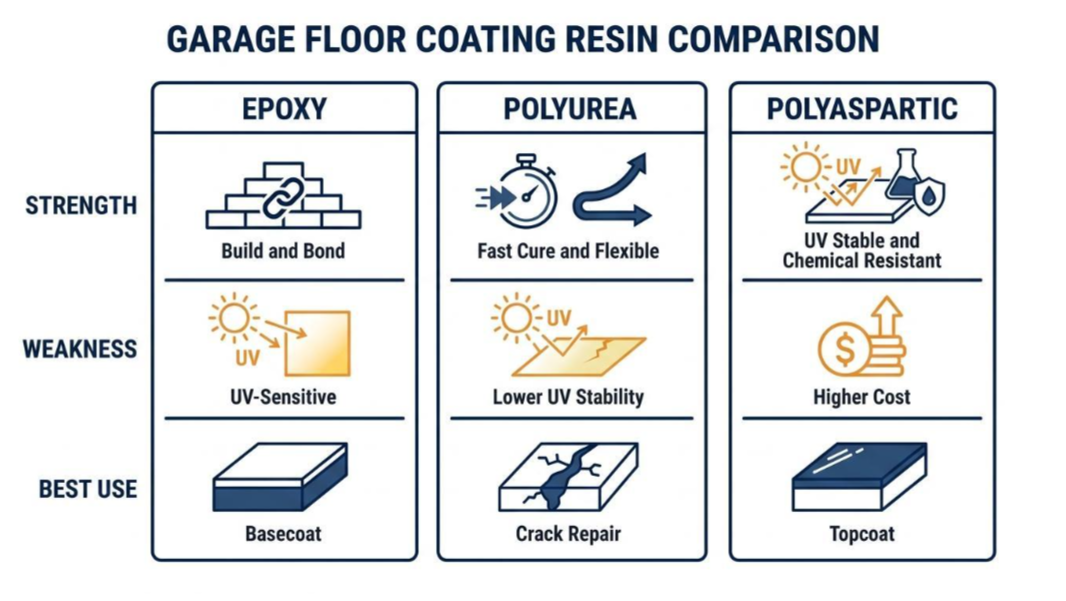
- Multi-layer system: The 4-layer epoxy flake system (primer, basecoat, vinyl flake, polyaspartic topcoat) creates redundant bonding layers that resist vapor pressure far better than single-coat systems.
Professional prep takes longer than a weekend DIY project, but it eliminates the conditions that cause bubbling in the first place.
Frequently Asked Questions
Will bubbles in epoxy go away on their own?
No. Once bubbles form in a cured epoxy floor, they don't flatten or self-heal. Small isolated bubbles may remain cosmetic, but widespread bubbling indicates adhesion failure beneath the surface. The affected areas typically worsen over time as moisture continues pushing upward through the concrete slab.
Can you fix epoxy floor bubbles without recoating the entire floor?
Small, isolated bubbles can sometimes be spot-repaired by cutting out the affected area, re-grinding the concrete, and applying a patch coat. Widespread bubbling across large sections usually requires full removal and recoating. Titan Garage Floors evaluates the extent of damage before recommending the most cost-effective repair approach.
Is epoxy supposed to have bubbles during application?
Minor outgassing bubbles during the wet stage are normal and typically self-level before the coating cures. Persistent bubbles that remain after curing indicate a problem—usually moisture, contamination, or temperature errors during application. A professional installer monitors these conditions throughout the process to prevent this.
Stop Bubbles Before They Start
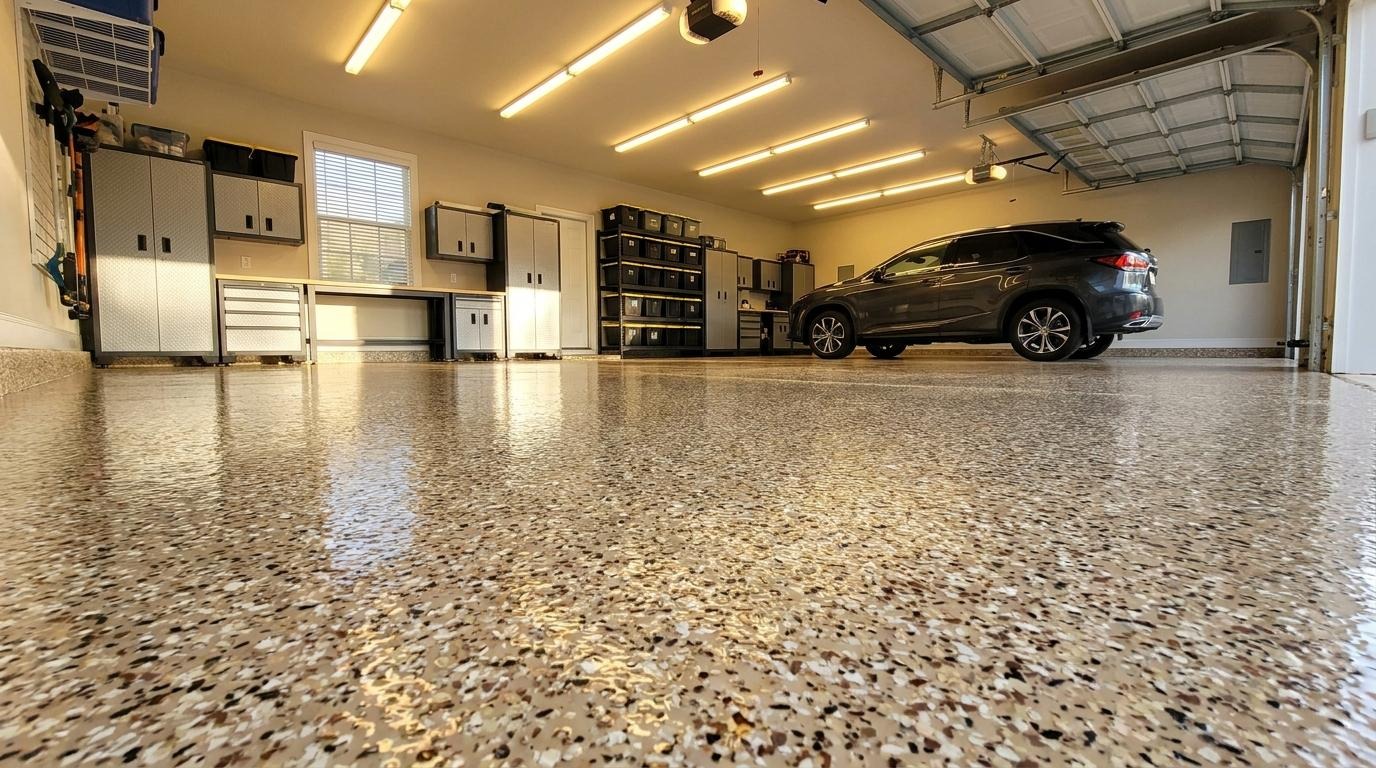
Bubbling in epoxy garage floors almost always comes down to surface prep. Moisture testing, diamond grinding, and controlled application conditions eliminate the three most common causes of coating failure in Charlotte garages.
Contact Titan Garage Floors for a free estimate that includes professional moisture assessment for your Charlotte-area garage. Call (910) 852 9266 today.