Epoxy vs Stained Concrete: Which Floor Finish Is Right for You?
If you've been comparing options for your garage or basement floor, you've probably narrowed it down to two: epoxy coatings and stained concrete. Both can transform a bare slab into something worth looking at, but they protect, perform, and age in completely different ways.
Titan Garage Floors has been installing epoxy flake flooring systems across the greater Charlotte, NC metro since 2019, and we've walked homeowners through this exact comparison hundreds of times.
Here's what actually separates these two finishes and how to choose the right one.
What Stained Concrete Actually Does (and Doesn't Do)
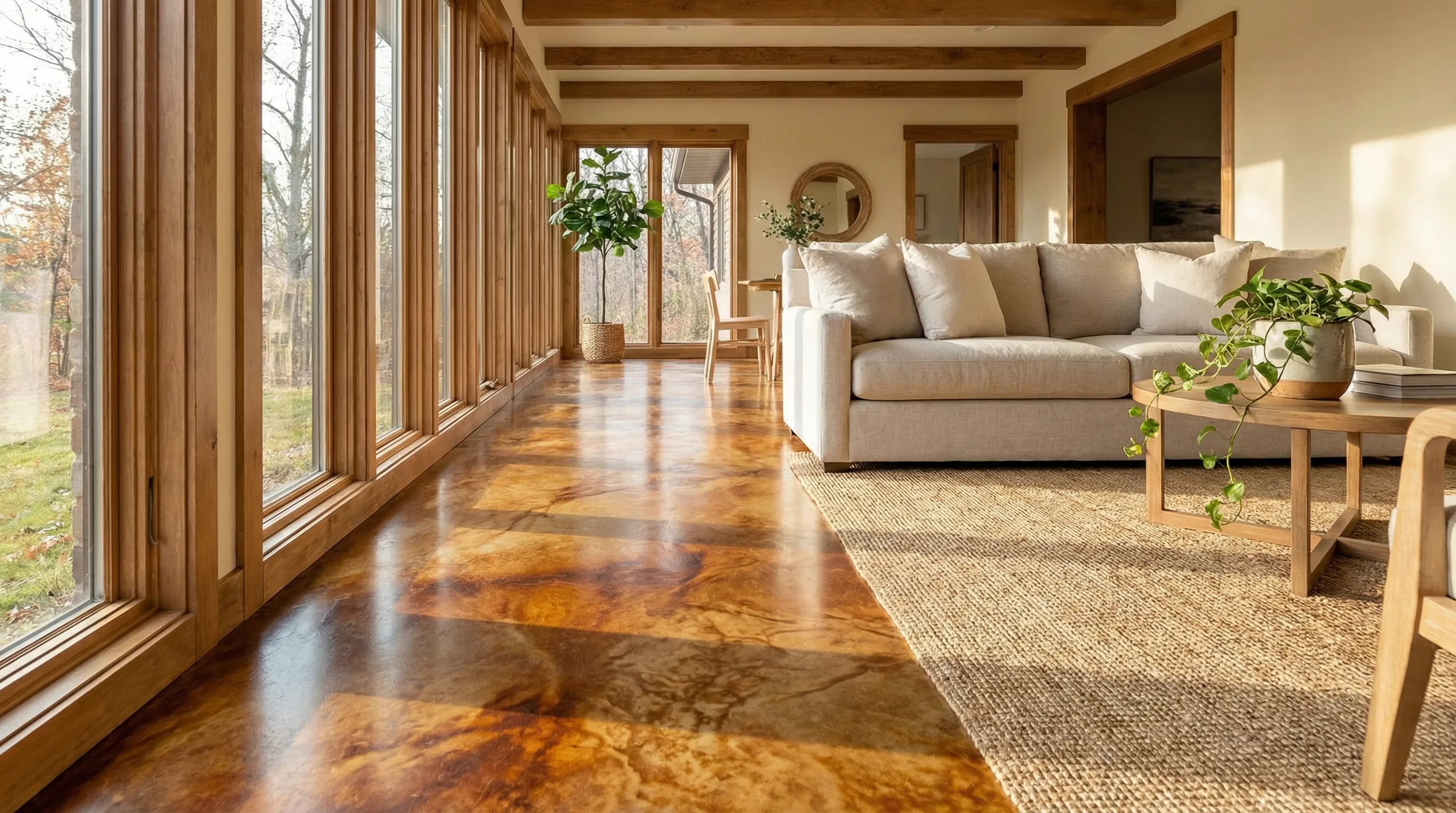
Stained concrete is often misunderstood as a protective finish, but color and protection are two very different things.
Stained concrete changes the appearance of your existing slab without adding a protective layer on top of it. Acid-based stains react chemically with the minerals in concrete to create translucent, mottled color tones. Water-based stains sit closer to the surface and offer more consistent, opaque color options. The results can look striking in the right setting: polished lobbies, decorative patios, indoor showrooms.
But staining doesn't fill cracks, seal pores, or create chemical resistance. A stained garage floor is still bare concrete underneath the color. It absorbs oil, road salt, and moisture the same way an untreated slab does. Stained concrete also offers zero protection against hot tire pickup, the common problem where heated car tires soften and pull finish material off the floor surface. If you're parking vehicles on the floor daily, stain alone won't hold up to that kind of repeated thermal stress.
How Professional Epoxy Coating Systems Compare
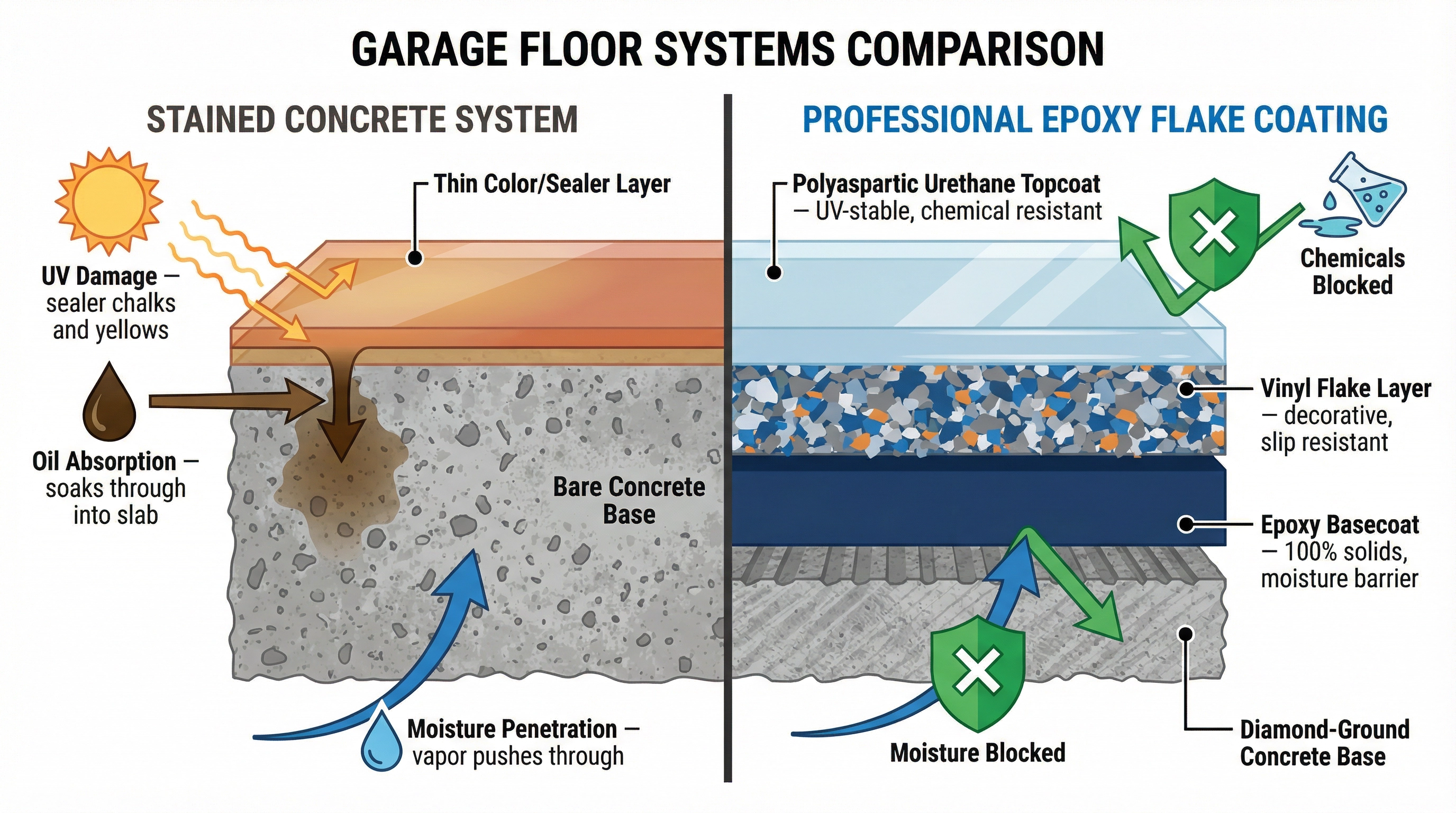
Stained concrete changes how a floor looks, while a professional epoxy system changes what the floor actually is.
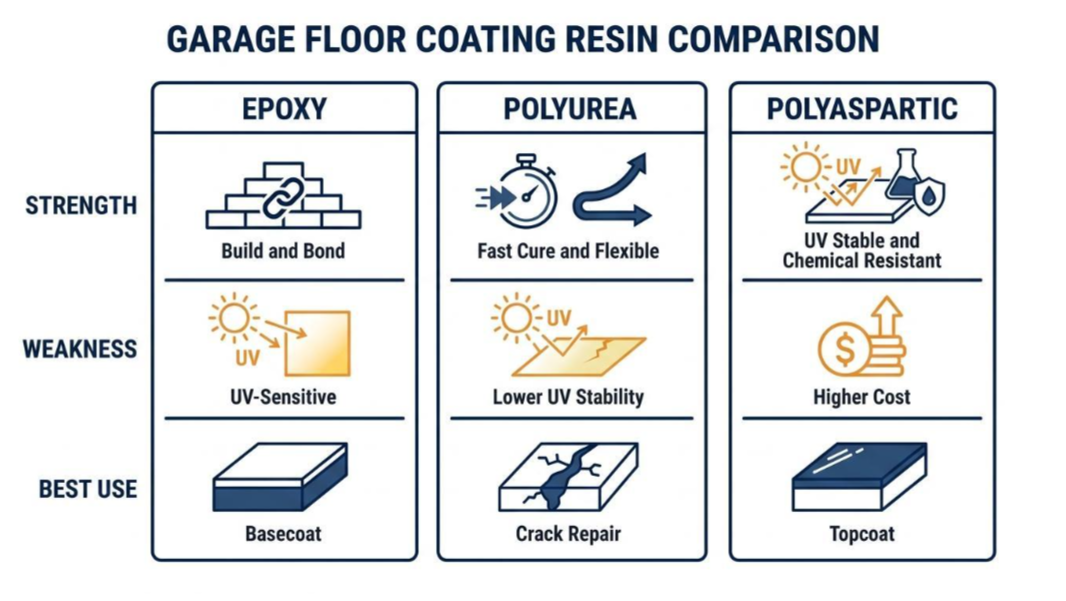
A professional epoxy floor isn’t just a color change. It's a multi-layer protective system bonded directly to the concrete. Titan Garage Floors' system starts with diamond grinding the concrete surface to create a strong mechanical bond, then applies three coating layers:
- A high-build epoxy basecoat (100% solids, moisture barrier)
- A full broadcast of quarter-inch vinyl flakes for texture and aesthetics
- A polyaspartic urethane clear topcoat (a fast-curing, UV-stable protective seal that locks everything underneath)
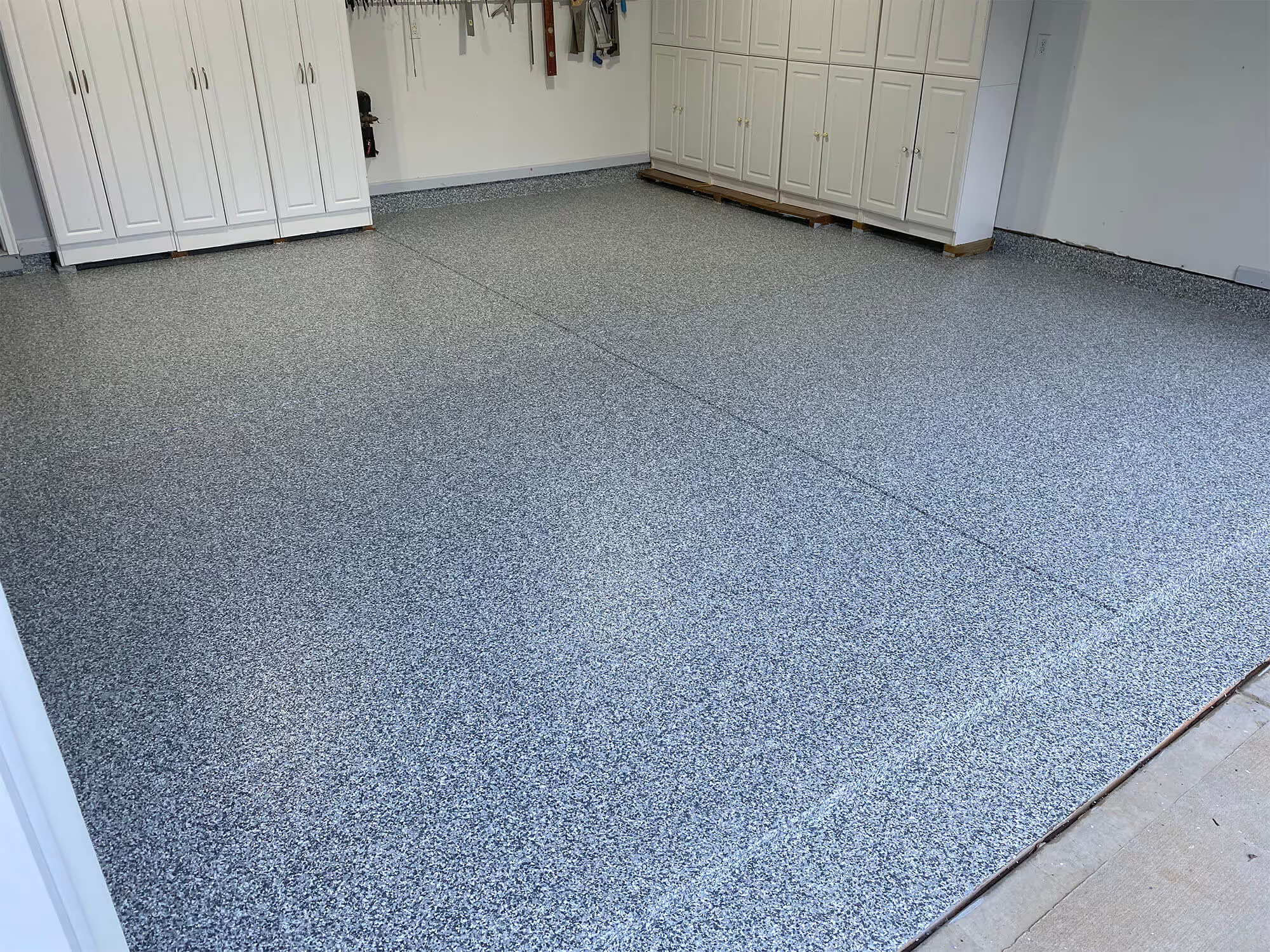
The result is a non-porous surface that resists moisture, chemicals, stains, and abrasion. Unlike stain, which changes the color of concrete, epoxy creates an entirely new wearing surface on top of it. Oil drips wipe up, road salt doesn't penetrate, and the finish stays cleanable for years. The full installation is completed in a single day, and every project is backed by a 15-year warranty.
Durability in Charlotte's Climate

Charlotte's climate puts garage floors through a specific set of stresses that expose the differences between these two finishes fast.
Heat and Humidity
Summer temperatures regularly push above 90°F with humidity often exceeding 70%. Stained concrete absorbs that ambient moisture through the slab—a process called moisture vapor transmission. Over time, this causes discoloration, efflorescence (white mineral deposits that push through to the surface), and premature wear on any topical sealer applied over the stain.
Professional epoxy systems address this directly. Diamond grinding before coating opens the concrete's pores for a true mechanical bond, while the polyaspartic topcoat helps reduce moisture intrusion by creating a sealed, moisture-resistant barrier.
UV Exposure
UV exposure is the other Charlotte-specific factor. Garage floors catch sustained sun through open doors from spring through fall. Stained concrete itself won't degrade from UV, but the clear sealer applied over it can yellow, cloud, and peel. In contrast, Titan's 100% UV-stable polyaspartic topcoat won't yellow or break down regardless of sun exposure.
Which Finish Fits Your Space?
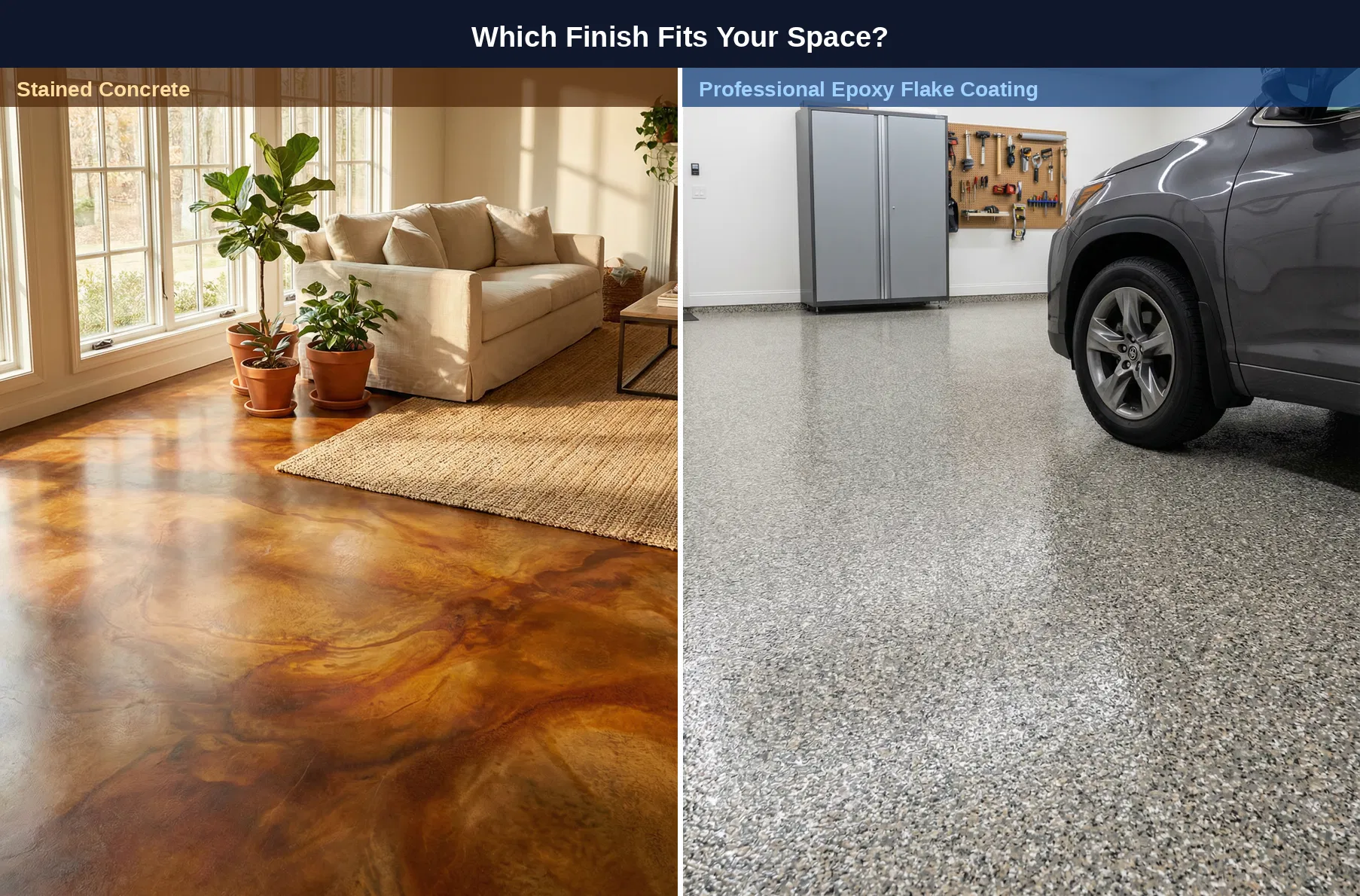
The right answer depends less on aesthetics and more on how the floor gets used every day.
Stained Concrete
Stained concrete works best on interior surfaces with light foot traffic and no vehicle exposure: a finished basement, a sunroom, or a decorative indoor space where aesthetics matter more than impact or chemical resistance. If you want the natural look of concrete with added color depth, stain delivers that. But expect to reseal every two to three years to maintain the appearance, and know that stain offers no structural or chemical protection.
Professional Epoxy Coating
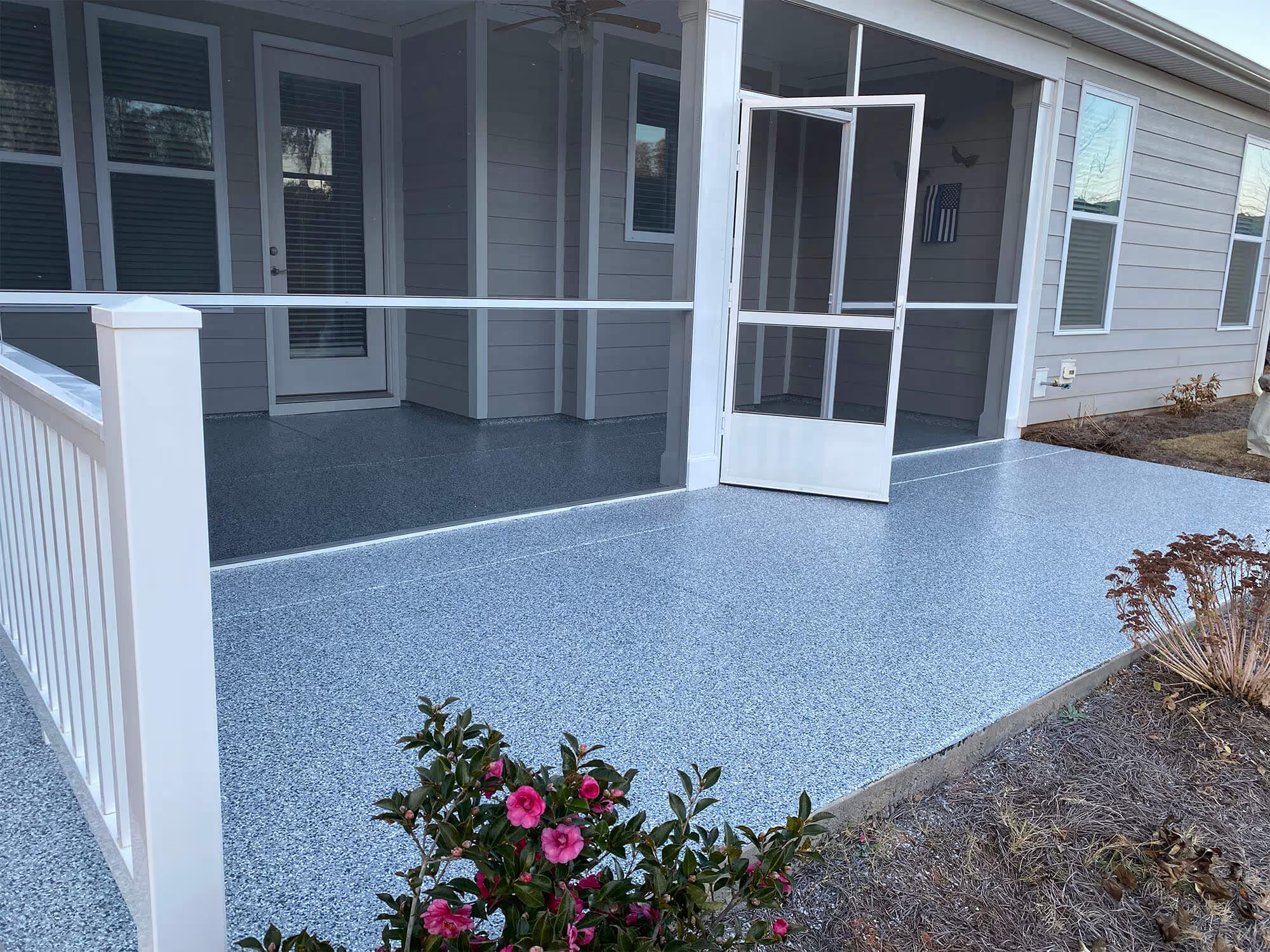
For garage floors, basements with moisture concerns, patios, and pool decks—any surface that deals with vehicles, chemicals, weather, or heavy use—professional epoxy coating is the stronger choice.
Titan Garage Floors installs epoxy flake systems for homeowners across Charlotte, Concord, Mooresville, and the Lake Norman area with a full range of color and flake options designed to match any style. You can choose from natural stone tones like Outback and Shoreline to bold modern finishes like Domino.
Get the Right Finish for Your Floor

Deciding between epoxy and stained concrete comes down to protection versus decoration. If your floor needs to handle Charlotte's heat, humidity, and daily vehicle traffic, a professional epoxy coating system is the finish that performs and lasts.
A stained floor that needs resealing in two years isn't a finish. It's a recurring expense. If you want a floor built to handle Charlotte's heat, humidity, and daily vehicle traffic, Titan Garage Floors offers free estimates throughout the greater Charlotte metro. Call (910) 852-9266 or send us a message. We'll walk you through exactly what your floor needs before you spend a dollar.