Why Diamond Grinding Matters for Your Garage Floor Coating
Diamond grinding removes surface contamination and opens the concrete's pores so a garage floor coating can bond properly. Without it, epoxy and polyaspartic coatings simply sit on top of the slab instead of locking into it and can start failing within months. This is why Titan Garage Floors starts every garage floor coating project with diamond grinding. We consider it the single most important step that allows the coating to last fifteen years instead of two.
A homeowner in Concord had a DIY epoxy kit peel within six months. The concrete looked clean, but no grinding was done and invisible surface contamination prevented the coating from bonding. Acid etching and pressure washing can't match what a diamond grinder achieves, and Charlotte's humidity reveals the gap within months.
What Diamond Grinding Does to Concrete
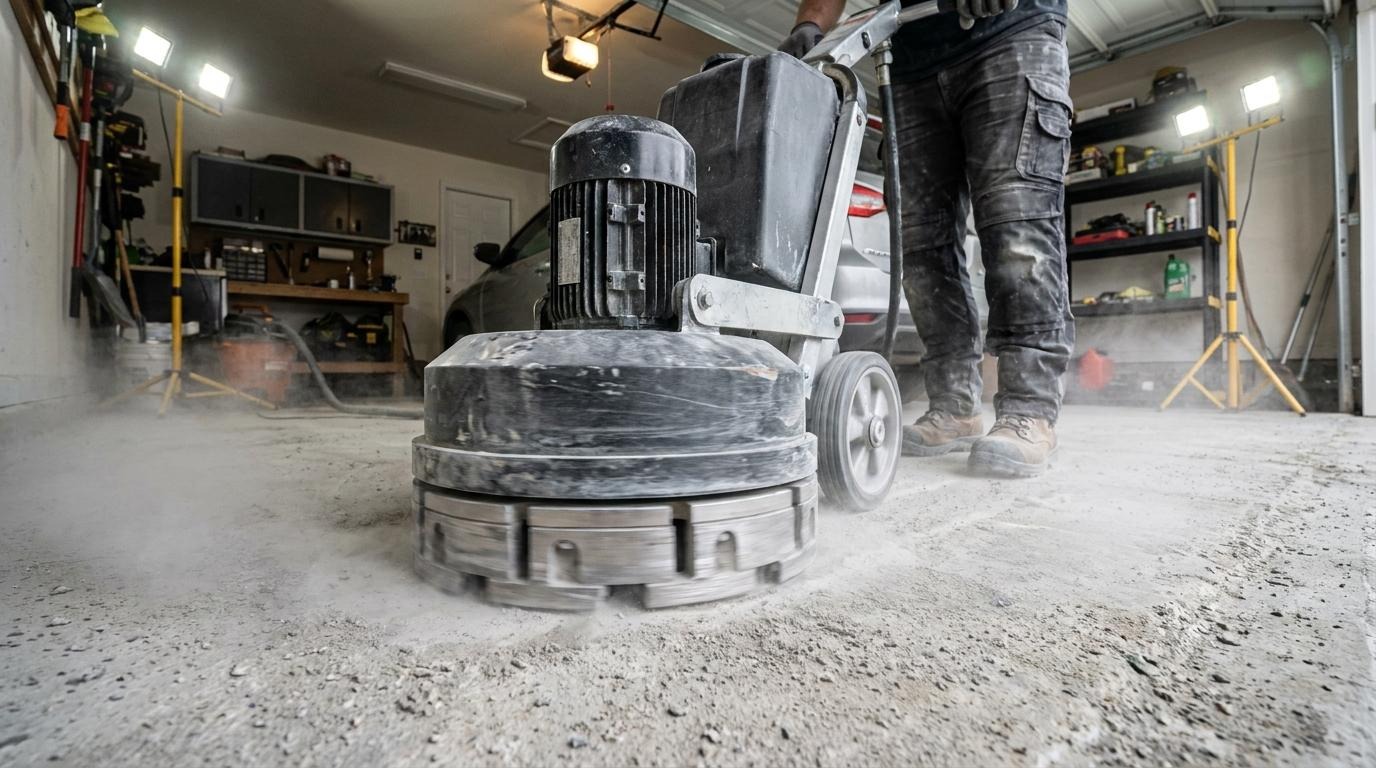
A diamond grinder uses rotating metal-bonded diamond segments to shave the top layer of concrete and create a rough, uniformly profiled surface. The process removes oil, paint, old sealers, adhesives, dirt, and any contamination embedded in the slab. It also opens the concrete's pores, which are naturally sealed on the troweled surface of a finished slab.
The open-pore profile allows epoxy and polyaspartic coatings to flow into the concrete and form a mechanical bond. The coating locks into the concrete at a microscopic level rather than sitting on top. This bond is what prevents peeling, bubbling, and delamination under daily vehicle traffic, chemical exposure, and temperature swings.
Why Other Prep Methods Fall Short
Acid Etching
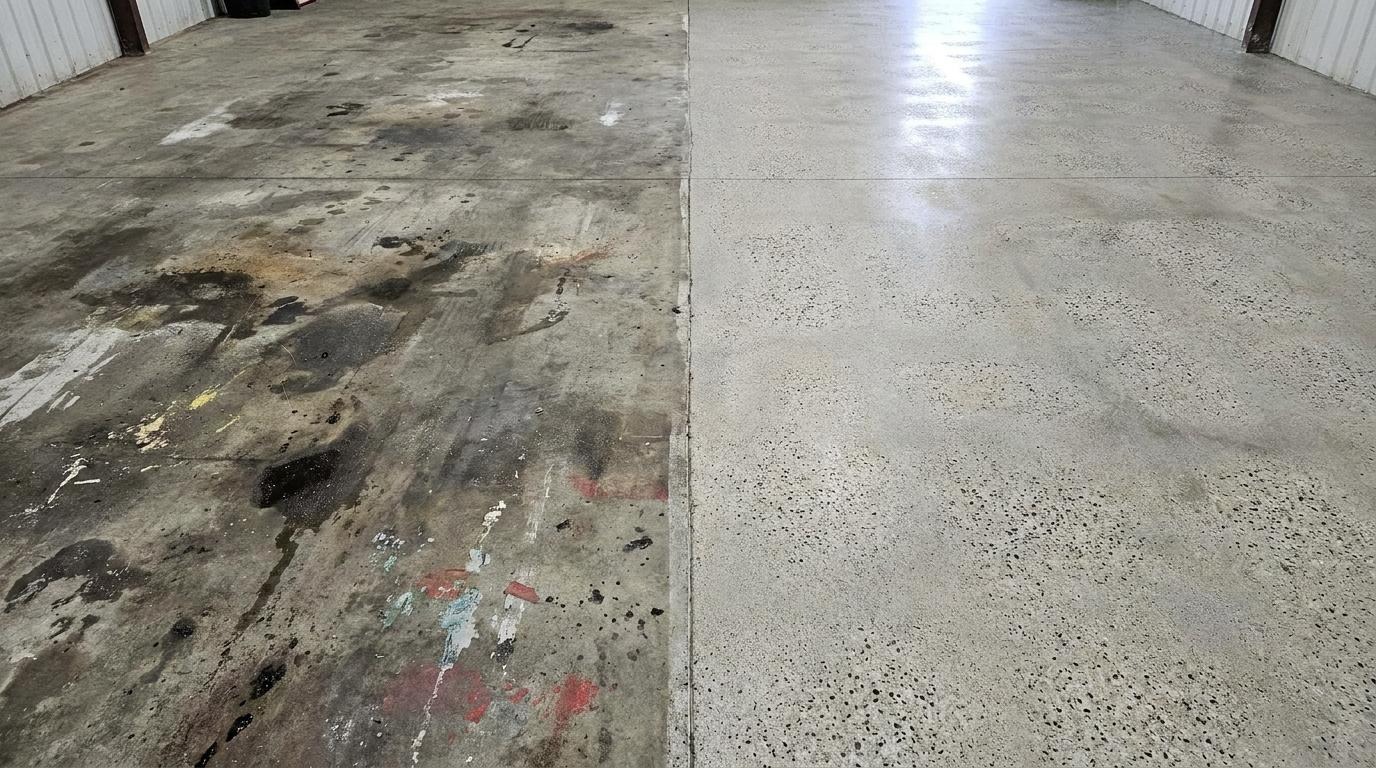
Most DIY epoxy kits include a bottle of acid etch solution as the only surface preparation. Acid etching dissolves a thin layer of the concrete surface but does not create the consistent profile that diamond grinding achieves. The etch depth is uneven, varies with concrete age and density, and leaves residue that can interfere with coating adhesion. In Charlotte's humid climate, acid-etched floors often fail within the first year because moisture vapor pushes through the weak bond.
Pressure Washing
Pressure washing removes loose dirt and surface grime but does nothing to open the concrete's pores or remove embedded contaminants like oil and old sealers. A pressure-washed slab looks clean, but the surface profile is unchanged. A coating applied over a pressure-washed floor has no mechanical grip and relies entirely on surface adhesion, which doesn't hold up under tire heat, chemical spills, or Charlotte's humidity-driven moisture vapor.
How Charlotte's Humidity Makes Grinding Essential
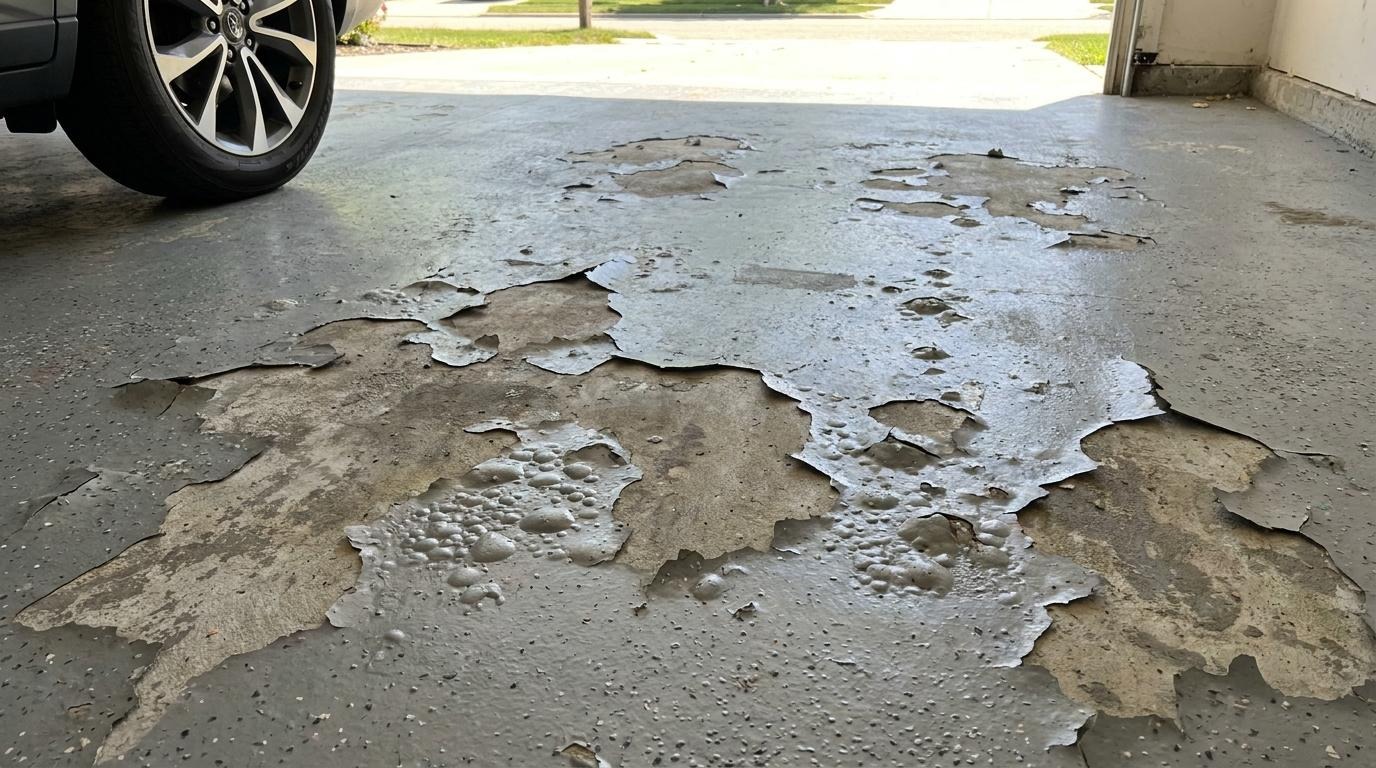
Charlotte's summer humidity regularly exceeds 70%, and concrete slabs below or at grade absorb moisture from the surrounding soil. That moisture moves upward through the slab as vapor. When a coating is applied without a strong mechanical bond, the vapor pushes against the underside of the coating and separates it from the concrete. This is the primary cause of bubbling and delamination in Charlotte-area garages.
Diamond grinding addresses this in two ways. First, it creates the profile that lets the coating lock into the slab rather than resting on it. Second, it exposes the slab's true condition so the installer can test moisture levels before coating. If the vapor emission rate is too high, a moisture mitigation primer goes down first. Titan Garage Floors performs moisture testing on every Charlotte-area project, including homes in Fort Mill, Rock Hill, and the South Carolina suburbs where clay-heavy soil holds more ground moisture.
Frequently Asked Questions
Is diamond grinding necessary before epoxy?
Diamond grinding is necessary before any professional epoxy installation because it removes surface contamination and creates the mechanical profile the coating needs to bond. Acid etching and pressure washing do not achieve the same result. Skipping this step is the single most common reason garage floor coatings peel or delaminate within the first year.
How much does diamond grinding a garage floor cost?
Diamond grinding a garage floor typically costs $1 to $4 per square foot when done as part of a professional coating installation. For a standard two-car garage of 400 to 500 square feet, that portion of the project runs roughly $400 to $2,000 depending on the concrete's condition. Titan Garage Floors includes diamond grinding in every installation quote.
Can you grind a garage floor yourself?
You can rent a concrete grinder from an equipment rental company, but achieving a consistent profile across a full garage floor requires experience with the machine and knowledge of the concrete's condition. Uneven grinding creates high and low spots that show through the coating. Most homeowners who attempt DIY grinding either under-grind, leaving contamination behind, or over-grind in some areas, creating an inconsistent bond.
One Hour Determines if Your Garage Floor Lasts 15 Years
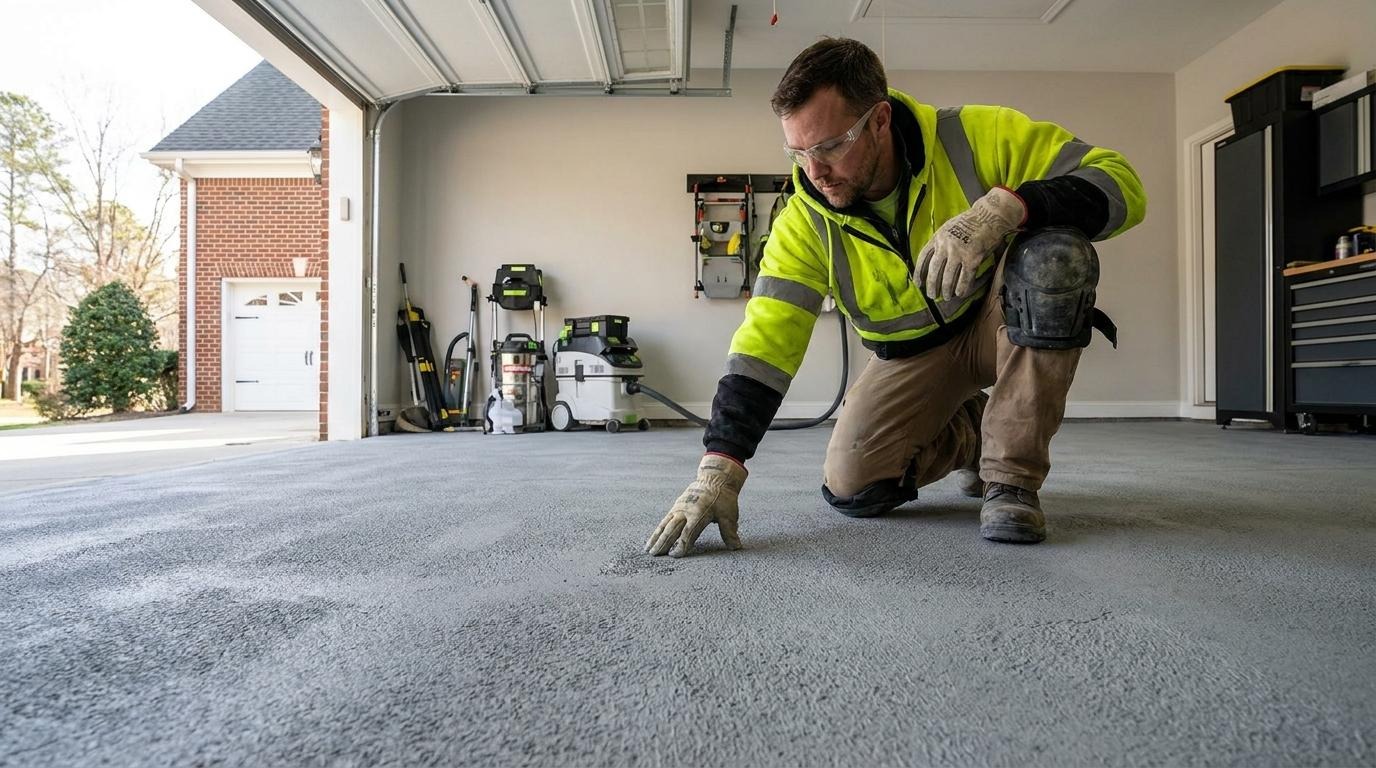
Diamond grinding takes about an hour for a standard two-car garage. That single hour separates the floors that hold up for fifteen years from the ones that peel before the next summer. It's not the most expensive part of the install nor the most visible. But it's the step that determines whether the coating actually bonds to the concrete or just sits loosely on top.
Titan Garage Floors handles diamond grinding on every install across Charlotte, Concord, Fort Mill, Rock Hill, and the rest of the Carolinas metro. Call (910) 852-9266 or request a free estimate online.