Epoxy Floor Warranty: What Should Be Covered and Why It Matters
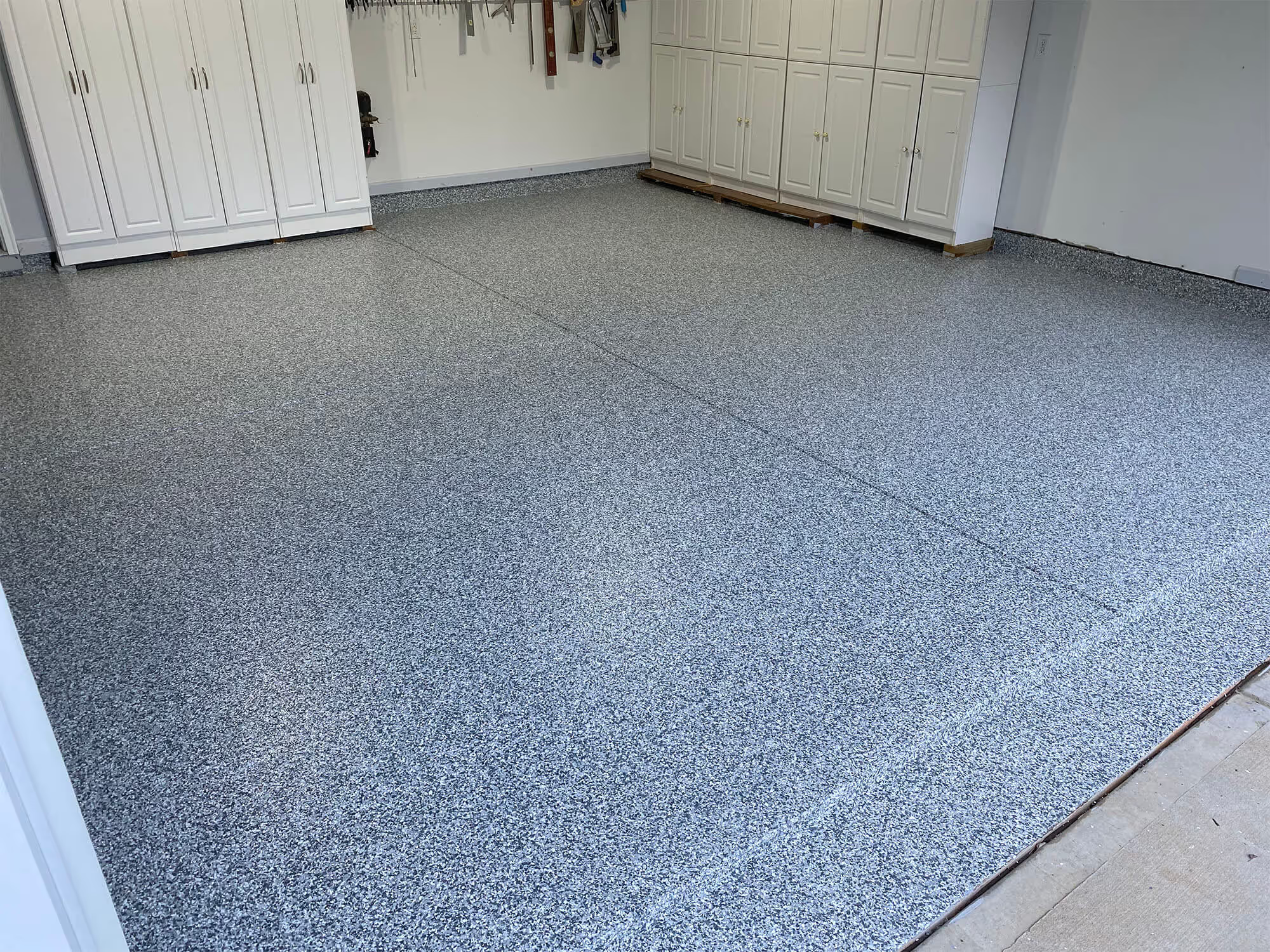
An epoxy floor warranty should cover peeling, delamination, hot tire pickup, yellowing, and basic chemical resistance for a clearly stated number of years. Many garage coating warranties cover none of those failures and use vague language to hide it. Titan Garage Floors backs every epoxy flake installation across the Charlotte metro with a 15-year warranty and uses a UV-stable topcoat to resist yellowing.
Most homeowners assume a “lifetime warranty” is the strongest possible coverage. It usually isn't. Lifetime warranties on coatings often define “lifetime” as five years, exclude labor entirely, and require the homeowner to prove the floor wasn't “misused,” a clause that voids most claims. A clearly stated 15-year written warranty like the one backing Titan's professionally installed epoxy flake flooring carries more legal weight than an open-ended “lifetime” promise. Reading a coating warranty starts with five contract clauses most homeowners never check, and those clauses come up first below.
The Warranty Myth Most Contractors Don't Correct
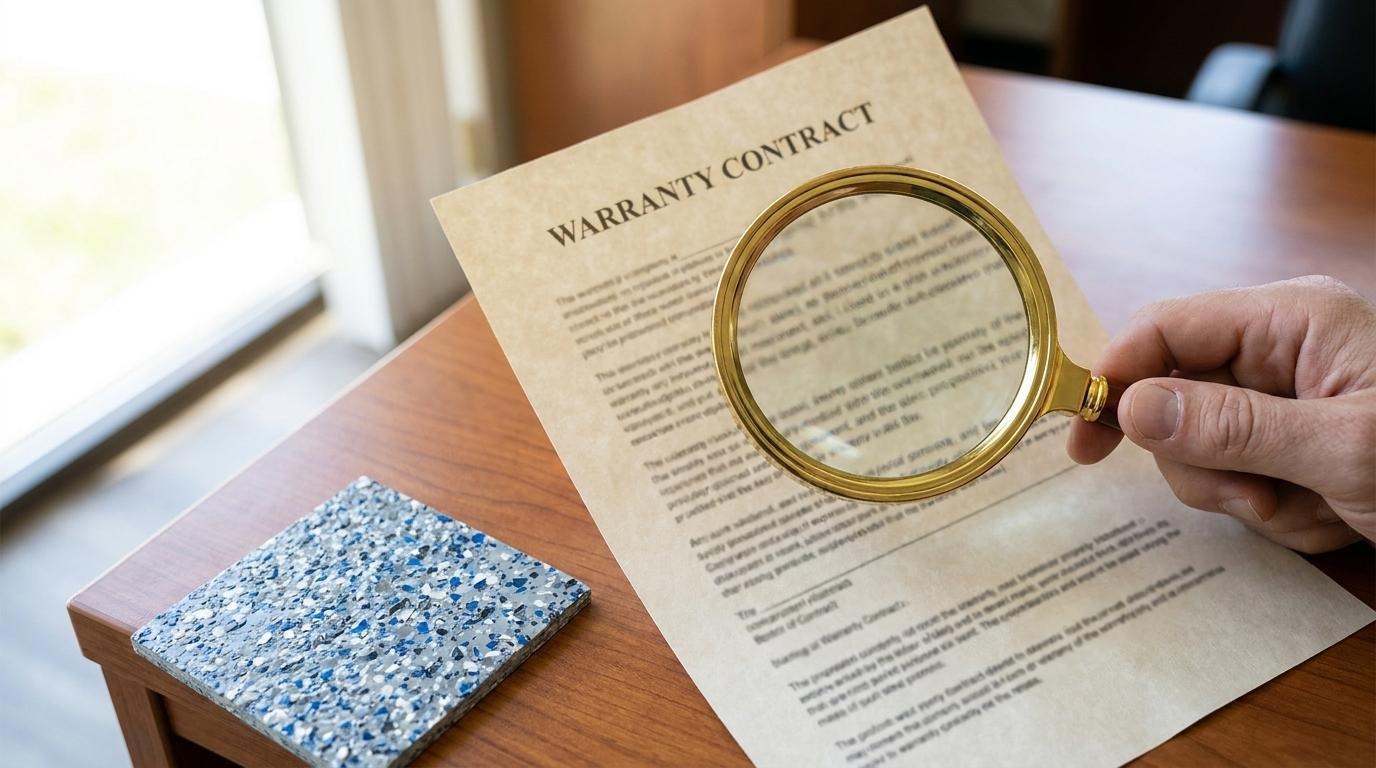
Lifetime warranties sound stronger than dated warranties because the word “lifetime” has no upper bound. The written definition almost always does. Many “lifetime” coating warranties define lifetime as the original homeowner's tenure in the property or as the lifetime of the resin batch, which can mean fewer years than the headline suggests.
The written 15-year warranty Titan provides has a specific end date, but the coverage between today and that date is clear. That distinction is also why selecting a vetted epoxy flooring professional determines whether the paperwork on the warranty matches what's actually owed.
Five Clauses That Define an Honest Warranty
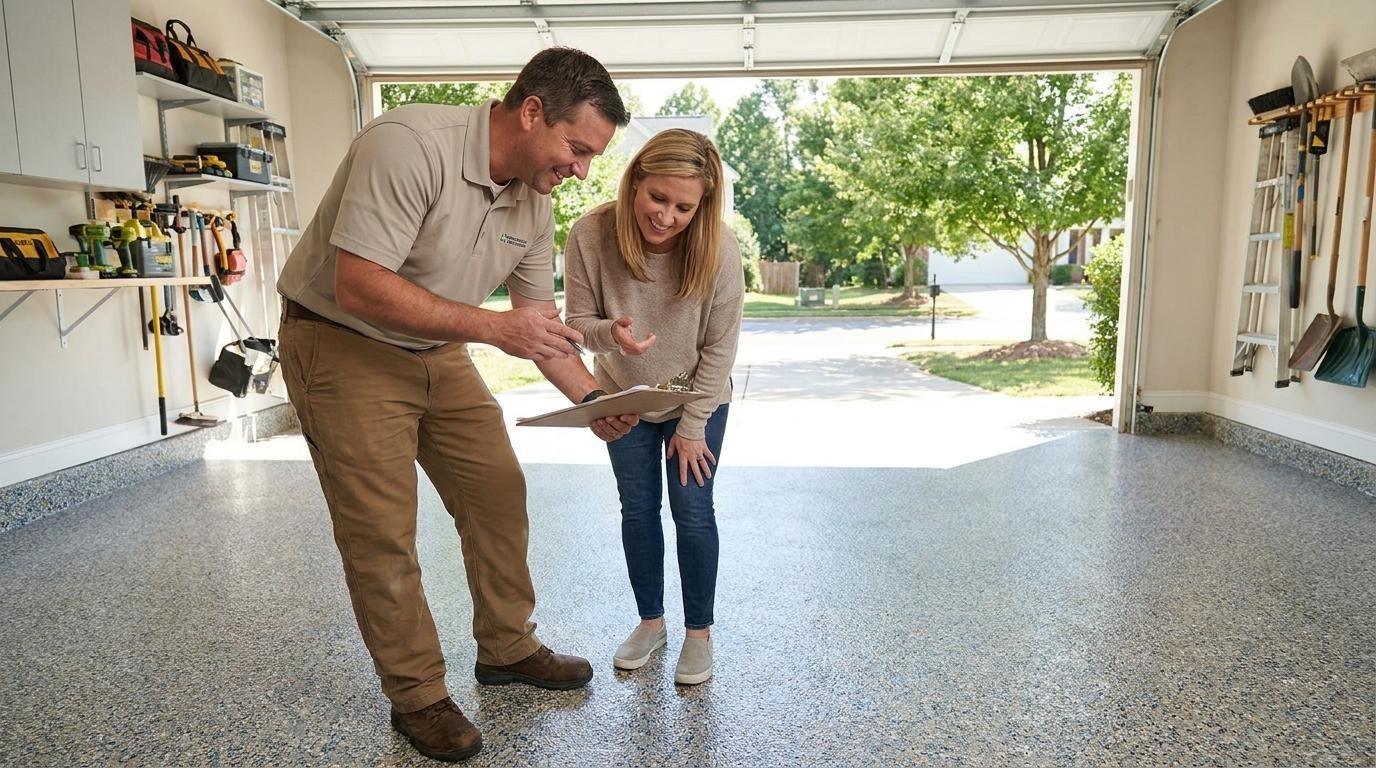
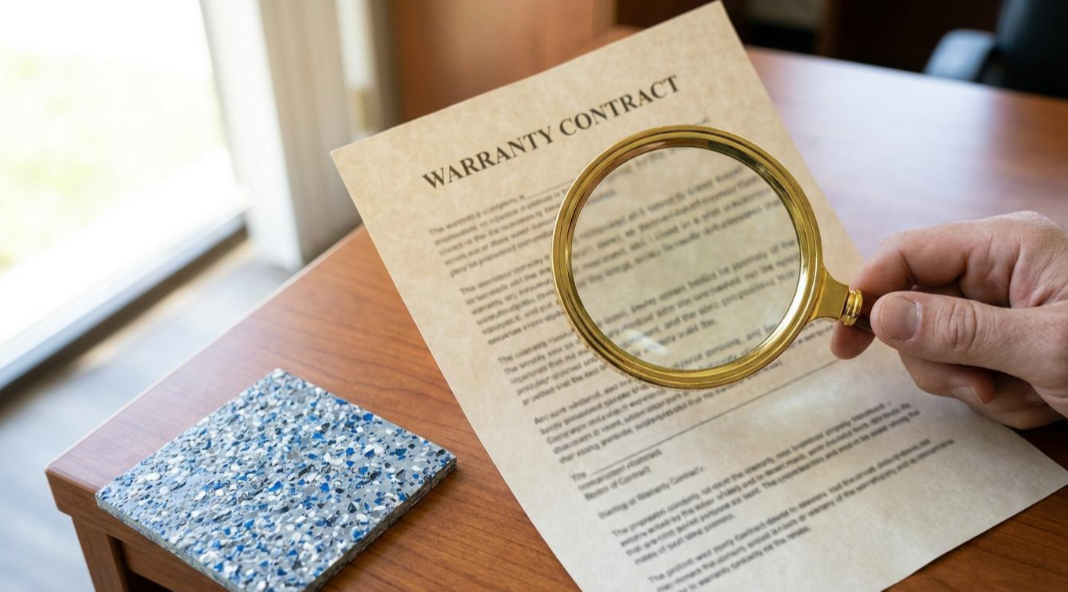
These are the contract clauses worth searching for in any contractor's warranty document before signing.
Specific Failure Modes Named
An honest warranty names the failures it covers: peeling, delamination, blistering, hot tire pickup, yellowing, and discoloration. Vague language like 'manufacturing defects' usually excludes the failures homeowners actually see.
Labor Included or Excluded
A material-only warranty replaces resin but leaves the homeowner paying for installation again. Look for warranties that include both material and labor for the covered period. That's how Titan's garage floor coating warranty is structured.
Transferability to a New Homeowner
Transferable warranties pass to the next owner when the home sells. Charlotte's strong resale market makes this clause more valuable than it looks at install day.
Prep and Installation Requirements
Honest warranties require diamond grinding and full surface prep as a condition of coverage. Contractors who skip prep and still offer a long warranty are writing checks the coating can't cash when the floor fails at year three.
Exclusions Listed Specifically
Read the exclusions. Some warranties void coverage for “commercial use,” “vehicle traffic,” or “temperature exposure above 90°F.” Those clauses effectively void garage coverage in Charlotte. Honest warranties list narrow, reasonable exclusions like impact damage from dropped tools or non-standard chemical exposure.
Why Length Alone Doesn't Equal Coverage

A 25-year warranty with material-only coverage and a list of exclusions that includes 'vehicle traffic' is worth less than a 10-year warranty that includes labor and covers peeling. The math runs the same way for a coating warranty as it does for an extended car warranty: read the coverage, not the headline.
That's also where homeowner research matters. A real evaluation of whether garage floor coatings are worth it hinges on which warranty actually delivers when the floor needs it, not on the longer printed number.
Frequently Asked Questions
How long should an epoxy floor warranty be?
A professional epoxy floor warranty should run 10 to 15 years to match manufacturer expectations for a properly installed system. Shorter warranties of one to five years signal a DIY-grade install or a contractor unwilling to back the work. Open-ended “lifetime” warranties usually contain restrictive definitions and exclusions that shorten the real coverage well below the printed number.
What voids an epoxy floor warranty?
Epoxy floor warranties are typically voided by impact damage from heavy dropped objects, surface modifications by other contractors, chemical spills outside normal garage use, and improper cleaning with aggressive solvents. Some contractor warranties also void coverage for vehicle traffic, commercial use, or sustained hot weather, which makes those warranties effectively useless in a Charlotte residential garage.
Do all epoxy floors come with a warranty?
Not every epoxy floor comes with a written warranty. DIY epoxy kits typically include only a manufacturer warranty on the resin itself, with no labor or installation coverage. Professional installs vary widely. Titan's 15-year warranty backs every epoxy flake floor installed across the Charlotte metro, while its UV-stable topcoat is designed to resist yellowing that weakens cheaper systems.
Why Warranty Length Should Drive Your Decision
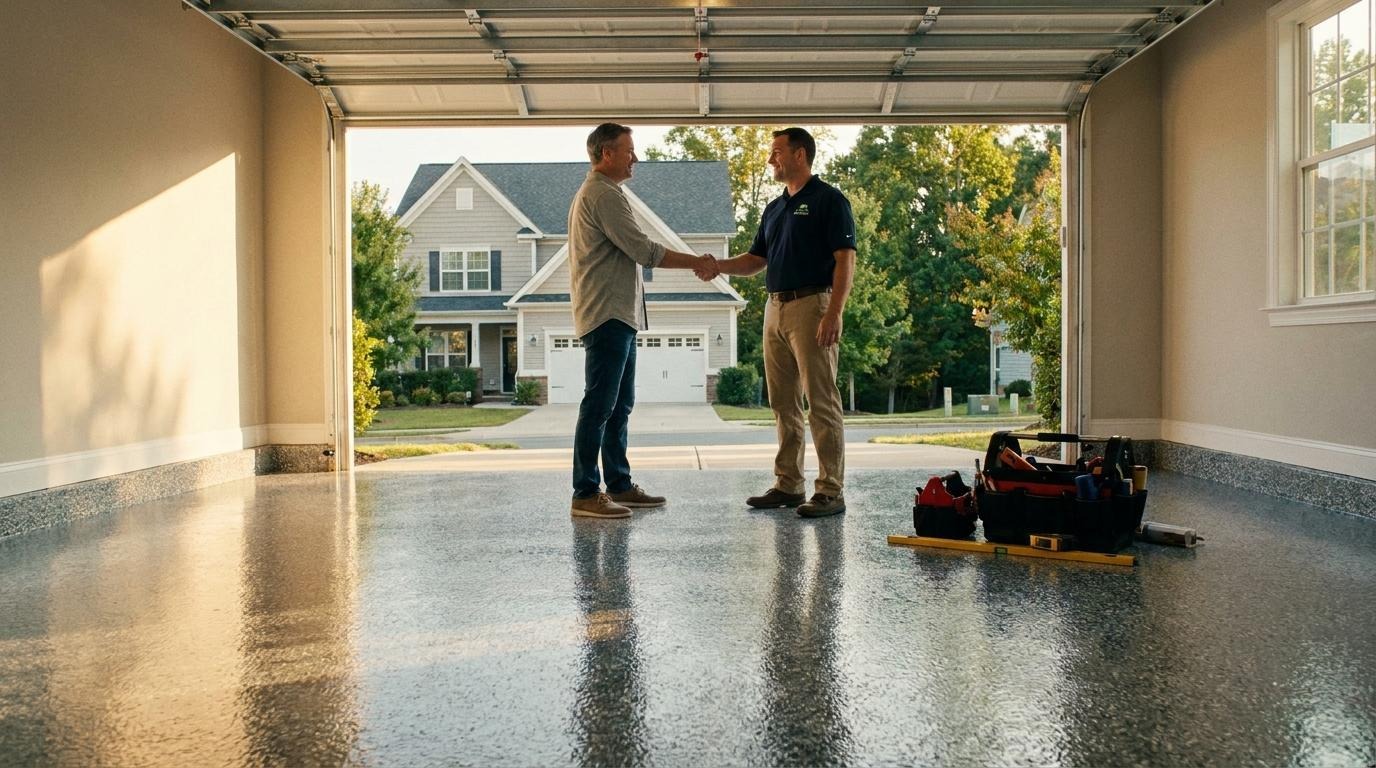
The length of the warranty signals contractor confidence. A 15-year written warranty backed by clear coverage language tells you the contractor expects the floor to perform throughout the warranty period and is willing to write it down. A “lifetime” warranty with restrictive exclusions tells you the opposite, even when the marketing reads better.
For a Charlotte-area quote with the full warranty terms in writing, request a Titan Garage Floors free estimate or call (910) 852-9266.