Why Epoxy Floors Yellow and How to Prevent It in Charlotte's Climate
Epoxy floor yellowing happens when ultraviolet light breaks the resin bonds inside a standard urethane topcoat, slowly turning a clear finish amber. The fix isn't stronger pigment or wax. It's a topcoat engineered to resist UV. Titan Garage Floors installs 100% UV-stable polyaspartic systems across the Charlotte metro and backs its epoxy floors with a 15-year warranty.
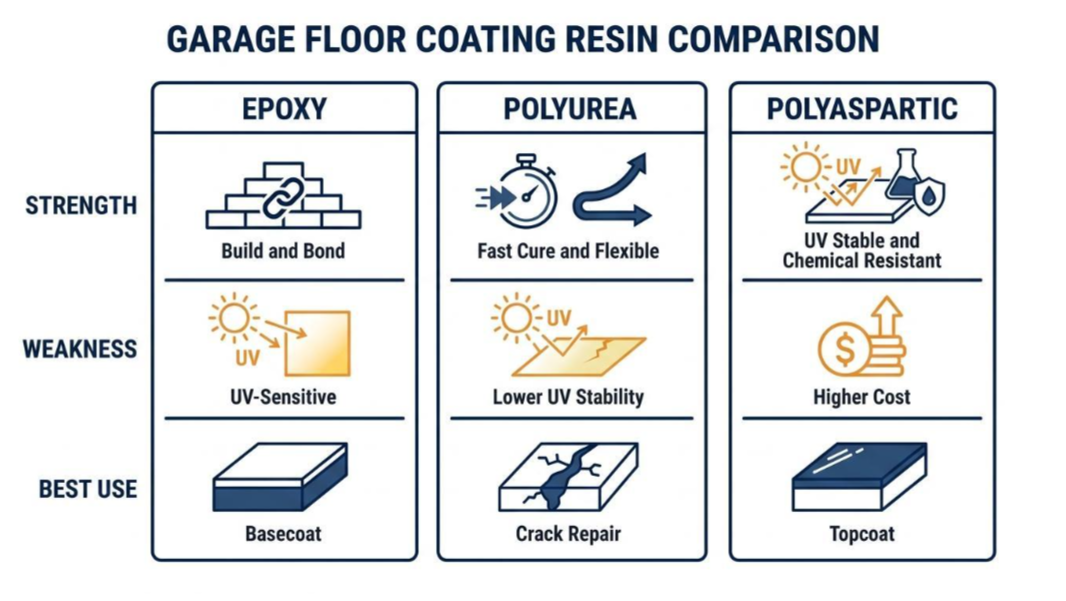
Homeowners often blame yellow garage floors on the epoxy itself. The real cause sits one layer above, in the clear urethane that's supposed to seal it. Standard aromatic urethane breaks down under Charlotte's 35°N sun, which is why Titan's epoxy flake flooring system uses a polyaspartic seal. That polyaspartic chemistry was engineered for demanding coating environments where UV stability, fast cure, and color retention matter. Three causes drive almost every case of yellowing, and one of them starts before the topcoat is mixed.
The Three Causes of Epoxy Yellowing
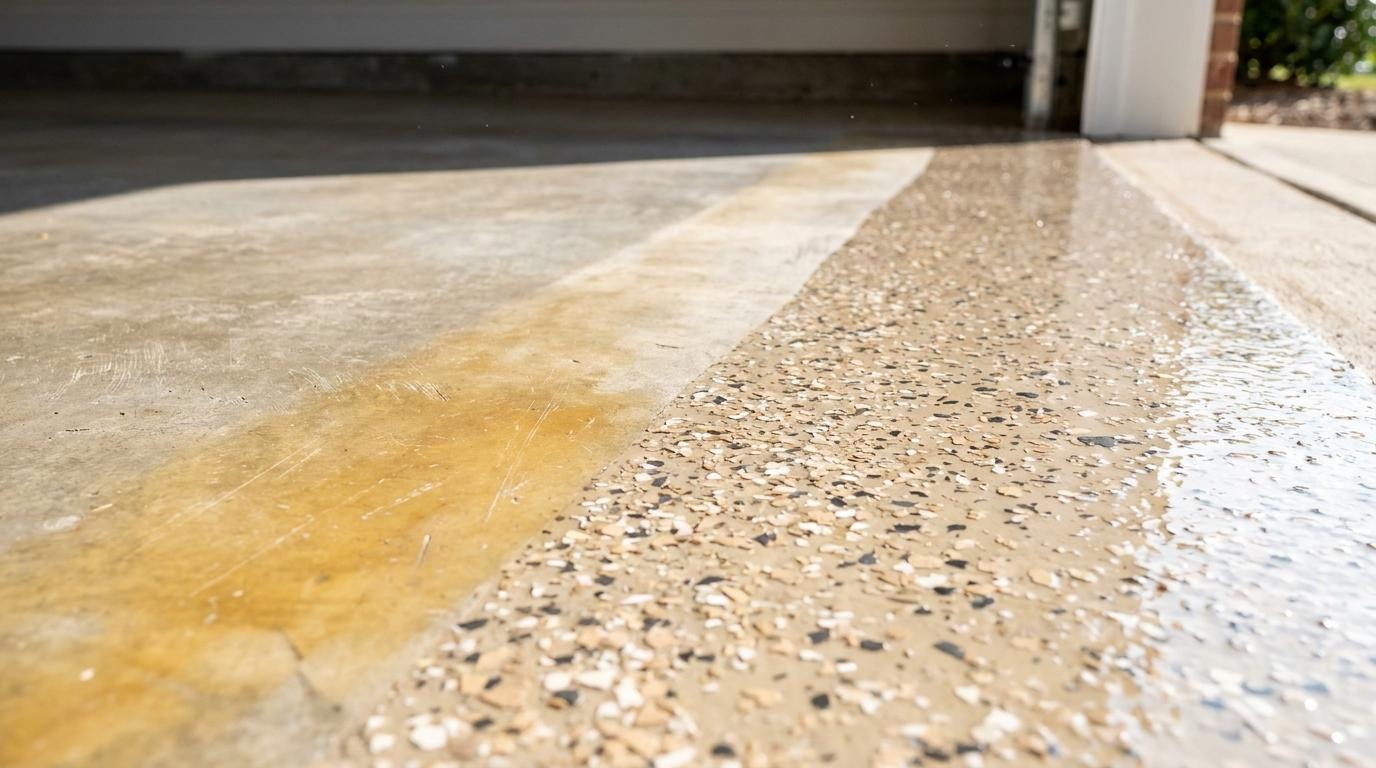
Yellowing rarely starts at the epoxy itself. Three failures higher up the system are responsible for almost every case we see in Charlotte garages.
UV-Reactive Topcoat Chemistry
Standard aromatic urethane reacts with ultraviolet light. The bonds break, the resin oxidizes, and the clear film turns amber within one to three years on a south-facing garage door. Aliphatic urethanes hold up longer but still degrade if the formulation isn't fully UV stable. The reliable solution is to use a 100% UV-stable polyaspartic urethane as the final coat.
Substandard Pigment in the Basecoat
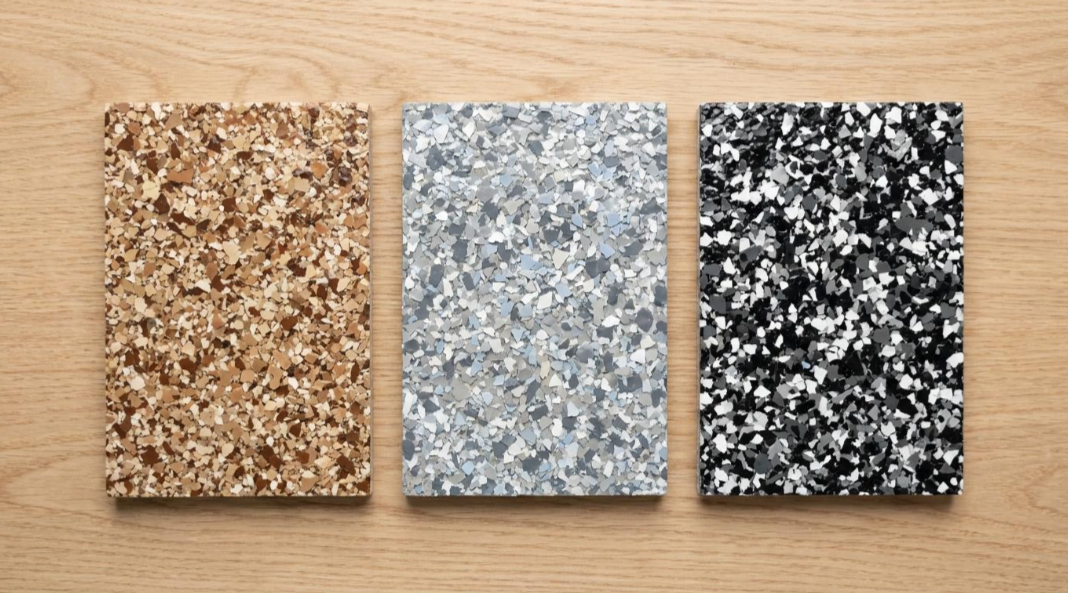
Some discount kits use organic pigments that fade or yellow when exposed to UV through a thin topcoat. The basecoat shifts color even if the topcoat holds up. Industrial-grade pigment in the base layer keeps flake colors accurate over time.
Sustained Heat Exposure
Constant heat, common under Charlotte's summer sun, accelerates oxidation in any urethane not engineered for it. Hot tire pickup and yellow streaking often share the same root cause: a topcoat softening at temperatures it wasn't built to handle.
Why Charlotte's UV Load Accelerates Failure
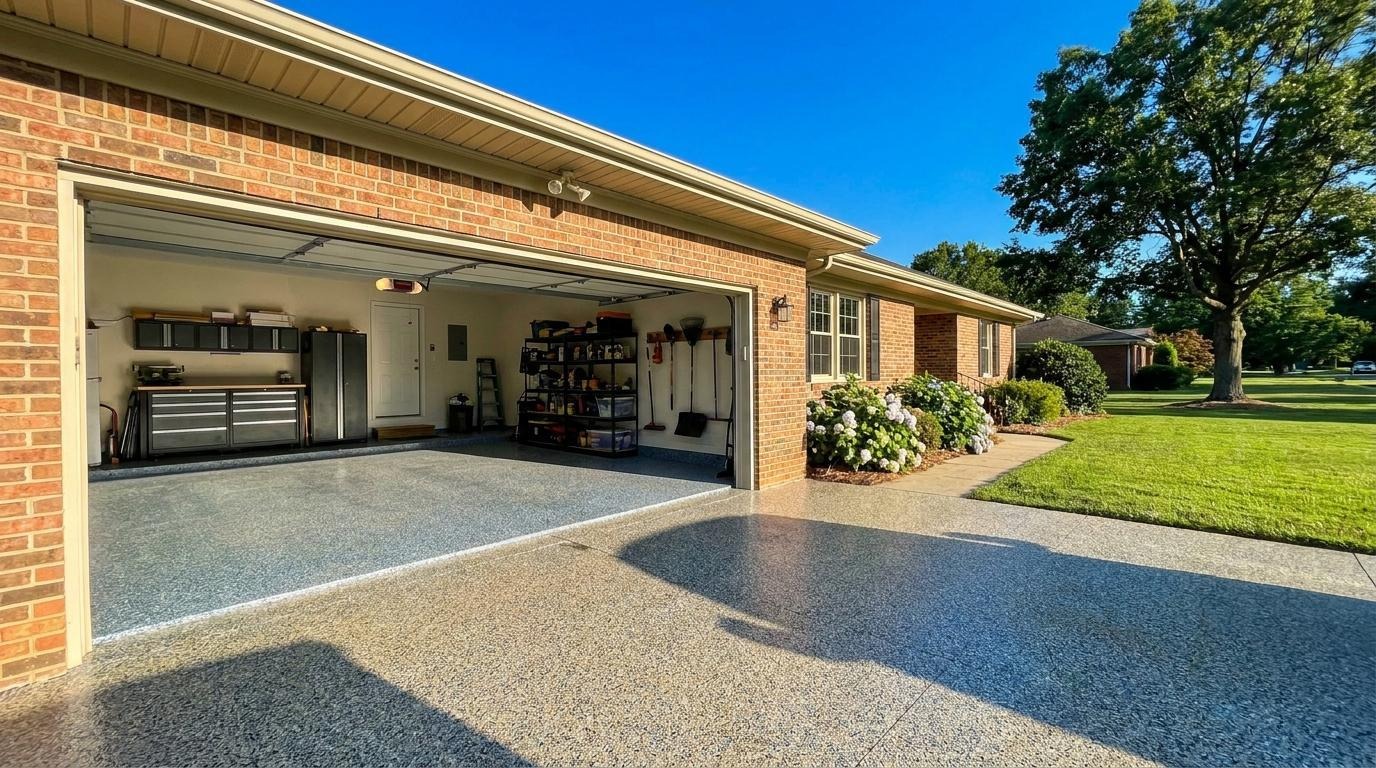
Charlotte sits at roughly 35°N latitude, further south than Los Angeles. That means longer summer days, steeper sun angles, and a UV index that regularly hits 9 or 10 from late May through early September. A garage door left open for weekend projects exposes the floor directly to that load, and over a few seasons the cumulative damage shows.
Humidity layers onto the UV problem. Moist air doesn't yellow a coating on its own, but it can keep certain urethane formulations soft for longer after install, which leaves them more vulnerable to oxidation before the film fully cures.
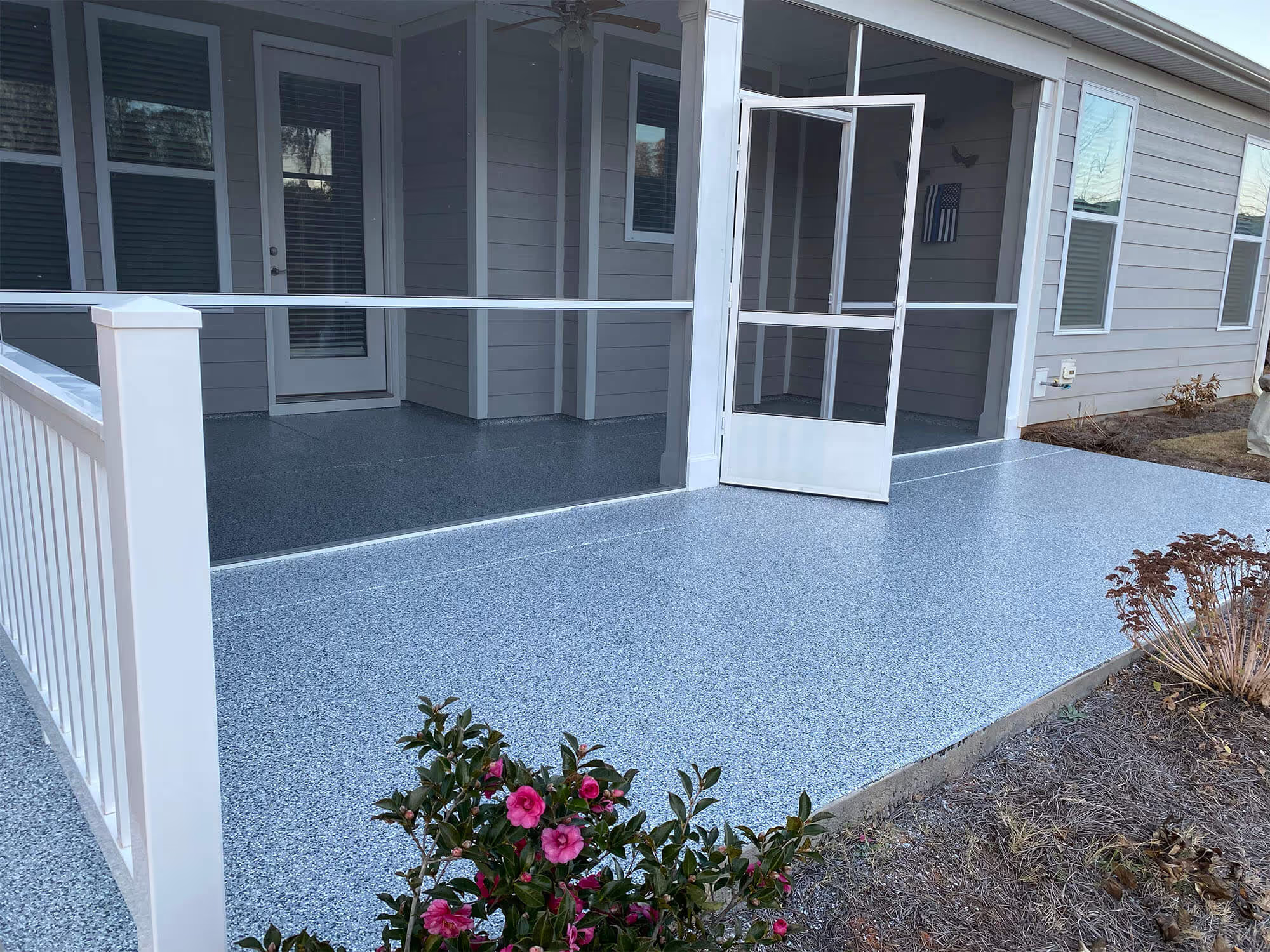
Outdoor concrete faces the same dynamic year-round. Driveways, pool decks, and patios in this region need a topcoat rated for outdoor sun exposure, not the indoor-rated systems most discount kits have.
How a Polyaspartic Topcoat Prevents It
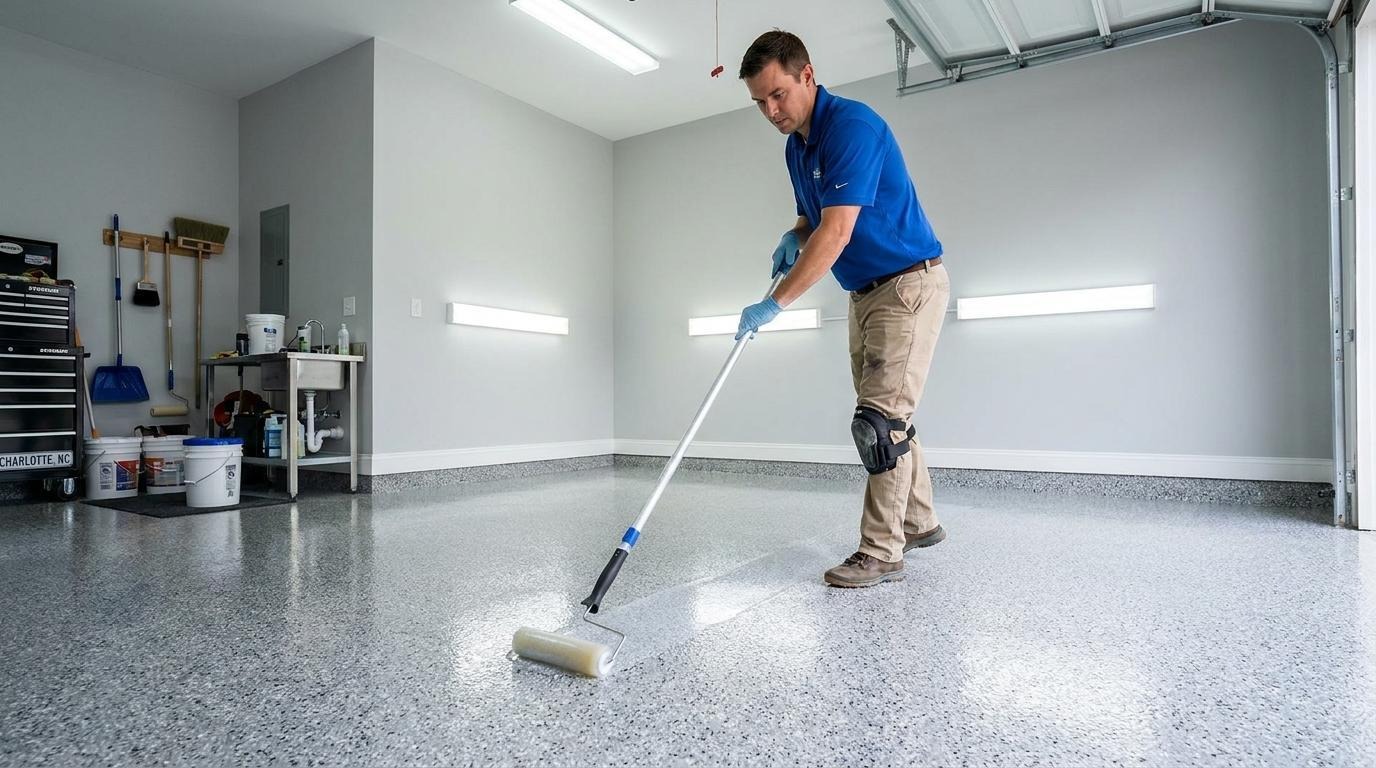
Polyaspartic urethane is a fast-curing, 100% UV-stable resin. The chemistry is used in demanding coating environments where sustained sun, salt, and temperature swings can punish weaker topcoats.
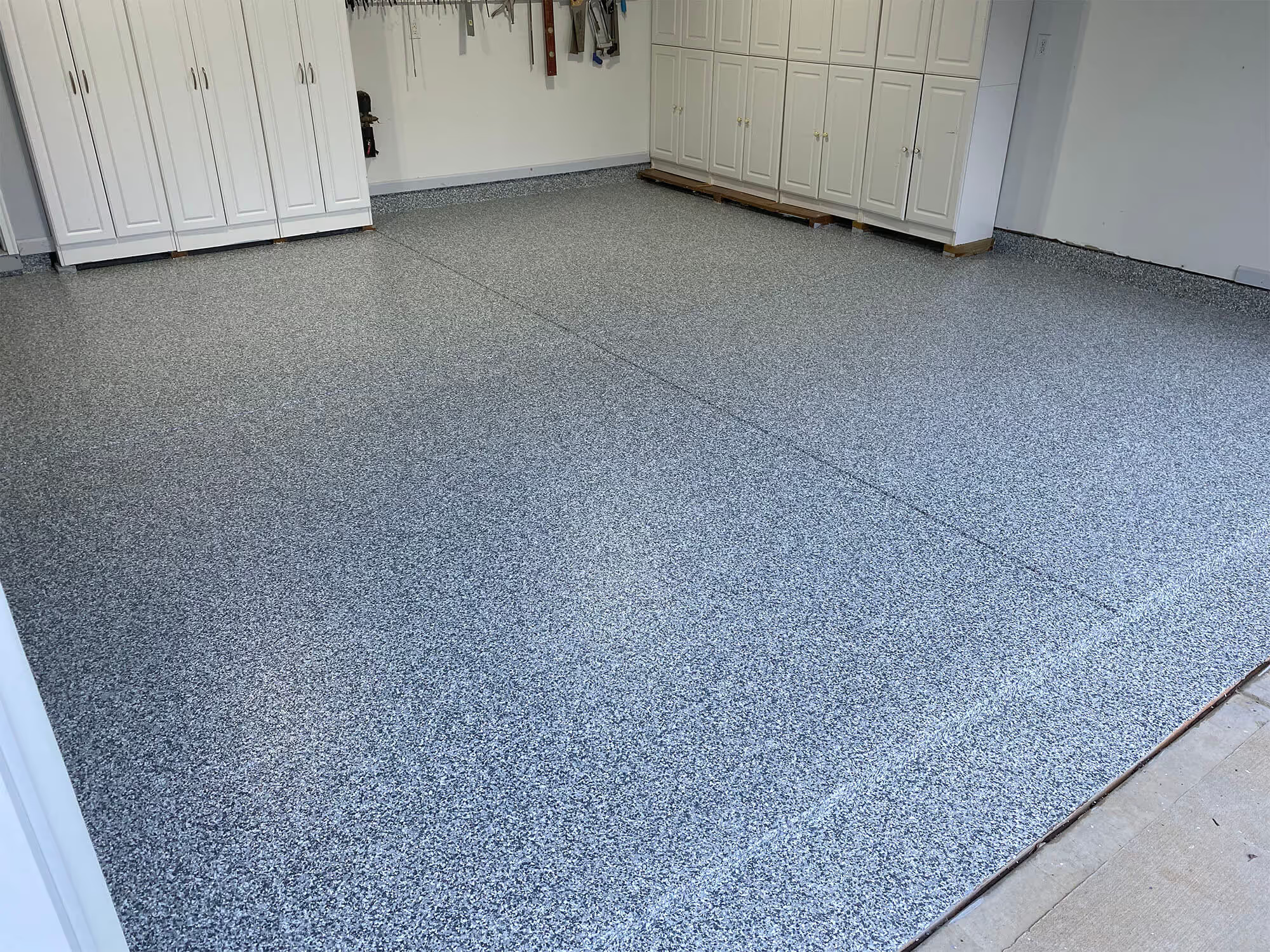
The four-layer system Titan installs uses a polyaspartic topcoat as the final seal over the vinyl flake basecoat. That topcoat locks in flake color, resists hot tire pickup, and stays clear under sustained sun. Industrial-grade pigment in the basecoat prevents the underlying color from shifting even after years of UV.
Combined, the system pairs Titan's 15-year epoxy floor warranty with a UV-stable topcoat designed to resist yellowing. For homeowners weighing whether a coating holds up outside, the topcoat chemistry is what determines the answer, which is why Titan's polyaspartic garage floor coatings are built for outdoor sun.
Frequently Asked Questions
Can you fix yellowed epoxy?
A yellowed epoxy floor can be restored by grinding off the failed topcoat and reapplying a UV-stable polyaspartic urethane, though the basecoat may need replacing if its pigment also discolored. Diamond grinding strips the damaged layer without destroying the underlying concrete. Titan handles restoration installs across the Charlotte metro when the base layer is still sound.
Does polyaspartic yellow over time?
Polyaspartic urethane is unlikely to yellow when correctly formulated as a 100% UV-stable resin. The chemistry resists the oxidation reaction that causes amber discoloration in standard epoxy and aromatic urethane. That stability is the reason Titan uses polyaspartic as the final topcoat on every epoxy flake floor it installs.
Will a UV-stable topcoat prevent yellowing on a driveway too?
For Charlotte driveways and pool decks, a UV-stable polyaspartic topcoat helps prevent yellowing because the chemistry that resists UV inside a garage is designed for direct outdoor sun. Standard indoor topcoats are not rated for sustained outdoor exposure. Any concrete coating that sees direct daily sun in this region needs the same UV-stable system used on garage installs.
Stop Yellowing Before It Starts in Your Charlotte Garage
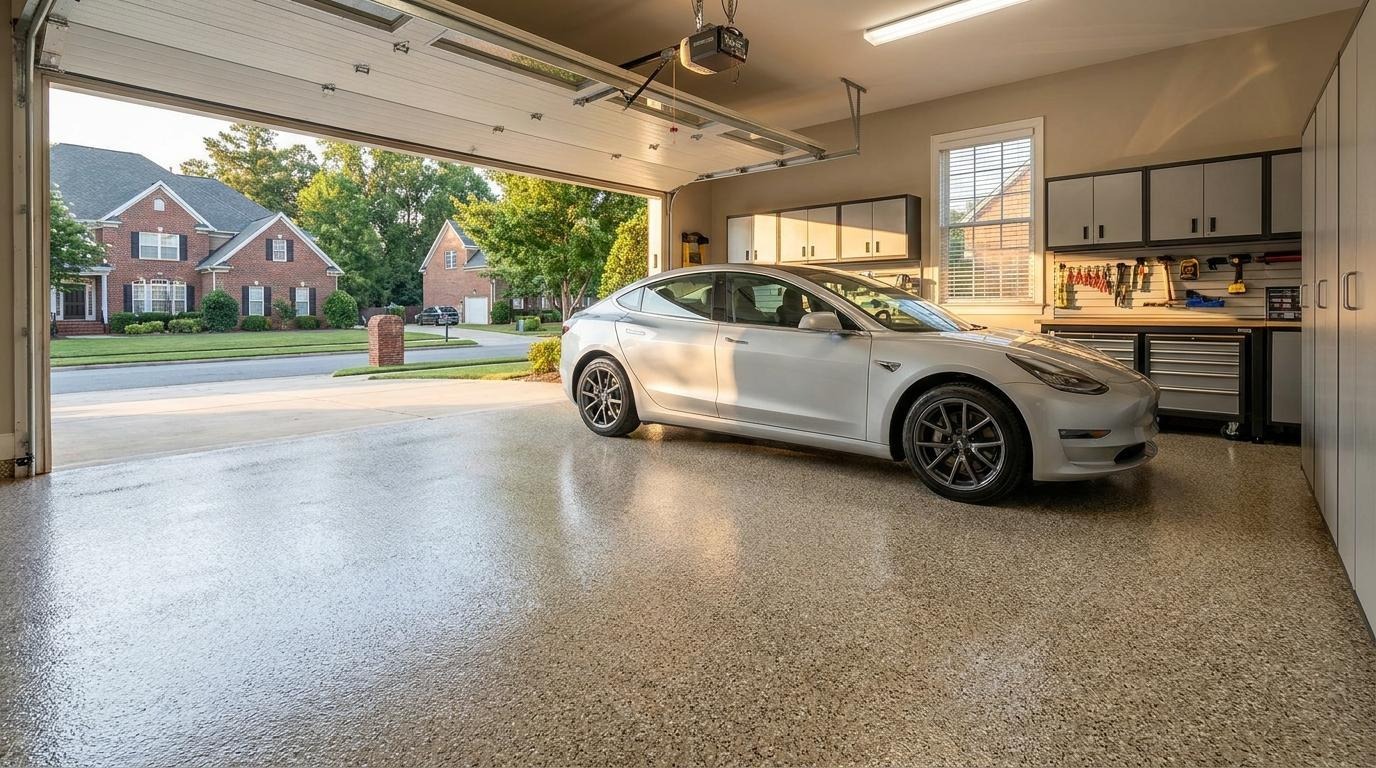
Yellowing is almost always a topcoat problem, not a basecoat problem. Charlotte's southern sun makes that distinction expensive over the life of a floor. Choosing a 100% UV-stable polyaspartic system at installaion demands the same labor and time as a non-UV-stable coating but addresses the most common reason garage floors look tired after a few summers.
For a quote on a polyaspartic system built for Charlotte's climate, request a free Titan Garage Floors estimate online or call (910) 852-9266.