What Is Polyaspartic Floor Coating? A Homeowner's Guide
Polyaspartic floor coating cures in hours rather than days and resists UV yellowing indefinitely. Made from a polyurea resin, it bonds to epoxy or directly to concrete through a two-component chemical reaction. Titan Garage Floors applies polyaspartic urethane as the final layer on every garage floor coating installation across the Charlotte, NC metro because it resists UV yellowing and hot tire damage better than epoxy alone.
Choosing the wrong topcoat on a Charlotte garage floor means the coating underneath starts degrading from sunlight and tire heat within a year or two. Start with how the coating locks into concrete, then see where it pulls ahead of standalone epoxy under Charlotte's summer UV and tire heat.
How Polyaspartic Bonds to Concrete
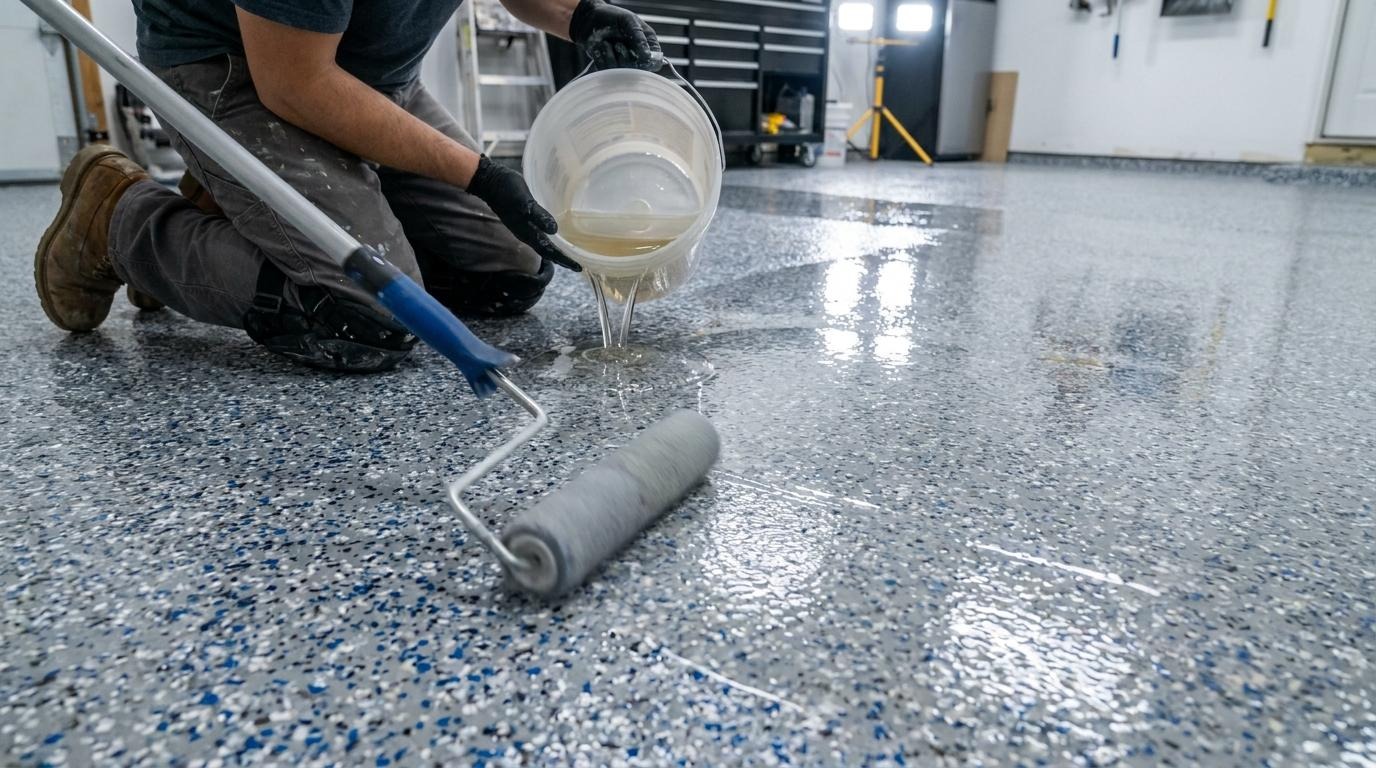
Polyaspartic is a two-component system. When the resin and the catalyst mix, a chemical reaction begins that cures the material from liquid to solid within two to six hours at room temperature. Compared to standard epoxy, which needs 24 to 72 hours to cure fully, polyaspartic lets homeowners drive on their garage floor the same day it's applied.
The coating bonds to diamond-ground concrete or to a cured epoxy basecoat. On bare concrete, the polyaspartic penetrates the open pores left by the grinder and creates a mechanical lock. On an epoxy base, it adheres to the cured resin surface and seals the flake layer beneath it. Both pathways require a clean, profiled surface. Skip the grinding and the topcoat sits on contamination rather than bonding into the substrate.
Where Polyaspartic Outperforms Standard Epoxy
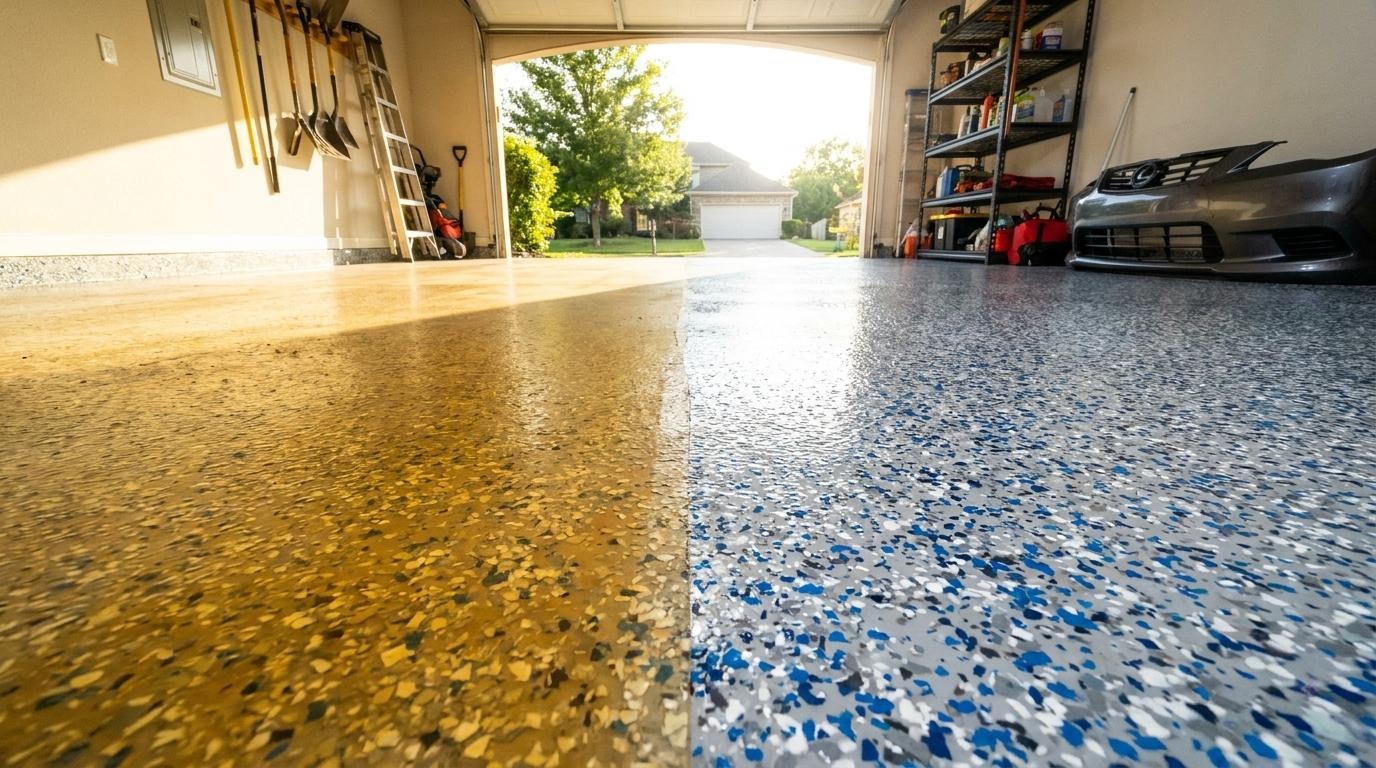
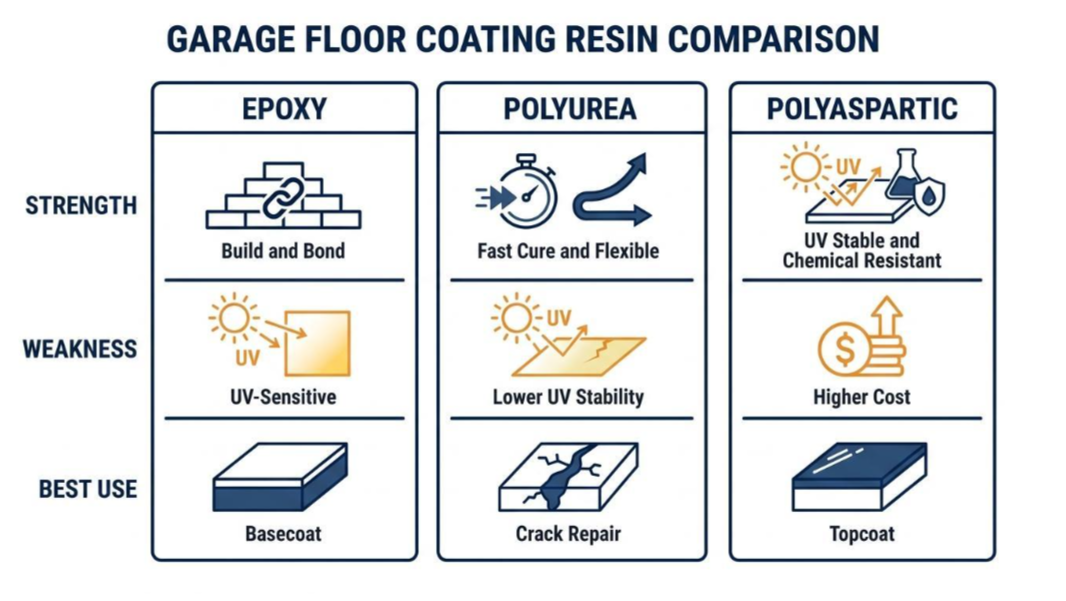
Two key performance factors, UV stability and resistance to hot tire pick-up, show why polyaspartic is the superior option for garage floors.
UV Stability
Standard epoxy yellows when exposed to ultraviolet light. In Charlotte, where garages face year-round sun exposure at 35 degrees north latitude, an unprotected epoxy floor can start showing amber discoloration within one to three years. Polyaspartic is 100% UV stable. The topcoat stays clear indefinitely, even on garage floors where the door stays open for hours each day.
Hot Tire Resistance
Hot tire pick-up happens when a car parked on a coating softens the surface and pulls it up when the vehicle moves. Epoxy alone can soften at the temperatures Charlotte summer tires reach after a highway drive. Polyaspartic stays rigid at higher temperatures and prevents the surface from bonding to rubber. This is one of the main reasons professional Charlotte installers use polyaspartic as a topcoat rather than letting the epoxy serve as the final layer.
How Titan Uses Polyaspartic in Charlotte
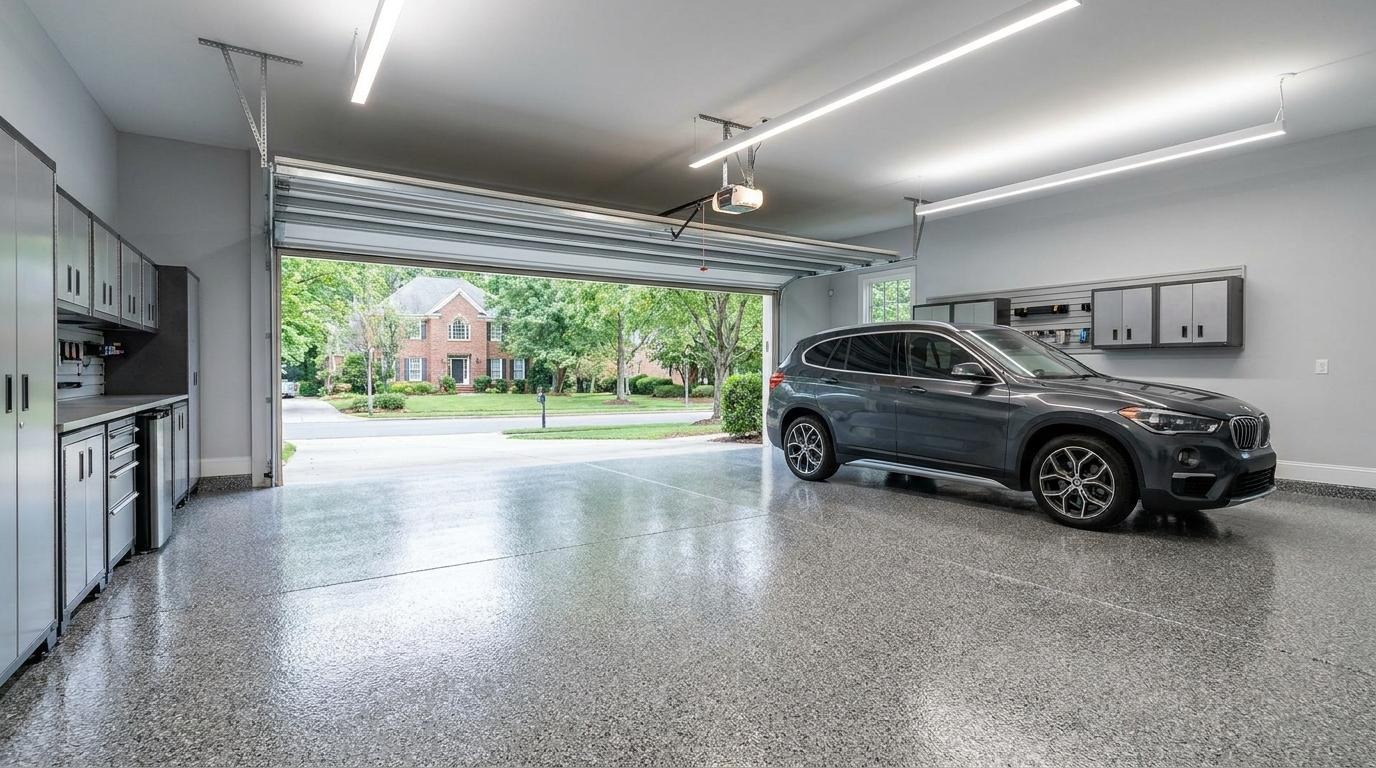
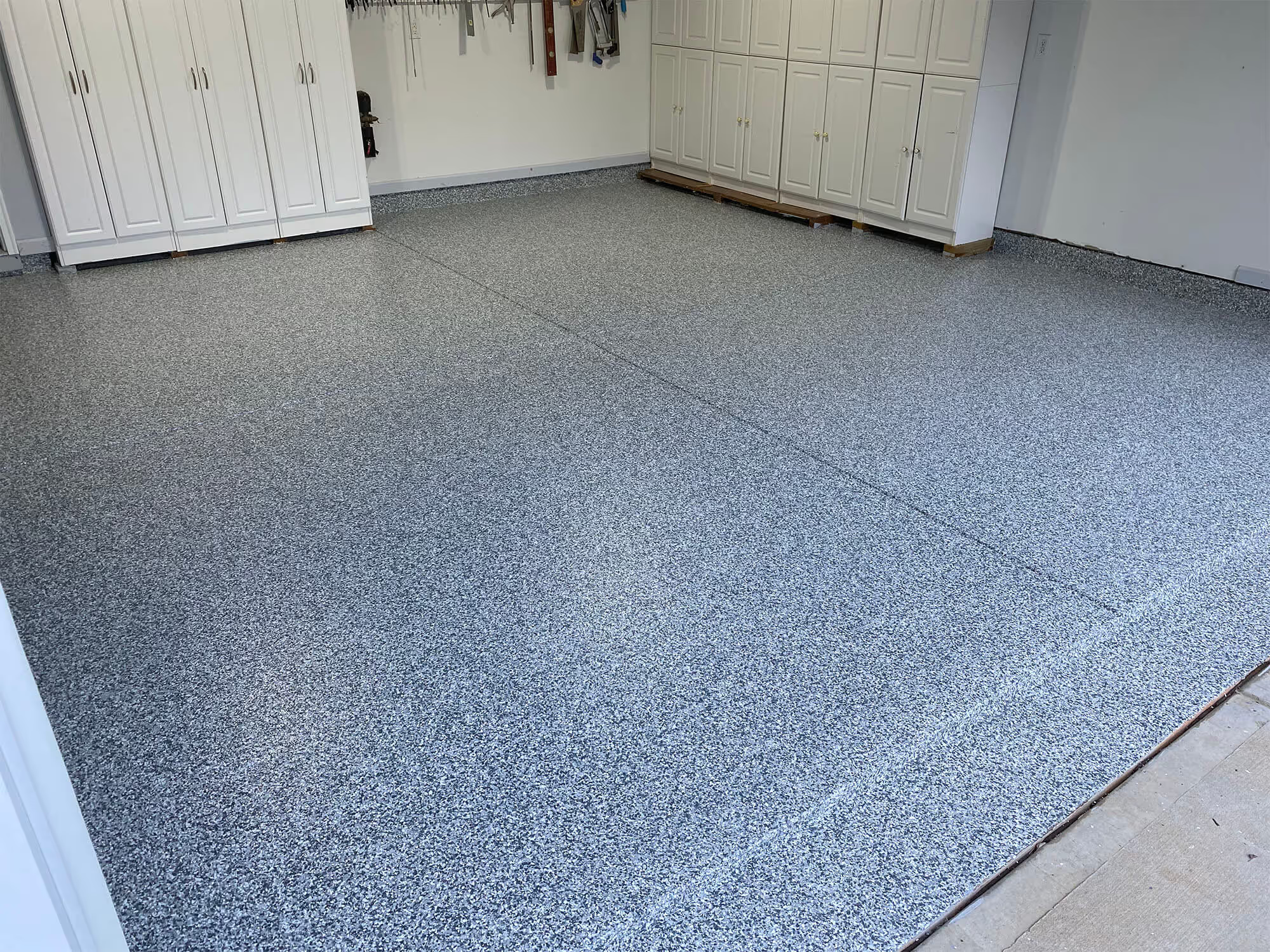
Titan Garage Floors applies polyaspartic urethane as the topcoat on its four-layer epoxy flake flooring system. The build starts with diamond grinding, then a primer coat, an epoxy basecoat with vinyl flake broadcast, and the polyaspartic topcoat to seal and protect the entire system. The polyaspartic layer is what gives the floor its glossy finish, UV protection, and resistance to chemicals, stains, and hot tires.
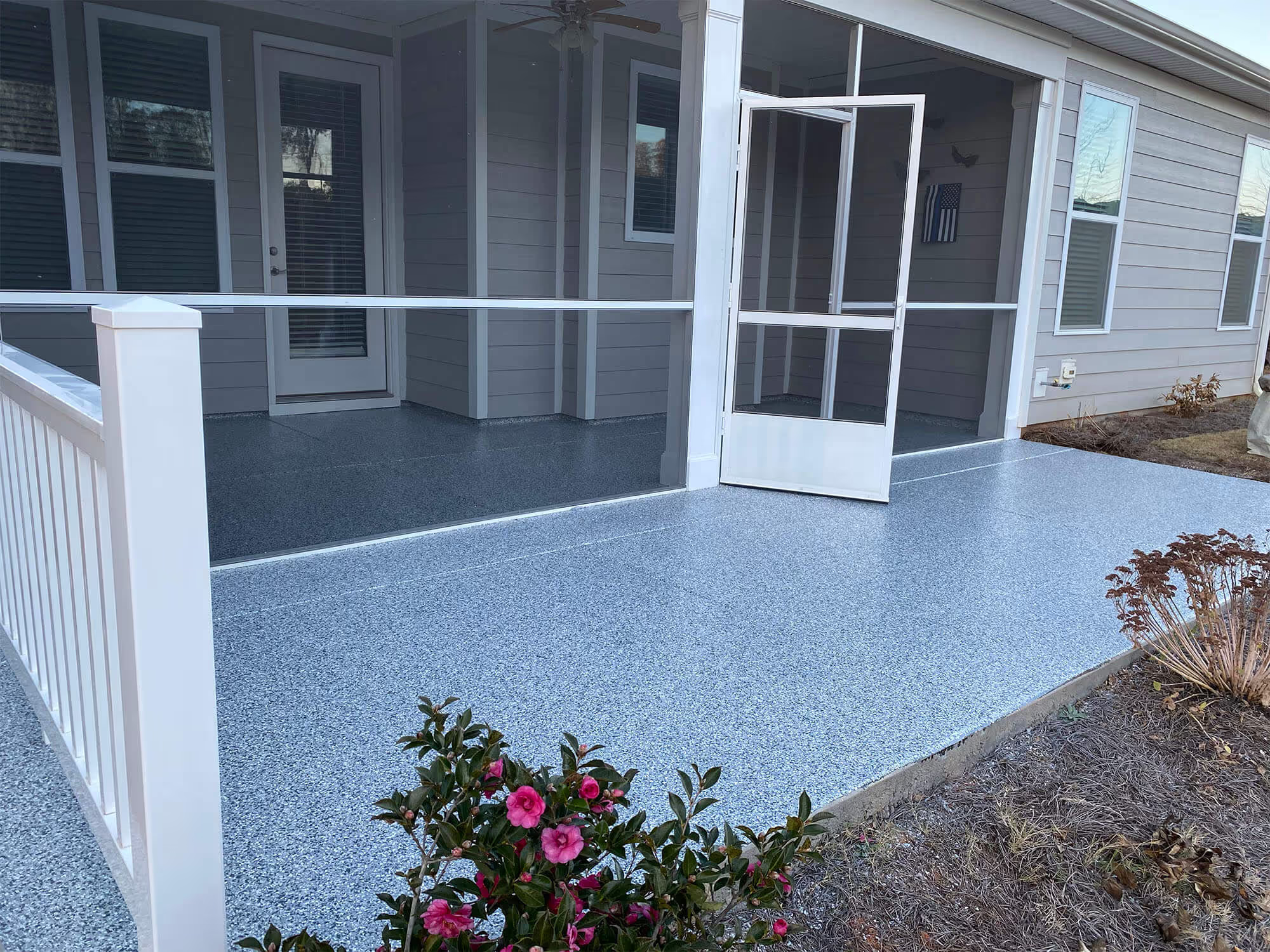
The same system goes on residential garages, basements, patios, and commercial floors across the Charlotte metro, including Lake Norman, Fort Mill, and Rock Hill. Every installation comes with a 15-year warranty. An anti-slip additive can also be mixed into the polyaspartic topcoat for surfaces that need extra traction, like pool decks and patios exposed to rain.
Frequently Asked Questions
How long does polyaspartic floor coating last?
Polyaspartic floor coating typically lasts 10 to 20 years when professionally installed over properly ground concrete. Titan Garage Floors backs its combined epoxy-plus-polyaspartic system with a 15-year warranty. Lifespan depends on traffic level, maintenance habits, and whether the concrete was adequately prepared before coating.
Is polyaspartic more expensive than epoxy?
Polyaspartic coating material costs more per gallon than standard epoxy, but the price difference in a finished garage floor project is smaller than most homeowners expect. A polyaspartic-only system runs roughly $4 to $12 per square foot installed, while a standalone epoxy system without a polyaspartic topcoat costs $3 to $7. The full system Titan installs (epoxy basecoat plus polyaspartic topcoat) falls between those ranges at $5 to $12 per square foot, reflecting the added durability and UV resistance of the combined build
Can polyaspartic be applied in cold weather?
Polyaspartic can be applied in colder temperatures than standard epoxy, which is one of its advantages for installers working in variable weather. Most polyaspartic products cure reliably at temperatures as low as 40 to 50 degrees Fahrenheit, while epoxy needs at least 55 to 60 degrees. Charlotte's mild winters rarely drop below polyaspartic's working range, making year-round installation possible.
Why Polyaspartic Is the Layer That Matters Most
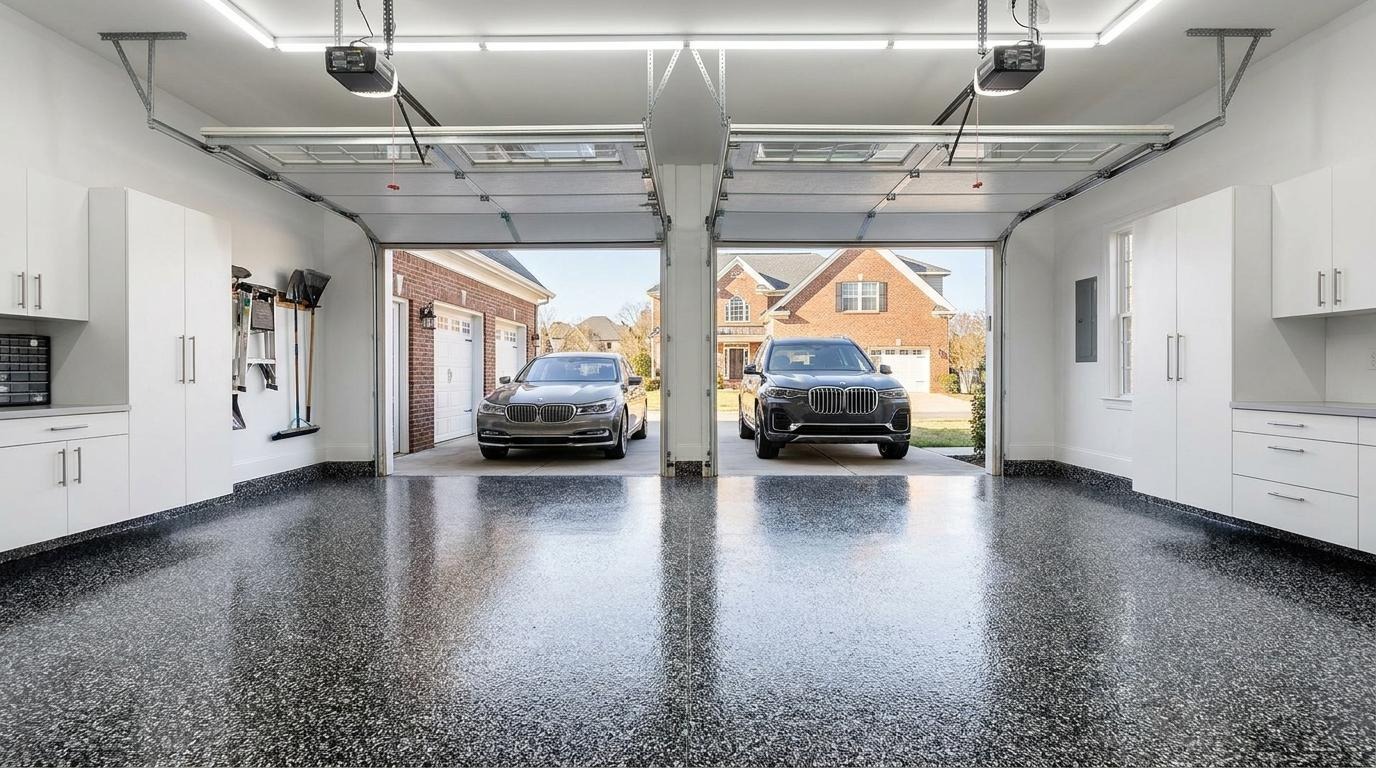
Polyaspartic is the layer that protects everything underneath it. It keeps the epoxy from yellowing, prevents hot tire damage, and gives the floor its glossy, cleanable surface. In a climate like Charlotte's, where UV and humidity test coatings year-round, a UV-stable polyaspartic topcoat holds up where standalone epoxy yellows and lifts.
Titan Garage Floors installs the four-layer system with a polyaspartic topcoat across Charlotte, Lake Norman, Fort Mill, and Rock Hill. Call (910) 852-9266 or request a free estimate online. Every installation comes with a 15-year warranty backed by the four-layer system mentioned in this article.