Concrete Paint vs Epoxy Flooring: An Honest Comparison for Homeowners
Homeowners are sometimes caught off guard when we tell them that concrete paint and epoxy flooring aren’t two versions of the same product. They're fundamentally different materials with different chemistry, different thickness, and dramatically different lifespans.
After installing garage floor coatings across the Charlotte, NC metro since 2019, Titan Garage Floors has recoated more painted concrete floors than we can count. What we find on those floors is almost always the same. This guide breaks down where paint falls short and why the distinction between concrete paint and epoxy matters.
Why Concrete Paint Fails on Garage Floors
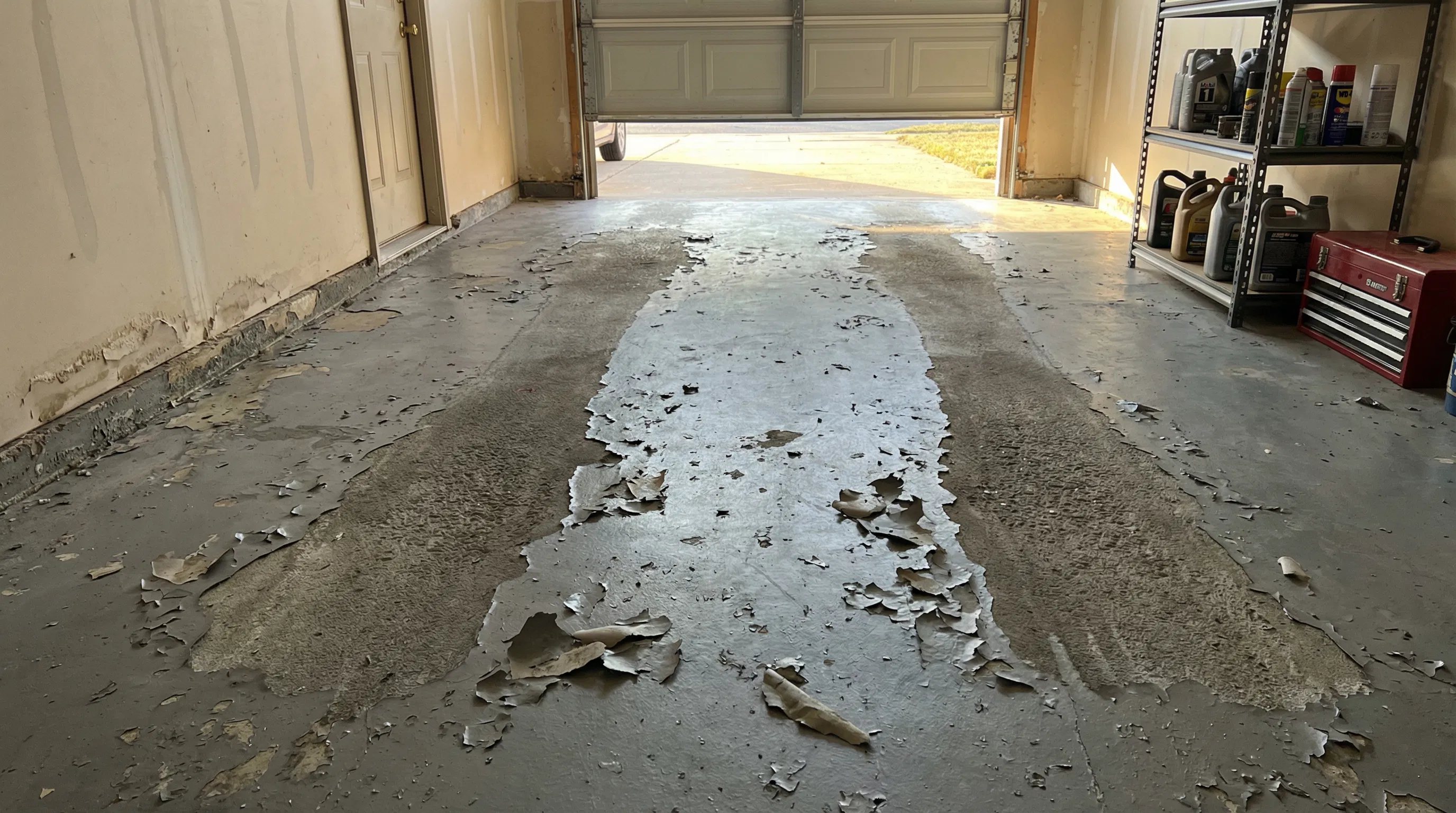
Concrete paint looks like a budget-friendly solution on the shelf but what happens after installation tells a different story.
Concrete floor paint, whether latex, acrylic, or even those "epoxy-fortified" paints sold at home improvement stores, sits on top of the concrete surface as a thin film, typically 2 to 4 mils thick. It bonds through surface adhesion alone, meaning it grips whatever is on the top layer of the slab without penetrating or mechanically locking into the concrete.
That's the root of the problem. A painted garage floor often starts peeling within months of regular use:
- Hot tire pickup, especially after a summer drive through Charlotte traffic, creates enough heat and friction with the tires to lift paint off the surface in patches
- Moisture vapor rising through the slab from below pushes the film loose from underneath
- Road salt, oil drips, and cleaning chemicals break down the thin coating faster than most homeowners expect
The result is a floor that looks worse than bare concrete within a year or two of application.
What Makes Epoxy a Different Category

Concrete paint and professional epoxy don't just perform differently. They're built on entirely different principles.
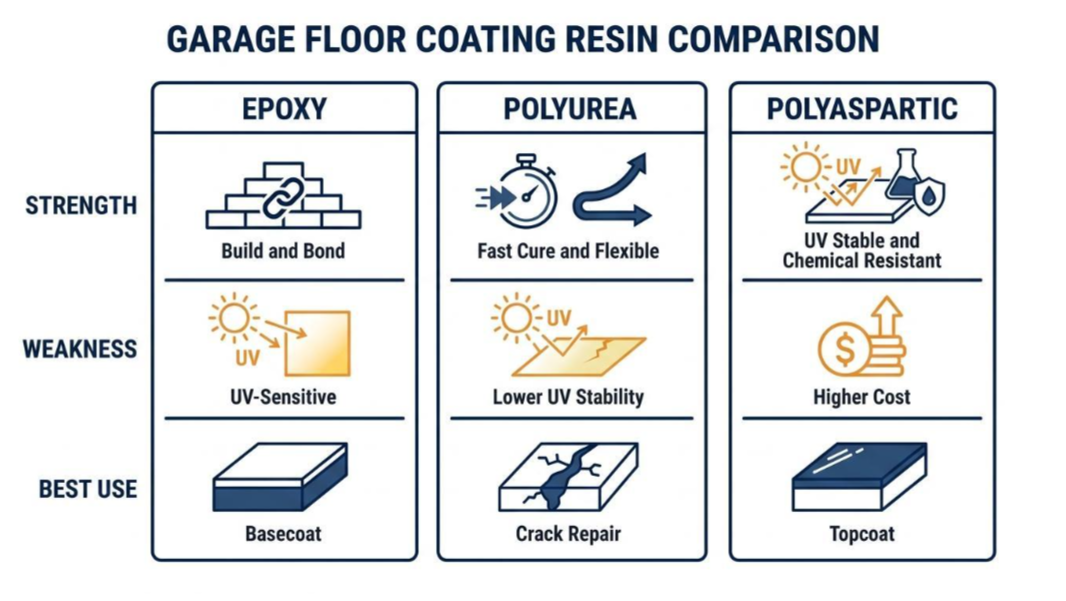
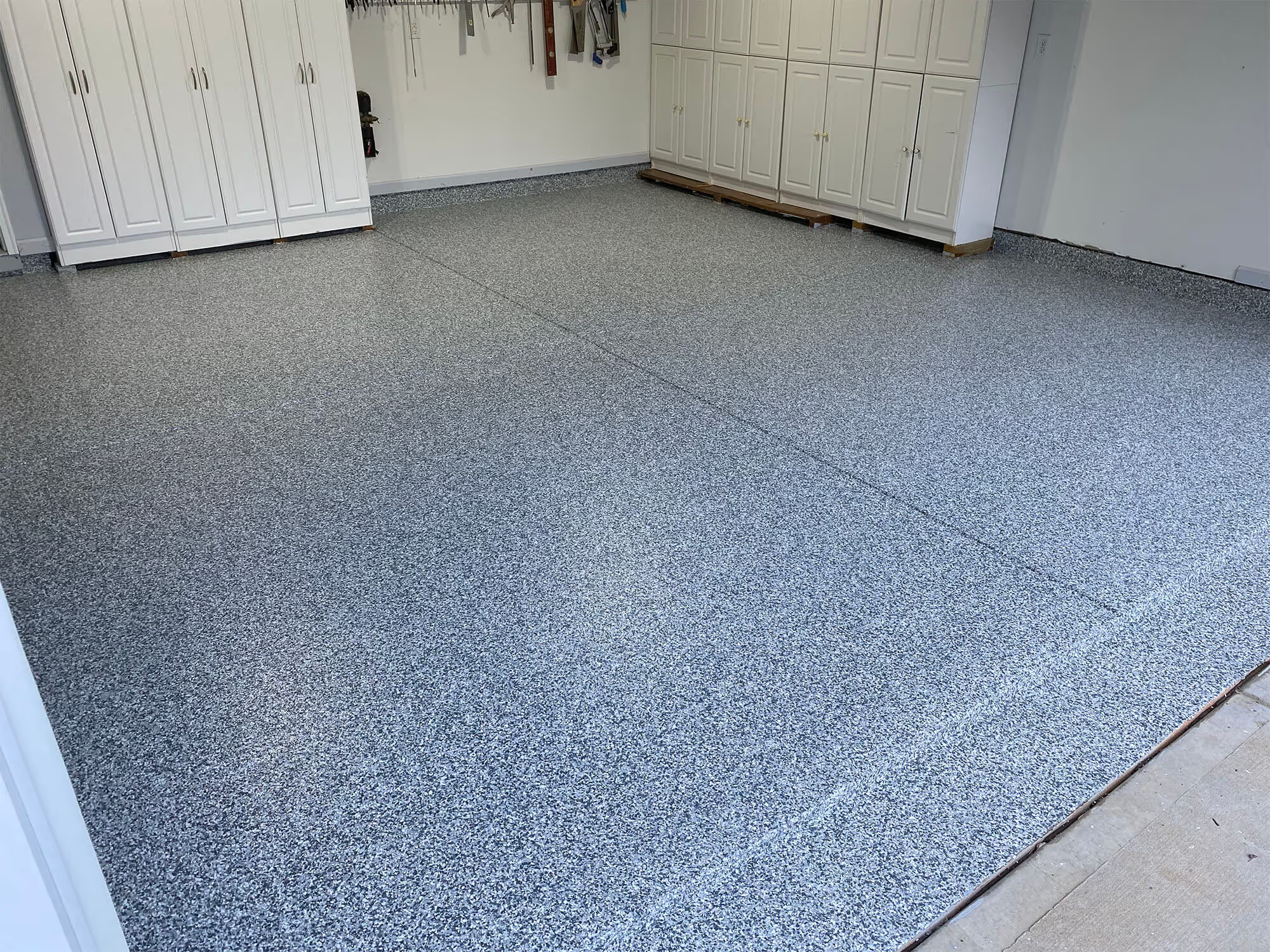
Titan Garage Floors' epoxy flake system starts with diamond grinding, mechanically profiling the concrete surface to open its pores and remove every contaminant. This creates a surface the epoxy can penetrate and grip, not just sit on top of. The high-build epoxy basecoat that follows is 10 to 20 times thicker than concrete paint. A full broadcast of quarter-inch vinyl flakes adds texture and impact resistance, while the polyaspartic urethane topcoat (a fast-curing, UV-stable clear seal) locks the entire system together.
The finished floor is non-porous, chemically resistant, and mechanically bonded to the slab. Where paint peels, professional epoxy is far less likely to separate because the bond extends into the concrete, not just onto it. Every installation comes with a 15-year warranty and is completed in a single day.
The Charlotte Factor—Heat, Humidity, and Daily Use
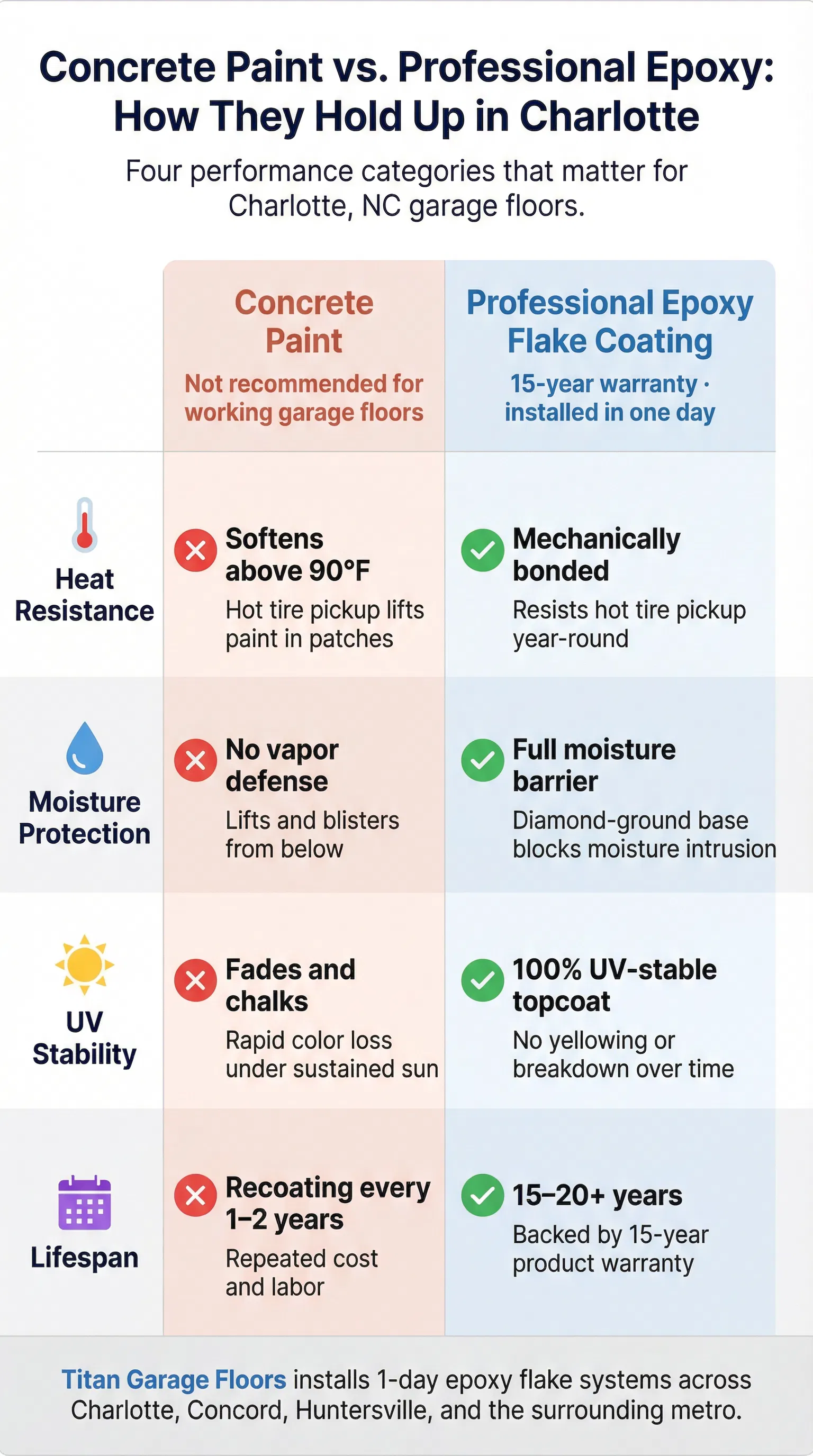
Charlotte's climate doesn't just shorten the life of concrete paint. It exposes every weakness in the product within the first season.
Heat
Summer heat softens thin paint films. When temperatures push above 90°F and a hot car parks on a freshly painted floor, the result is hot tire pickup. The paint can bond to the tire and peel away when the car leaves. This is a common outcome with paint-grade floor coatings in Charlotte's summer conditions.
Humidity
Humidity compounds the issue. North Carolina's summer humidity regularly exceeds 70%, and that moisture migrates through concrete slabs from below. Professional epoxy systems perform better under these conditions because diamond grinding creates a true surface profile for bonding, while the sealed topcoat helps protect against moisture intrusion. Paint has no defense against moisture vapor; it simply lifts and blisters.
UV Exposure
Garage floors exposed to direct sun through open doors also face UV degradation. Paint fades and chalks under sustained exposure. Titan's polyaspartic topcoat is 100% UV stable—no yellowing and no breakdown, regardless of how often the garage door stays open.
When Paint Might Make Sense (and When It Doesn't)
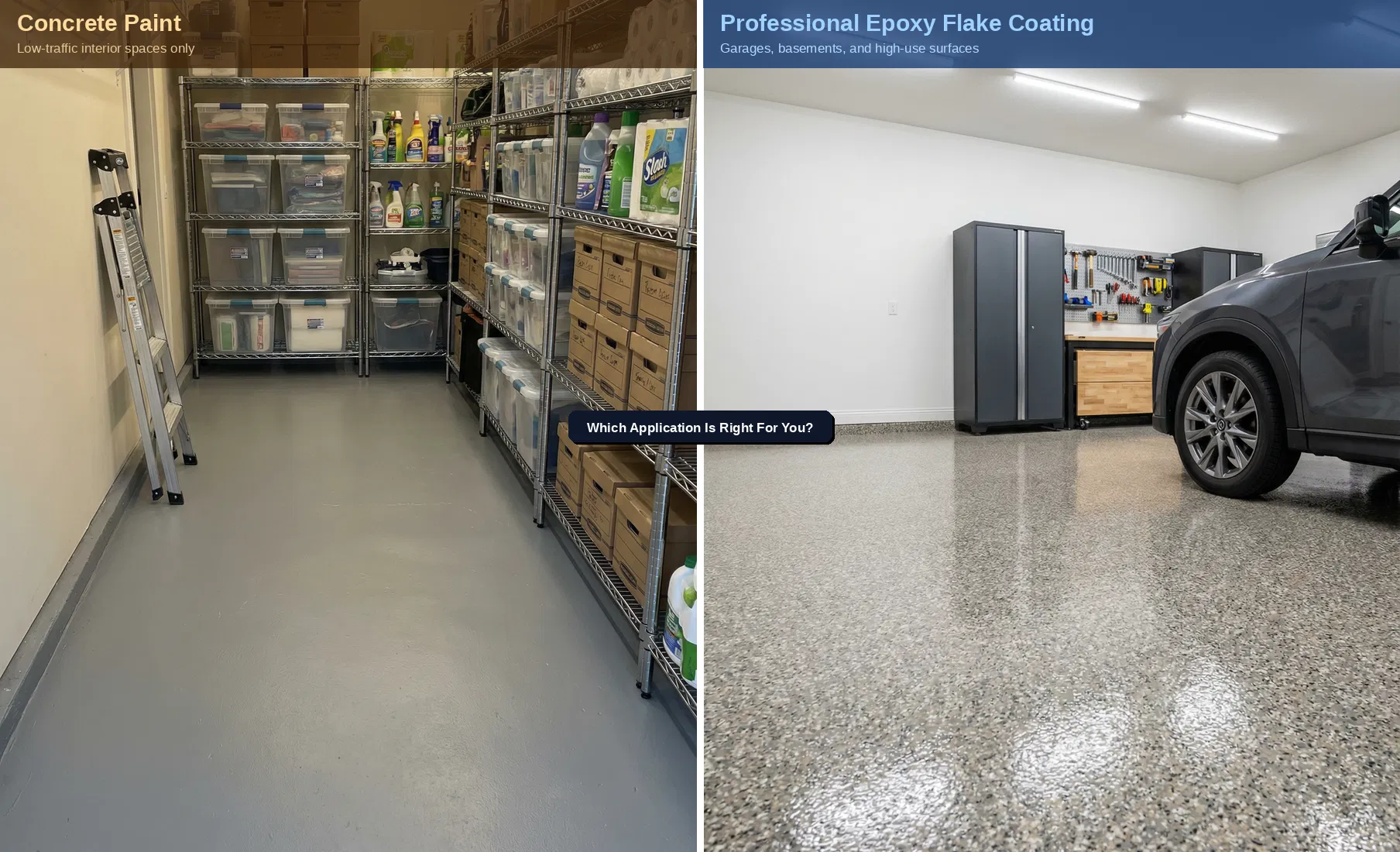
Concrete paint isn't always the wrong answer, but the situations where it works are fewer than most people realize.
There are limited cases where concrete paint is a reasonable choice: low-traffic interior surfaces like a utility closet or a storage area that never sees moisture, chemicals, or heat. For those applications, a quality concrete paint offers cosmetic improvement at a low initial cost.
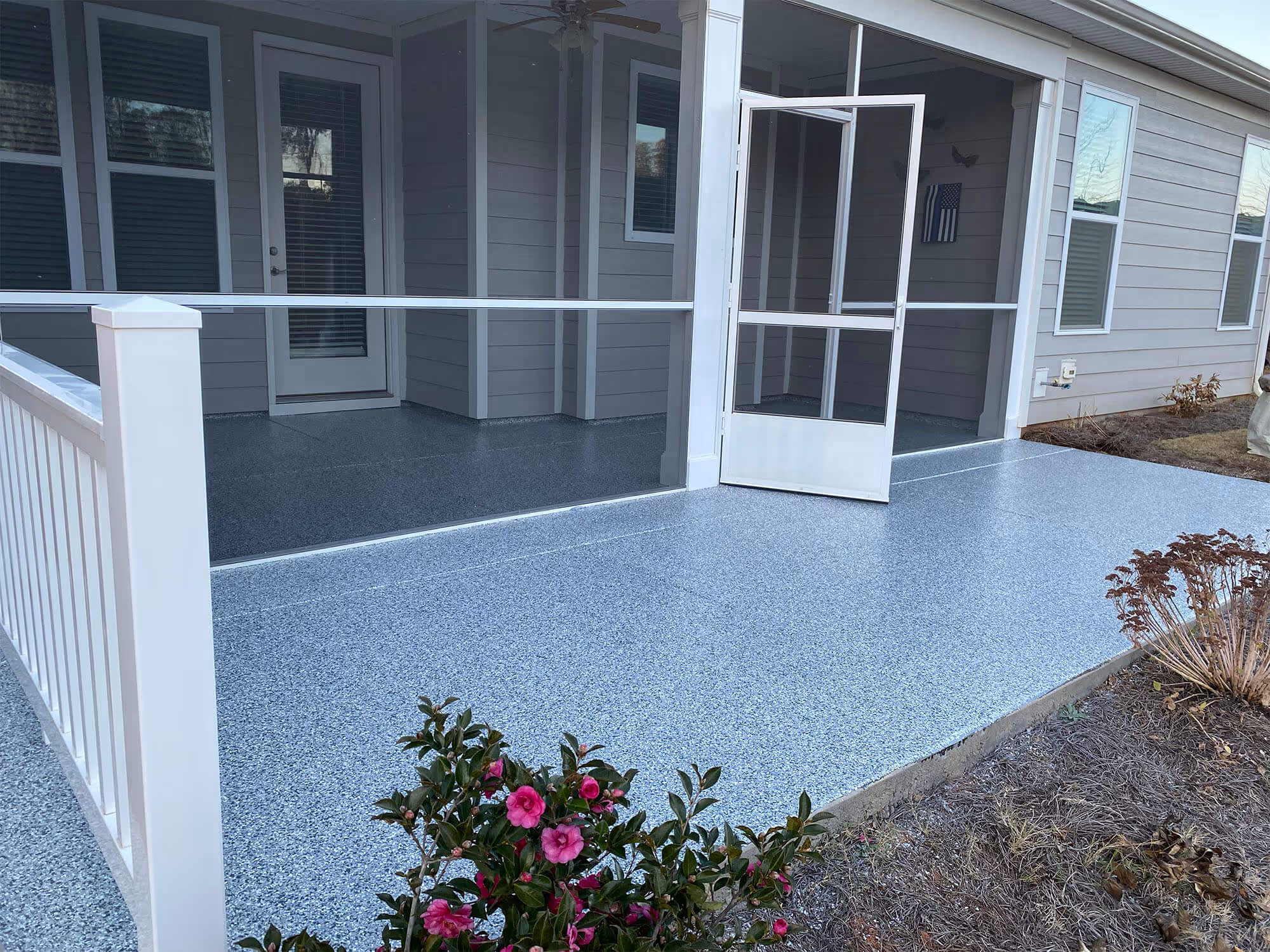
For any surface that functions as a working floor, such as garages, basements, patios, and driveways, paint isn’t engineered to perform. The cost difference between a can of concrete paint and a professional epoxy installation is real, but so is the difference in how long each lasts.
Most painted garage floors need recoating every one to two years. A professionally installed epoxy system lasts over a decade with minimal maintenance beyond basic cleaning. For Charlotte homeowners who want a floor that handles heat, humidity, and daily vehicle traffic without breaking down, that difference is exactly why professional epoxy is worth the investment. Titan Garage Floors installs durable 1-day epoxy flake systems for homeowners across Charlotte, Concord, Huntersville, and the surrounding metro.
Titan Garage: Choose the Coating That Lasts

Concrete paint costs less up front but fails faster and requires reapplication, often multiple times within the lifespan of a single professional epoxy system. For Charlotte homeowners ready to invest once and move on, Titan Garage Floors provides free estimates backed by a 15-year warranty. Call (910) 852-9266 or request a free estimate to get started.