Polyaspartic vs Epoxy Garage Floor Coatings: Pros and Cons
Polyaspartic and epoxy are the two most common professional garage floor coating systems, but they perform differently under Charlotte's heat, humidity, and UV exposure. Epoxy provides a thick, chemical-resistant base layer, while polyaspartic cures faster and resists UV yellowing. Titan Garage Floors uses both on every garage floor installation, layering an epoxy basecoat under a polyaspartic urethane topcoat for long-term durability.
Most homeowners hear "epoxy" and "polyaspartic" as competing choices, but the strongest garage floor systems use them together. Which system handles Charlotte's UV and hot tires better? The comparison below settles it for both.
How Epoxy and Polyaspartic Coatings Differ
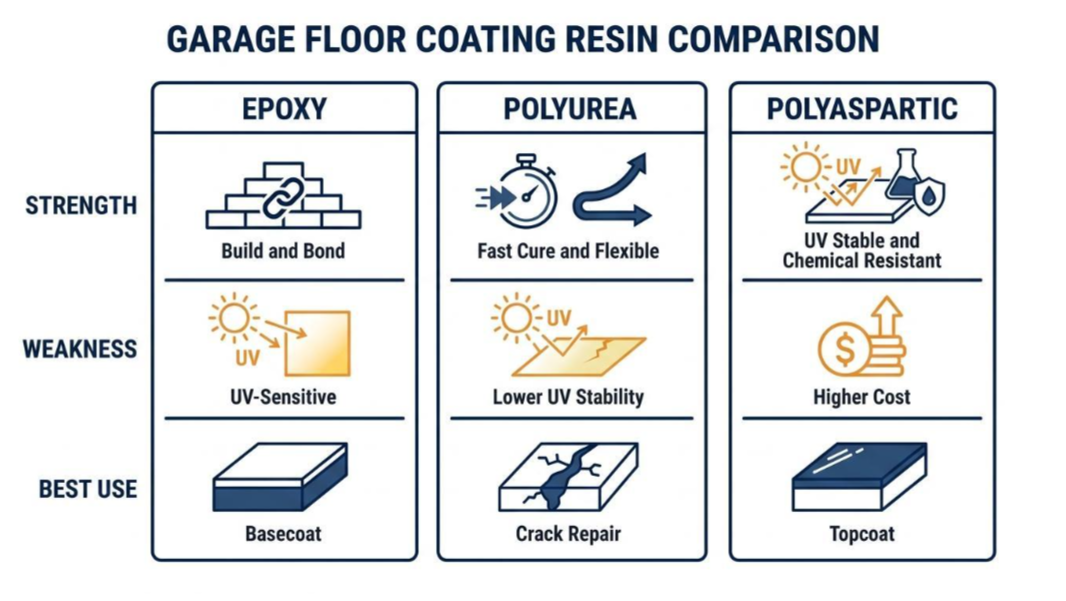
Epoxy is a two-part resin that cures through a chemical reaction between a resin and a hardener. It creates a hard, thick film that bonds to concrete through mechanical adhesion after diamond grinding. Cure time for a full epoxy system is typically 24 to 72 hours before the floor can handle vehicle traffic. That thickness is what gives epoxy its chemical resistance and impact absorption.
Polyaspartic is a type of polyurea coating that cures much faster, often within a few hours. It's thinner than epoxy but harder and more flexible once cured. Polyaspartic coatings are 100% UV stable, meaning they won't yellow or degrade under direct sunlight. This matters in Charlotte, where garages with south-facing doors get year-round UV exposure. The fast cure also means less downtime for homeowners who need their garage back the same day.
Durability and Performance in Charlotte's Climate
When comparing the long-term durability and performance of epoxy vs. polyaspartic in a climate like Charlotte's, two critical factors emerge: UV resistance and hot tire performance.
UV Resistance
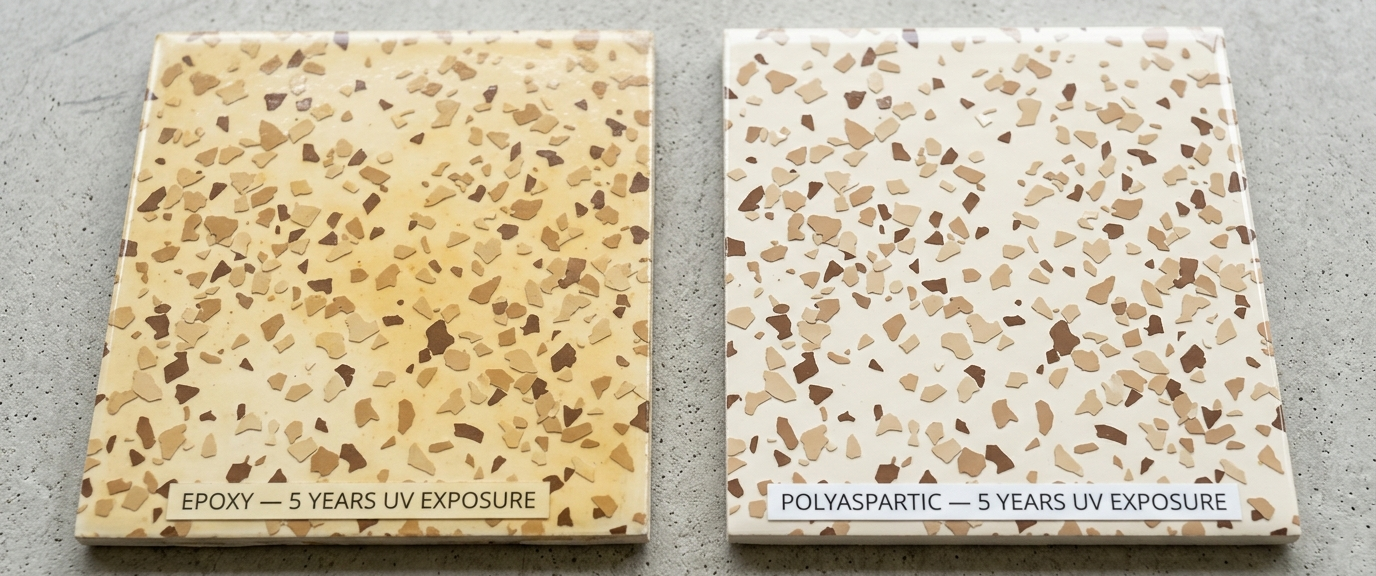
Standard epoxy yellows when exposed to UV light over time. In a Charlotte garage with the door open regularly, a standalone epoxy floor can start showing discoloration within one to three years. Polyaspartic topcoats resist UV degradation entirely, which is why professional installers apply polyaspartic as the final layer over the epoxy base.
Hot Tire Performance
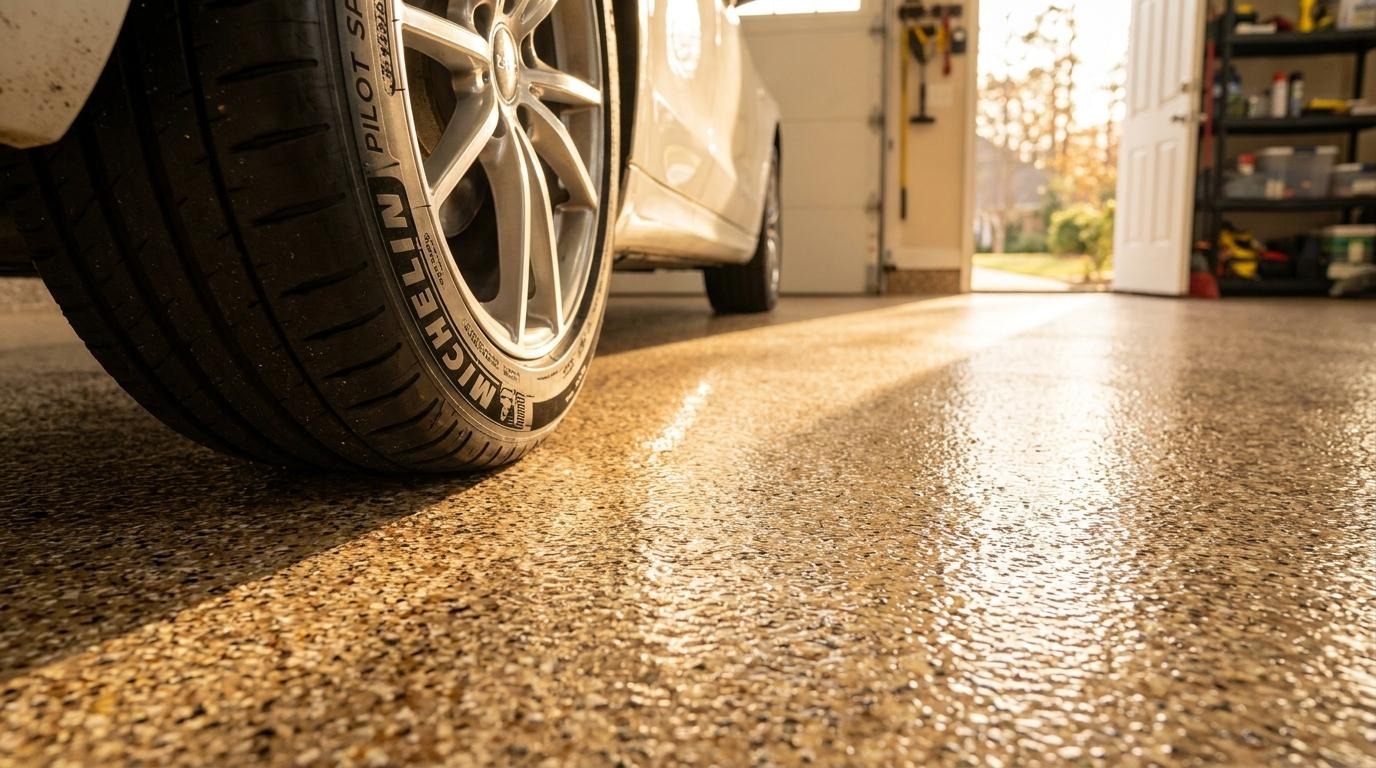
Charlotte summers push pavement and tire temperatures well above 150 degrees. A car parked on a pure epoxy floor after a summer drive can soften the surface and create hot tire pick-up. Polyaspartic topcoats stay rigid at higher temperatures and prevent this. Titan Garage Floors applies polyaspartic urethane as the topcoat on every residential and commercial installation specifically to handle Carolina heat.
Cost Comparison for a Charlotte Garage
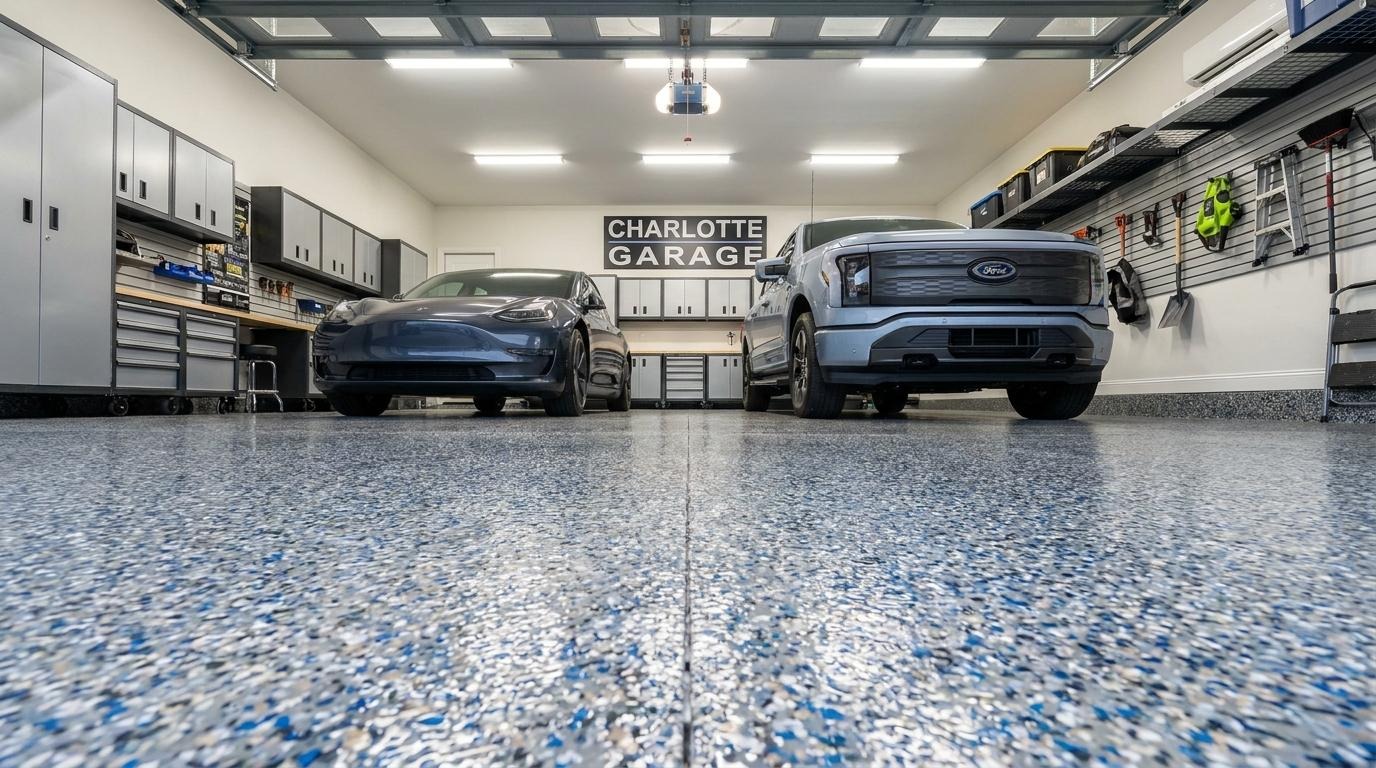
A standalone epoxy system typically costs $3 to $7 per square foot installed. A polyaspartic-only system runs $4 to $12 per square foot. For a standard two-car garage of 400 to 500 square feet, that puts an epoxy-only job at roughly $1,200 to $3,500 and a polyaspartic-only job at $1,600 to $6,000. The price gap narrows when you factor in longevity and reduced maintenance over a 15-year span.
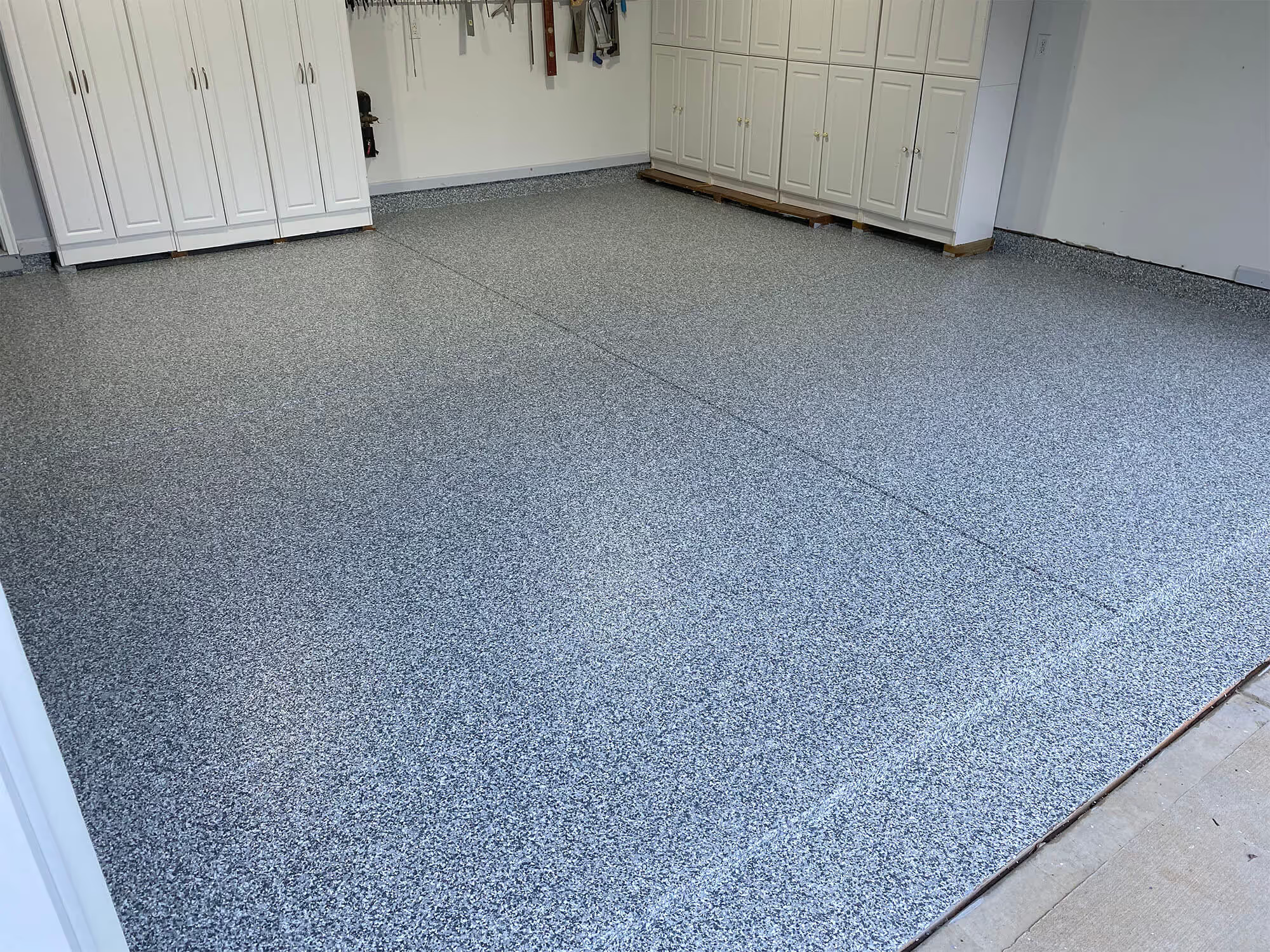
The hybrid system Titan installs, an epoxy basecoat with a polyaspartic topcoat, falls in the mid-range of professional coatings. You get the chemical resistance and thickness of epoxy where it matters most, at the concrete bond line, and the UV stability and hot tire resistance of polyaspartic where it matters most, at the surface. Homeowners across Concord, Harrisburg, and the surrounding Charlotte metro get the same system and the same 15-year warranty regardless of location.
Frequently Asked Questions
Is polyaspartic better than epoxy for garage floors?
Polyaspartic is better than epoxy as a topcoat because it resists UV yellowing and hot tire pick-up, two problems that standalone epoxy systems face in warm climates like Charlotte. Epoxy is better as a basecoat because it builds a thicker, more chemical-resistant bond to the concrete. The strongest systems use both together rather than choosing one over the other.
How long does a polyaspartic garage floor last?
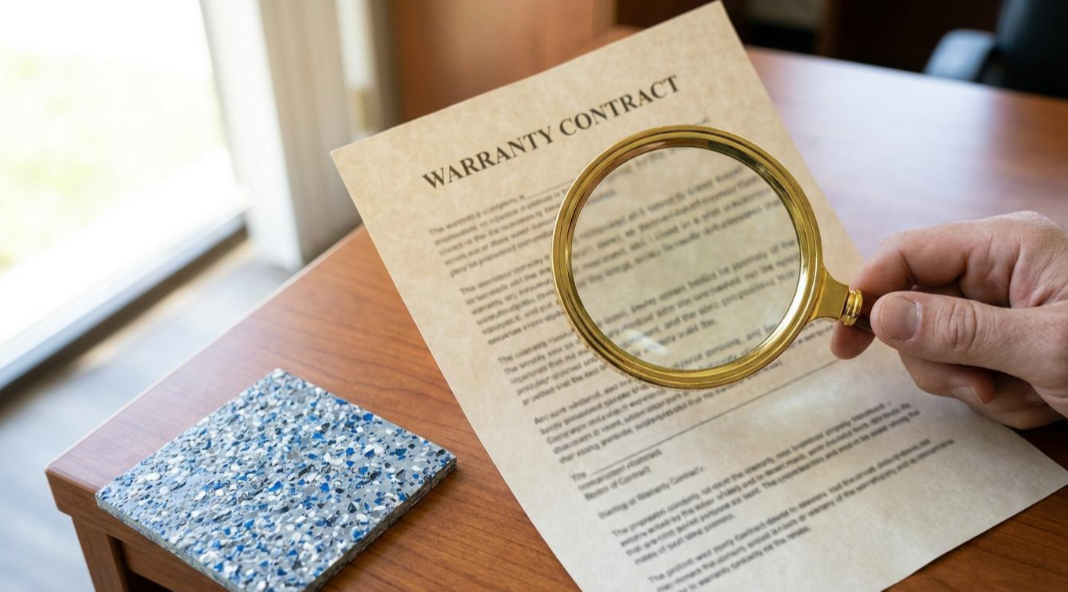
A professionally installed polyaspartic garage floor typically lasts 10 to 20 years with proper surface preparation and maintenance. Titan Garage Floors backs its epoxy-plus-polyaspartic system with a 15-year warranty. Lifespan depends heavily on the quality of diamond grinding and crack repair before the coating goes down.
Can you apply polyaspartic over an existing epoxy floor?
You can apply polyaspartic over an existing epoxy floor if the epoxy is in good condition, fully adhered, and lightly abraded to accept the new topcoat. If the existing epoxy is peeling, bubbling, or delaminating, it needs to be fully removed by diamond grinding before a new system goes down. Applying polyaspartic over a failing epoxy traps the problem underneath.
Combine the Strengths of Epoxy and Polyaspartic
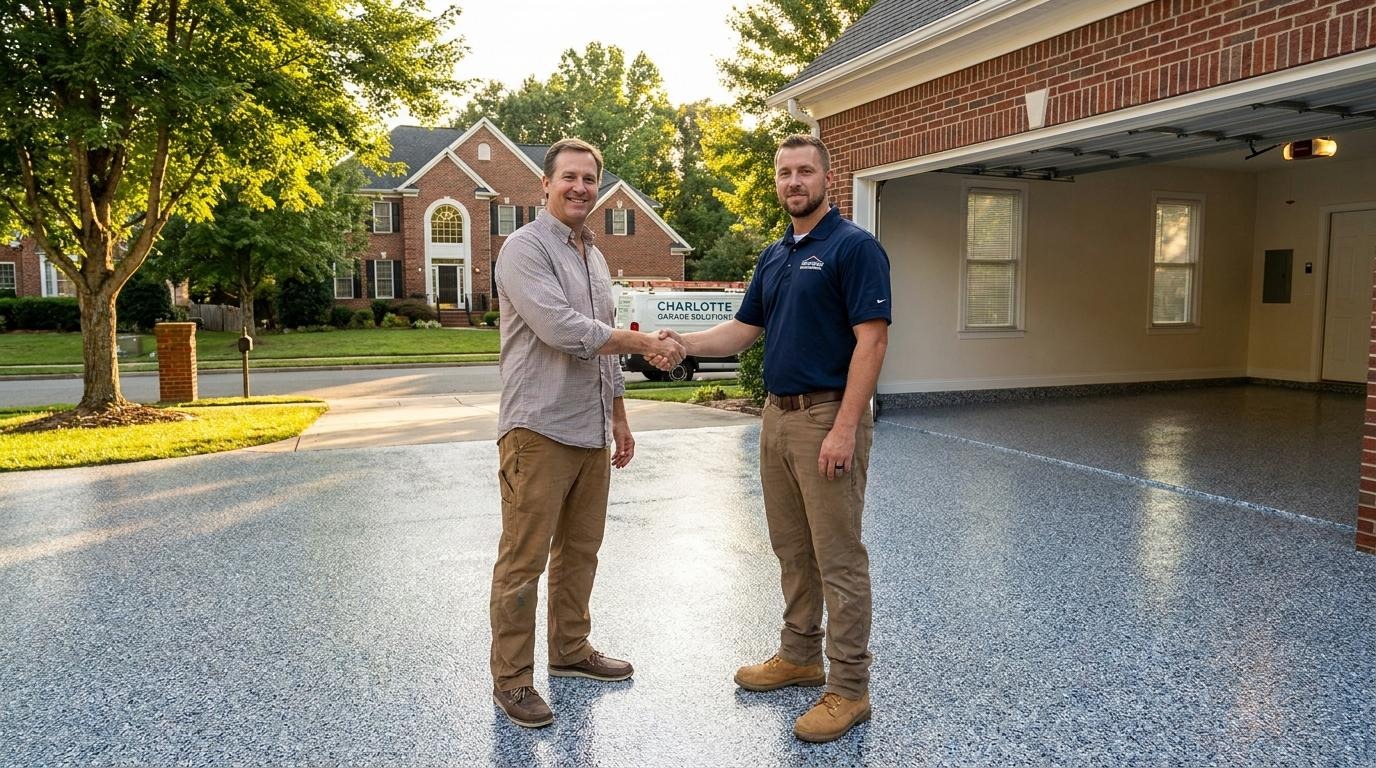
Epoxy and polyaspartic each handle one half of the job a Charlotte garage actually demands. The epoxy basecoat bonds into the concrete after diamond grinding and builds the chemical resistance, impact absorption, and thickness that a thin standalone topcoat can't match. The polyaspartic topcoat takes over from there, holding its color through years of UV exposure and staying rigid under hot tires. Neither coating fills both roles on its own. The professional system layers them, and that's how a garage floor lasts 15 years instead of three.
Titan Garage Floors installs the epoxy-plus-polyaspartic system across Charlotte, Concord, Harrisburg, and the surrounding metro, with a 15-year warranty on every job. Call (910) 852-9266 or request a free estimate online.