How to Compare Garage Floor Coating Quotes in the Charlotte Metro Area
Two garage floor coating quotes can look similar on paper and still describe completely different jobs. Before you compare any bottom-line number, it helps to know what each estimate actually includes: the measured area, the prep and repair work, the full coating system from base to topcoat, and the written warranty behind it. This guide walks through what to check so homeowners across Charlotte, Concord, Huntersville, Mooresville, Matthews, Fort Mill, and Rock Hill can compare proposals accurately instead of guessing based on price alone.
Match the Scope Before You Match the Price
A price per square foot only means something if two installers are measuring and scoping the job the same way. Local proposals do not always assume the same garage size, and minimum job charges can affect smaller spaces more than larger ones. Some quotes also separate hairline-crack work from larger repairs, or charge extra for joint treatment, perimeter detail, slip-resistant aggregate, or difficult access. Before comparing totals, confirm each quote is based on the same measured square footage, the same included versus optional repair work, and the same number of coating layers.
For more on how square footage and finish choices affect the final number, see our guide on factors affecting epoxy garage floor cost.
Know the Full Coating System You're Being Quoted
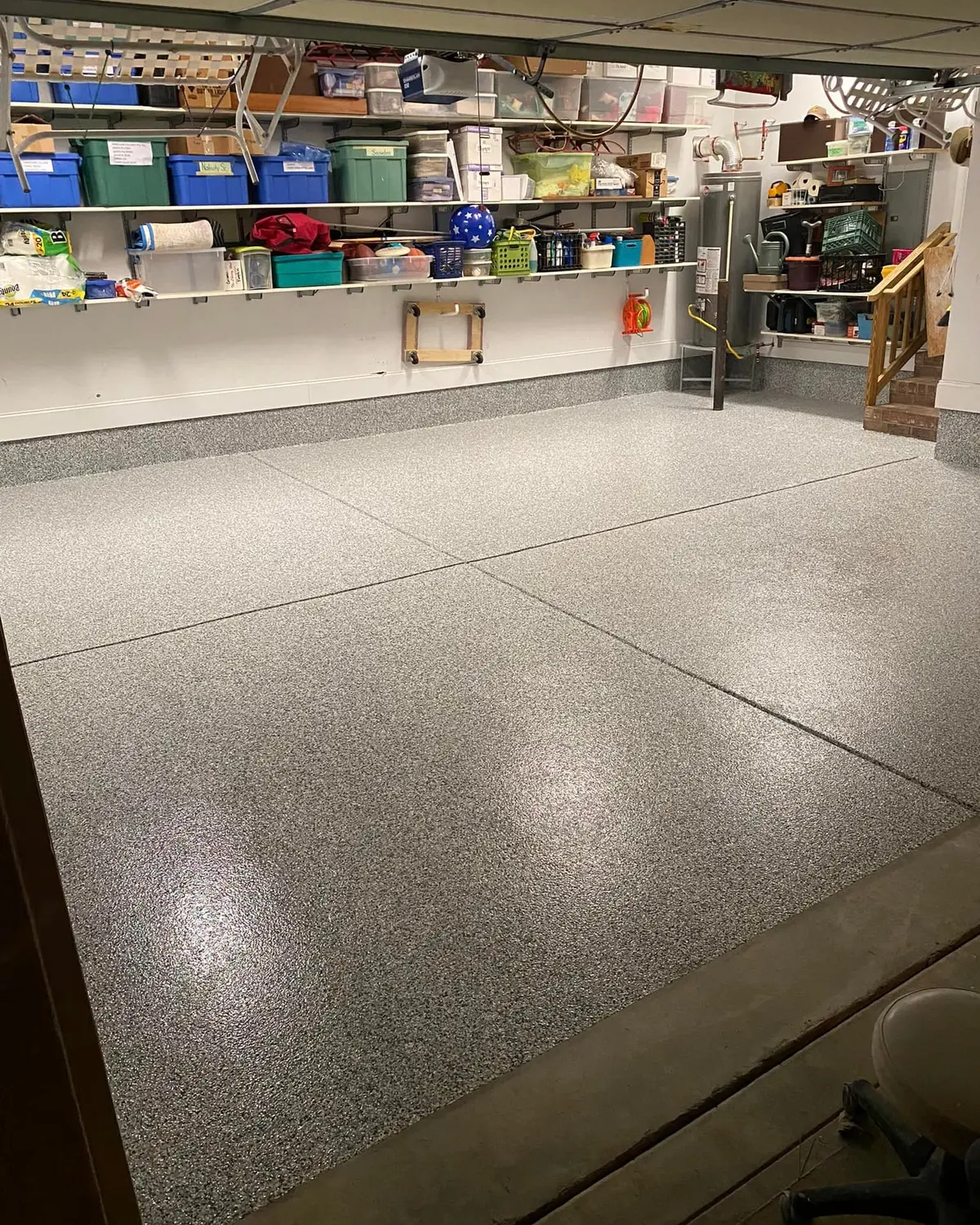
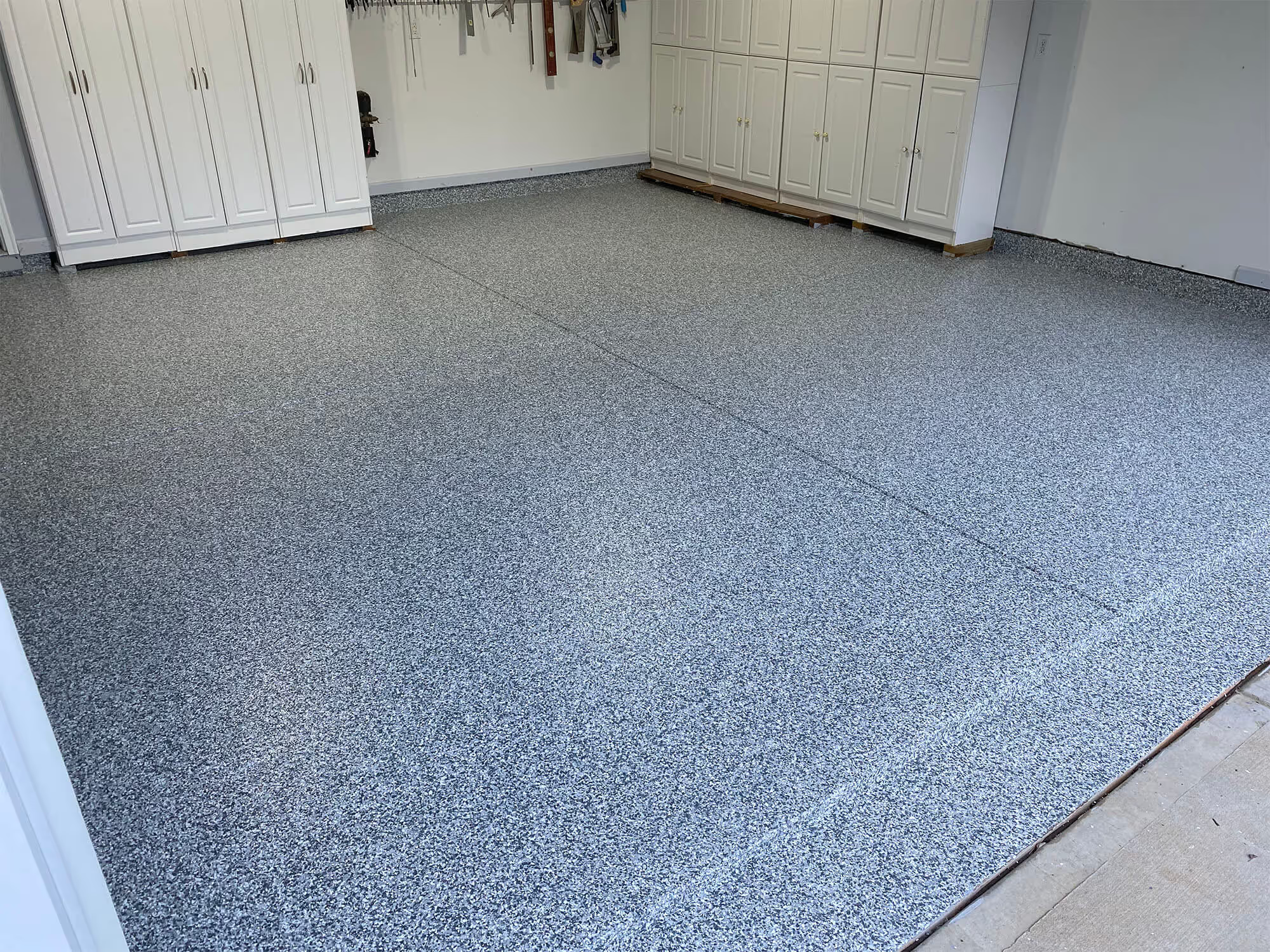
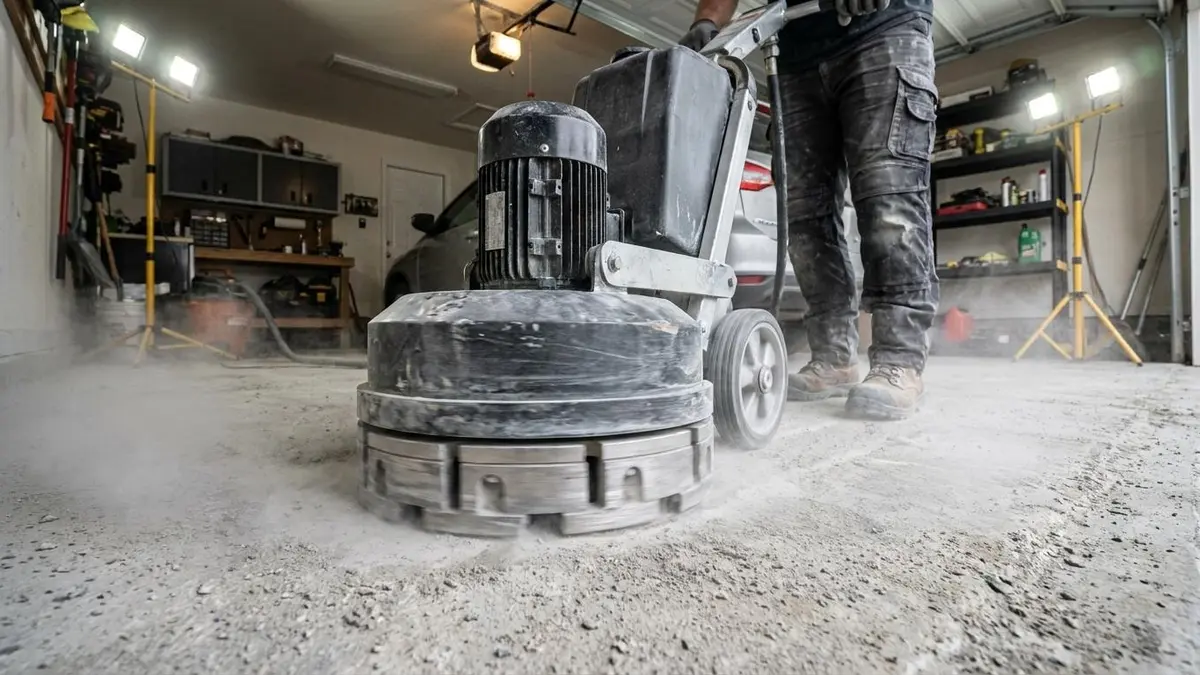
"Epoxy" and "polyaspartic" aren't necessarily competing choices; they can be different layers of the same installed system. On Titan Garage Floors' own installations, the build includes vacuum-attached diamond grinding, crack, divot, and hole repair, an epoxy base coat, a full 1/4-inch flake broadcast, and a UV-stable polyaspartic topcoat. When you request quotes, ask each installer to spell out the complete system in that same level of detail rather than a single material name. Titan also uses a 100% solids, VOC-free epoxy as part of that base coat.
See the full breakdown on our Garage Floor Coatings page to compare what a complete installation should include.
- Measured square footage: A lower rate on a smaller assumed footprint is not actually a lower price.
- Included vs. optional repairs: Joint treatment, perimeter work, and larger cracks are sometimes billed separately.
- Full coating system: Grinding, repair, base coat, flake broadcast, and topcoat should each be specified.
- Moisture testing and contingency: Determines what happens to cost and schedule if slab moisture is out of range.
- Written warranty coverage: Confirms what is actually protected after installation day.
Ask How Preparation and Repairs Are Actually Handled
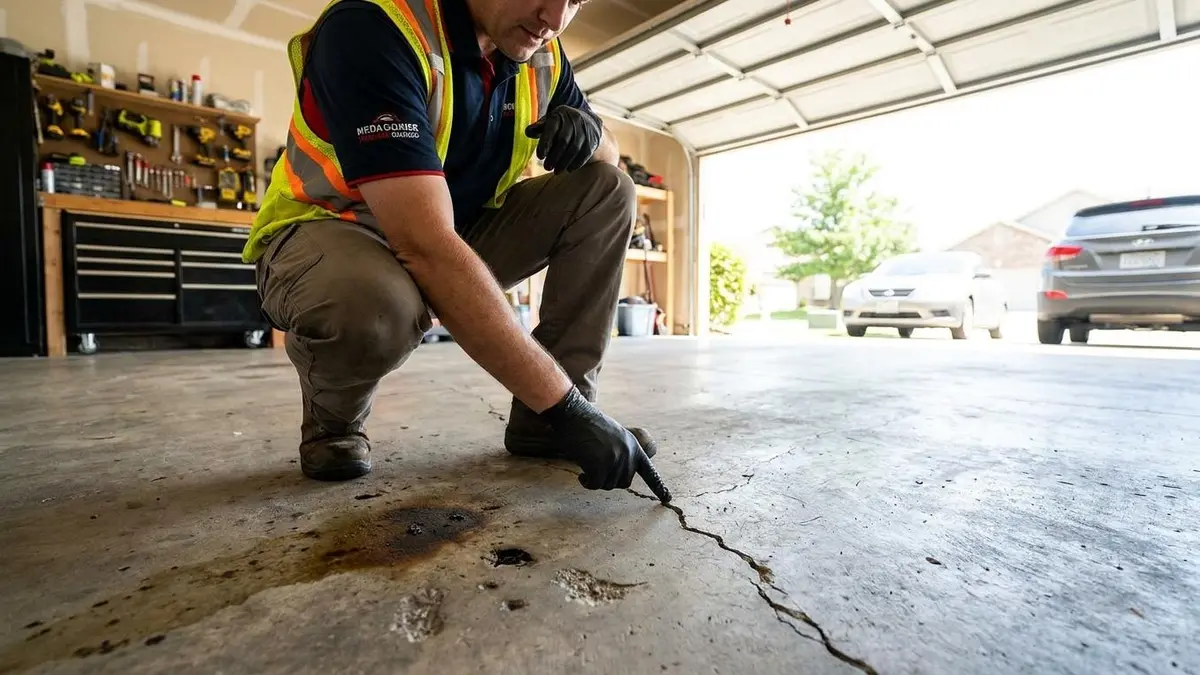
"Surface prep" on a quote can mean very different amounts of work. Proper preparation involves assessing the slab for soundness and contamination, removing any unsuitable concrete, and mechanically preparing the surface to match the coating system being installed, according to Sika's surface preparation guidance. Ask each installer how they handle existing coatings, oil contamination, and damaged areas, and get the answer in writing rather than assuming it matches a competitor's process. If you want to understand your own role in getting the garage ready, our post on preparing your garage before installation covers what to expect on your end.
Understand Moisture Risk Before You Compare Warranties
Excess moisture within a concrete slab can contribute to coating bond failures. Industry guidance from the National Ready Mixed Concrete Association emphasizes evaluating slab moisture against the coating manufacturer's requirements and considering moisture mitigation as a contingency in the project scope, rather than assuming every slab is suitable. Temperature, humidity, and slab condensation can also affect how well a coating bonds and cures, so it is reasonable to ask what weather or slab conditions could change your scheduled installation date. When you compare quotes, ask what happens to the price and timeline if moisture testing does not pass, and whether that outcome is addressed anywhere in writing.
Compare Warranty Terms Line by Line
A warranty length by itself does not tell you much. Titan Garage Floors backs its garage floor installations with a 15-year warranty that includes materials and labor, subject to the applicable written terms. Before choosing a contractor, ask exactly which failures are covered, including whether peeling, delamination, hot tire pickup, yellowing, or chemical damage are included, and what exclusions apply. A warranty that only states a number of years without these specifics is harder to compare fairly.
Separate "Installation Complete" From "Floor Ready to Use"
Installation day, light foot traffic, and full cure are different milestones, and they do not happen on the same timeline. Product documentation for polyaspartic coatings publishes separate allowances for each stage and notes that environmental conditions can affect curing time. Rather than accepting a general one-day promise, ask your installer for product-specific instructions on when you can walk on the floor and when you have approval to park or load a vehicle on it.
Get a Clear, Comparable Quote From Titan Garage Floors
Titan Garage Floors offers a free epoxy floor estimate for homeowners across the Charlotte Metro area, including Concord, Huntersville, Mooresville, Matthews, Fort Mill, and Rock Hill. Every garage floor installation is backed by a 15-year warranty that includes materials and labor, subject to the written warranty terms. Call (910) 852-9266 to schedule your in-person estimate and get a written proposal you can compare line by line against any other quote.