How Long Does an Epoxy Garage Floor Last?
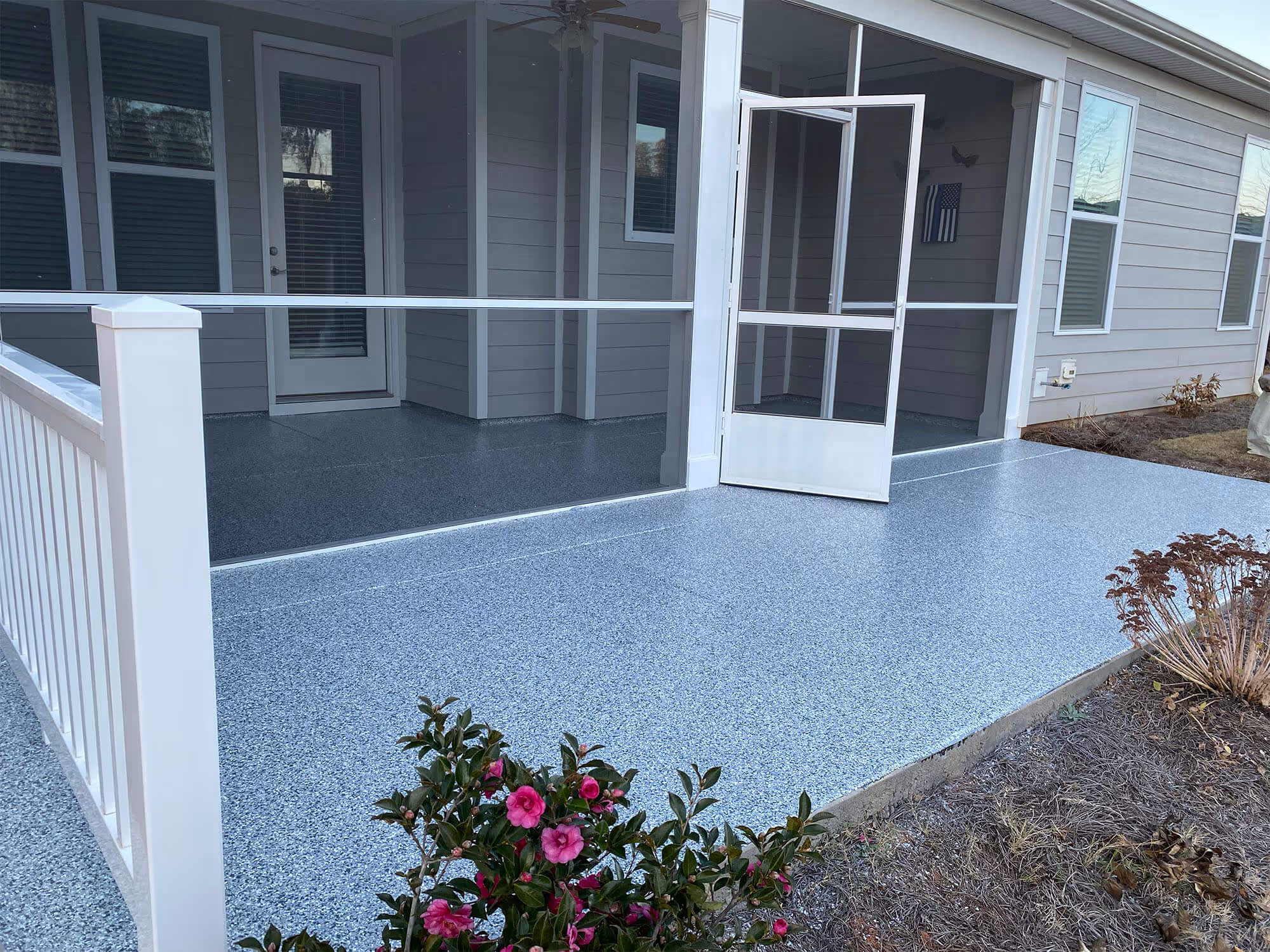
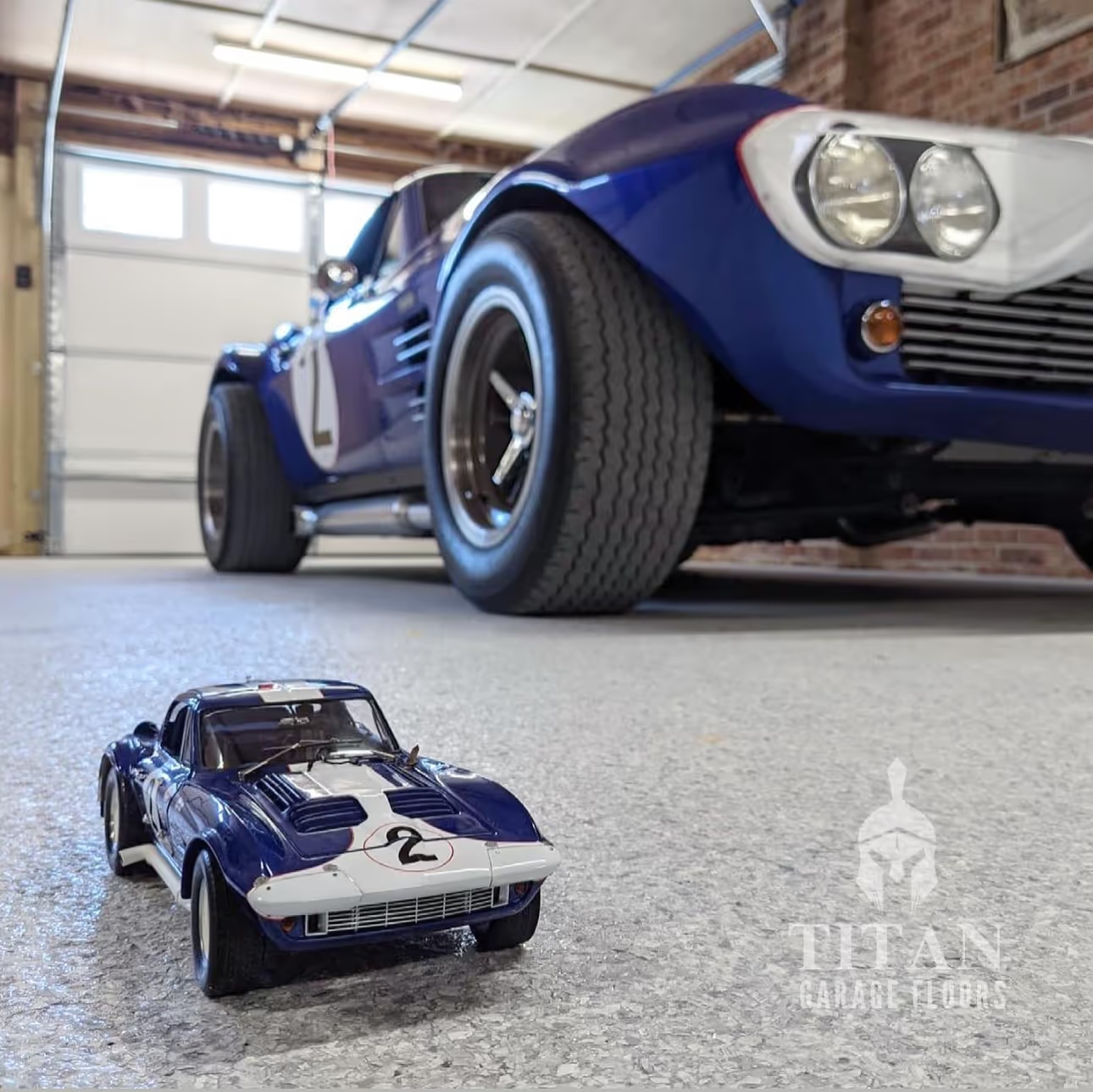
A professionally installed epoxy garage floor typically lasts 10 to 20 years, depending on surface preparation, coating system, and daily wear. DIY epoxy kits from home improvement stores often fail within two to five years. Titan Garage Floors installs diamond-ground, four-layer epoxy garage floor coatings across the Charlotte, NC area, each backed by a 15-year warranty.
Most coating failures show up within the first two years, and almost all of them are DIY kits applied to concrete that was never diamond-ground. A water-based DIY epoxy poured over acid-etched concrete behaves differently than a four-layer professional system bonded into a diamond-ground slab, even though both are sold as "epoxy floor coatings."
In this blog post, we talk about the two factors that decide epoxy floor lifespan, why DIY kits from home improvement stores fail in a few years, and how Charlotte's heat and humidity test garage coatings more than they would in milder climates.
What Determines How Long Your Epoxy Floor Lasts?
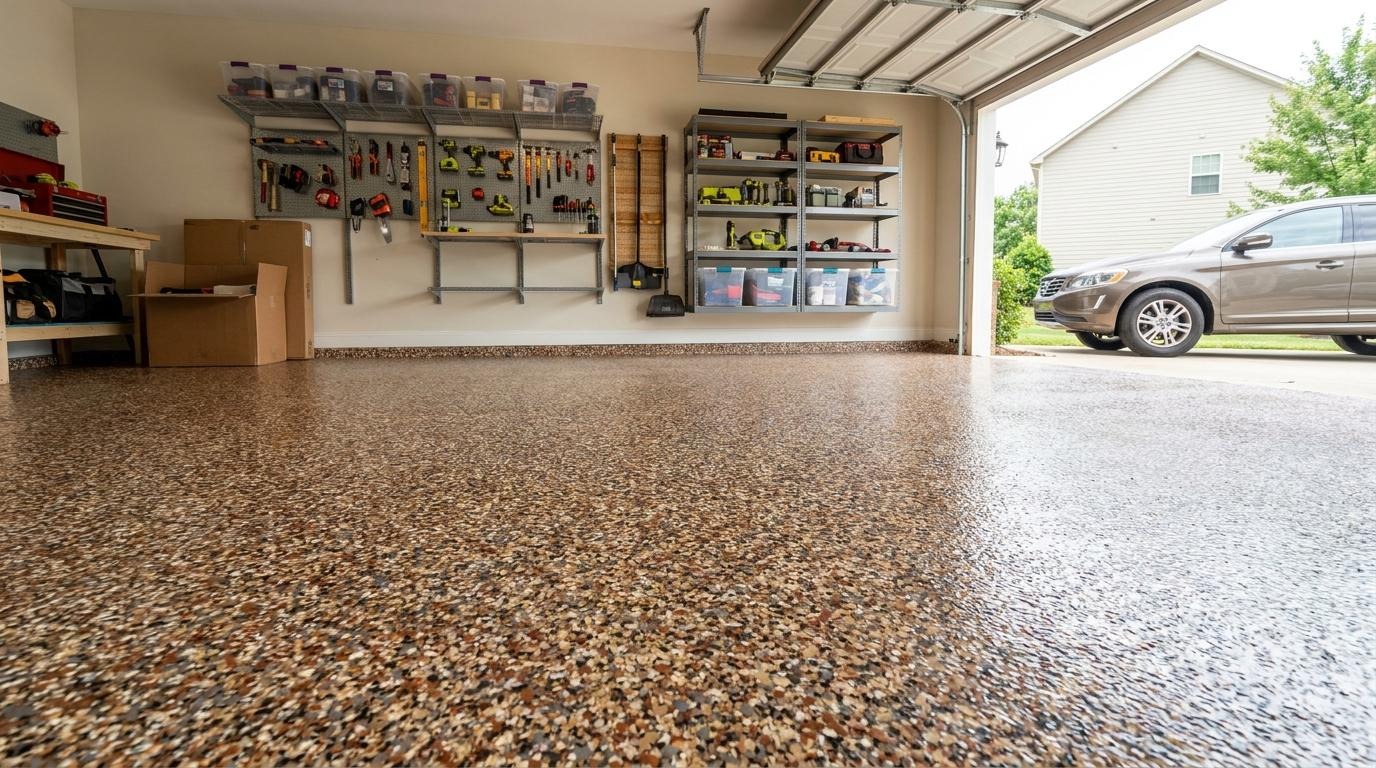
The lifespan of an epoxy garage floor is primarily decided by two key factors: the quality of the surface preparation and the coating system used.
Surface Preparation
Diamond grinding is the single biggest factor in epoxy lifespan. The grinder removes oil, old coatings, and surface contamination while opening the concrete's pores so the epoxy bonds mechanically into the slab. Without proper grinding, even a premium coating sits on top of the concrete instead of locking into it. Moisture vapor from Charlotte's humid summers pushes upward through untreated slabs and separates poorly bonded coatings within months.
Coating System and Thickness
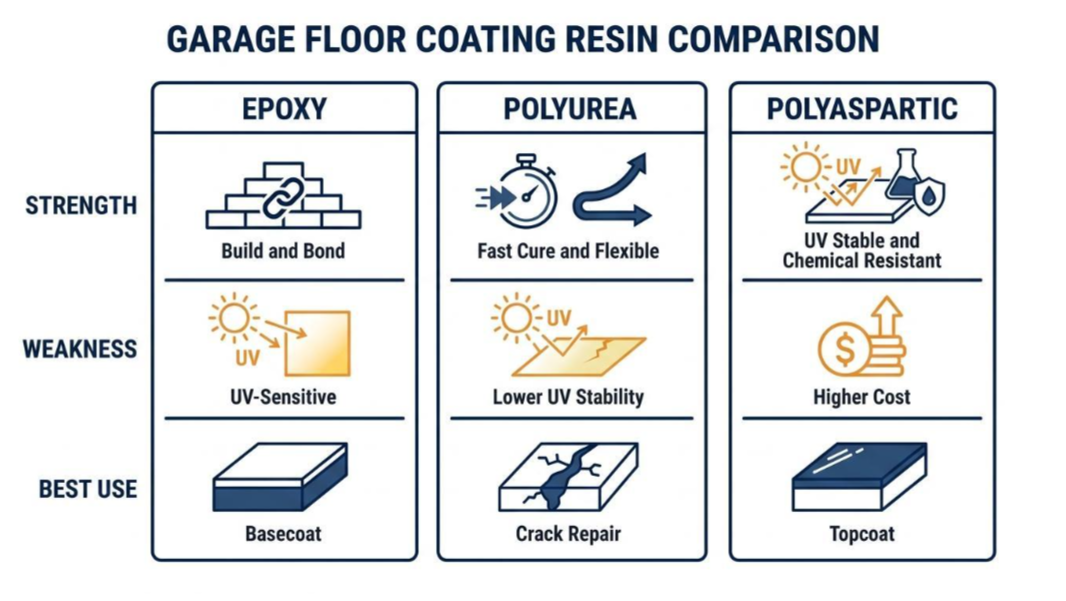
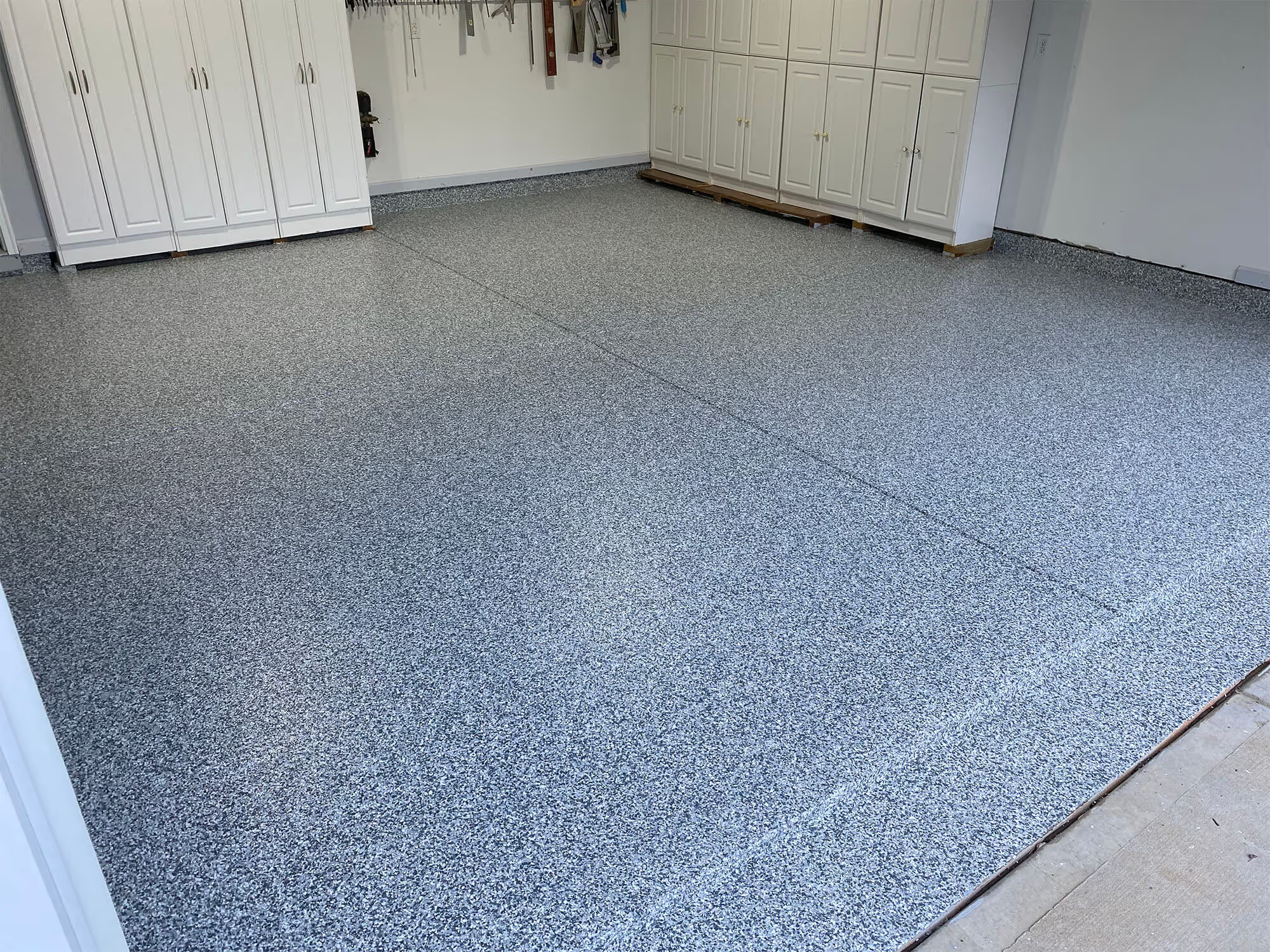
A single-coat from a DIY kit is roughly 3 to 5 mils thick. A professional four-layer system is significantly thicker with a primer, epoxy basecoat, vinyl flake broadcast, and polyaspartic urethane topcoat (a fast-curing, UV-stable protective seal). Thicker coatings absorb more impact, resist chemicals longer, and hold up under daily tire traffic. The polyaspartic topcoat won't yellow on garage floors exposed to direct Charlotte sunlight through open doors.
DIY Epoxy Kits vs Professional Installation
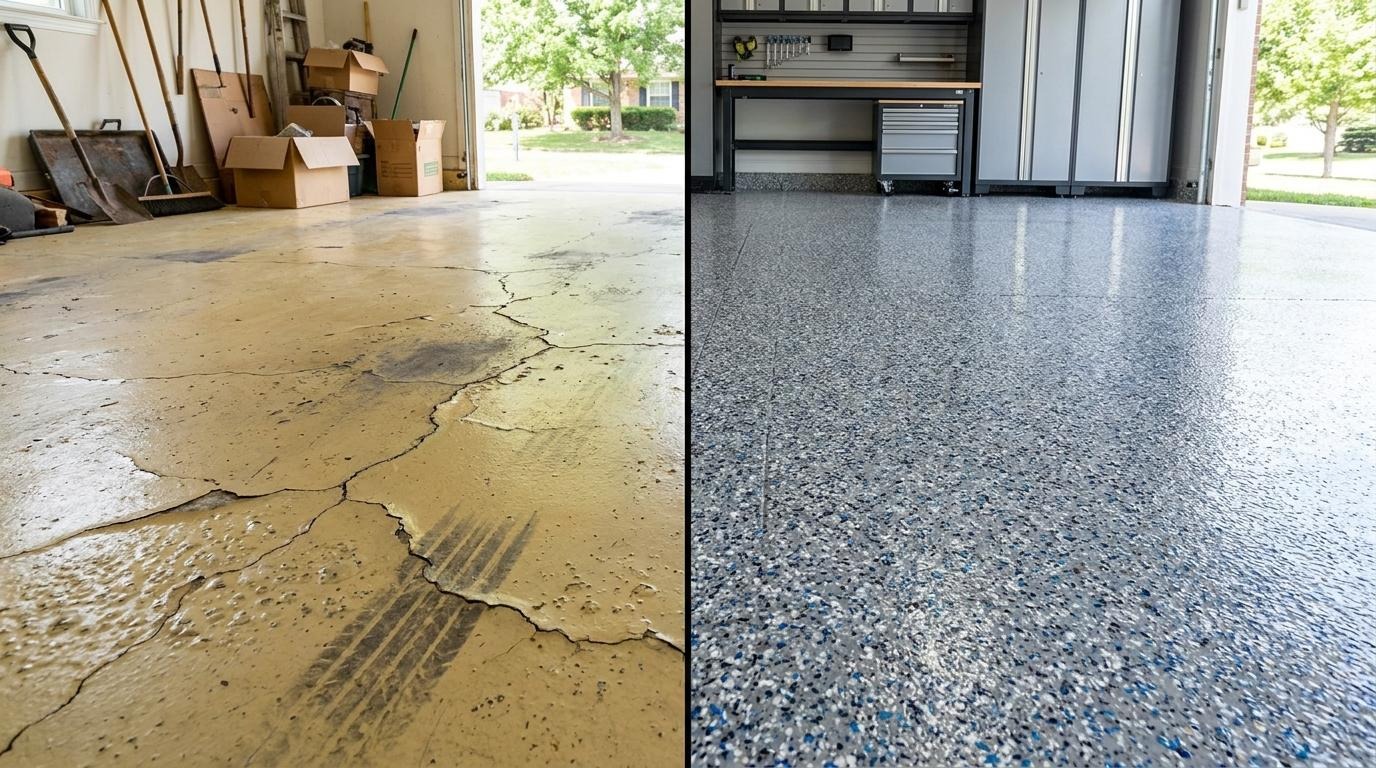
Home improvement store kits cost $50 to $150 per box and typically cover a one-car garage. They use water-based epoxy that cures to a thin film without mechanical bonding to the concrete. Most DIY kits skip diamond grinding entirely, relying on acid etching that doesn't create the surface profile a grinder achieves. The result is a coating resting on the surface rather than anchored into it.
In Charlotte's heat and humidity, the heat from tires softens thin coatings, and the film lifts in sheets. Contractors call this hot tire pick-up, and it's one of the most common complaints from homeowners who tried a DIY kit first. Professional systems resist it because the polyaspartic urethane topcoat stays rigid at temperatures well above what a parked car generates on a 95-degree afternoon. A few simple maintenance habits, like sweeping weekly and parking on a cool slab when possible, keep that topcoat looking new for longer.
How Charlotte's Climate Affects Epoxy Durability
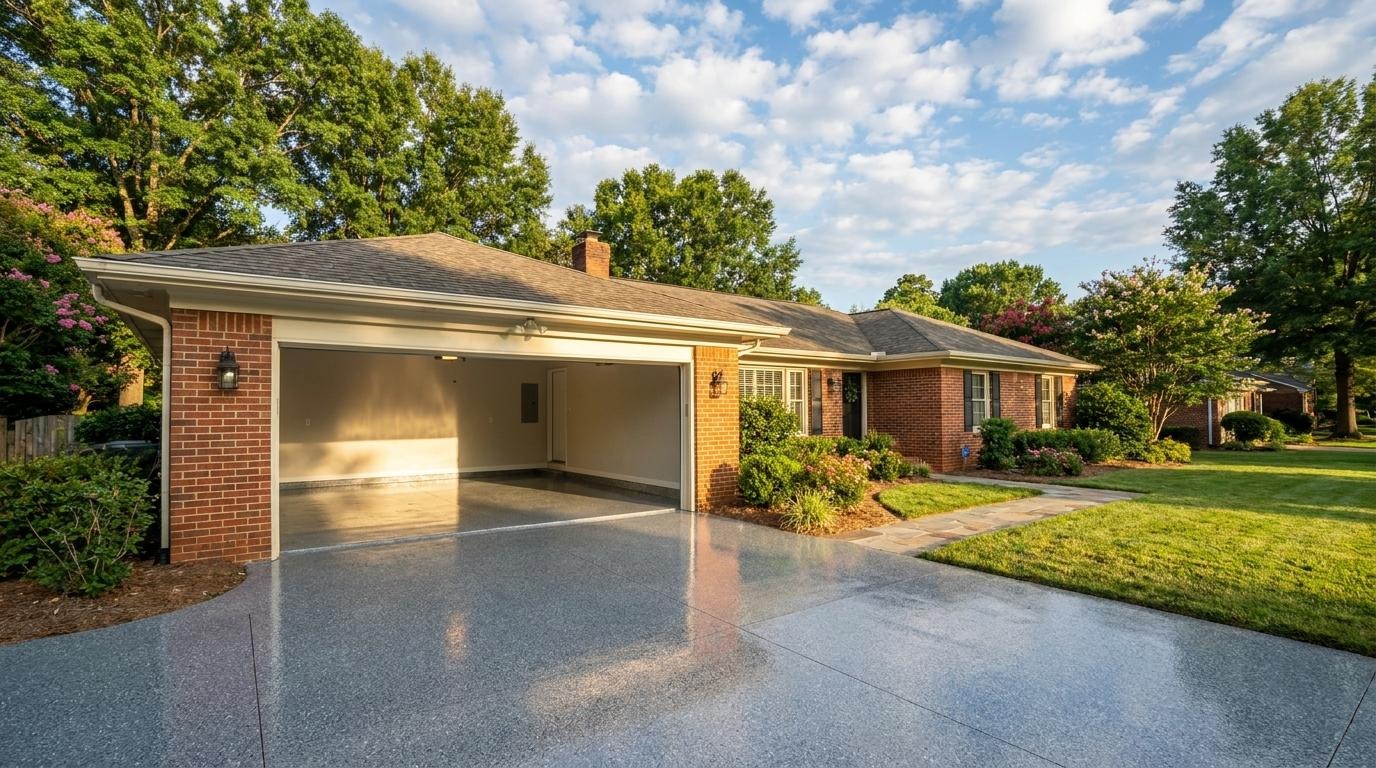
Charlotte sits at roughly 35 degrees north latitude with summer temperatures regularly above 90 degrees and humidity frequently above 70%. That combination tests garage floor coatings harder than moderate climates. UV exposure degrades non-UV-stable topcoats within a few years, turning white or cream-colored floors yellow.
Moisture vapor transmission through concrete slabs increases during humid months, and coatings without a proper mechanical bond lose adhesion from below. A system installed with diamond grinding, crack repair, and a UV-stable polyaspartic topcoat handles these conditions by design. Charlotte-area homeowners in Mooresville, Concord, and the Lake Norman corridor face the same climate stresses, which is why surface prep quality matters more here than in drier regions.
Frequently Asked Questions
Does epoxy flooring last longer than concrete paint?
Professional epoxy flooring outlasts concrete paint by a wide margin in residential garages. Paint sits on top of the concrete surface without a mechanical bond and typically wears through in one to three years under regular vehicle traffic. A four-layer epoxy flake system with a polyaspartic topcoat bonds into the concrete through diamond grinding and commonly lasts 10 to 20 years.
Can you extend the life of an existing epoxy floor?
You can extend an epoxy floor's service life by keeping the surface clean, avoiding harsh chemical cleaners, and recoating the topcoat when it begins to show wear. Titan Garage Floors recommends sweeping weekly and mopping with a pH-neutral cleaner monthly. Promptly cleaning up spills prevents chemical staining that can break down the topcoat prematurely.
How do you know when an epoxy floor needs to be replaced?
An epoxy garage floor needs to be replaced when the coating has worn down to the bare concrete in heavy-traffic spots (like where the tires sit or the bay door entrance), when yellow staining no longer comes up with cleaning, or when the edges of the coating are peeling away from the slab. Small chips in low-traffic areas are cosmetic and don't require a full recoat. Widespread peeling or soft spots under hot tires mean the bond has failed, and a full re-grind and recoat is the most reliable path to another decade of performance.
Your Floor's Lifespan Starts With the Installer You Choose
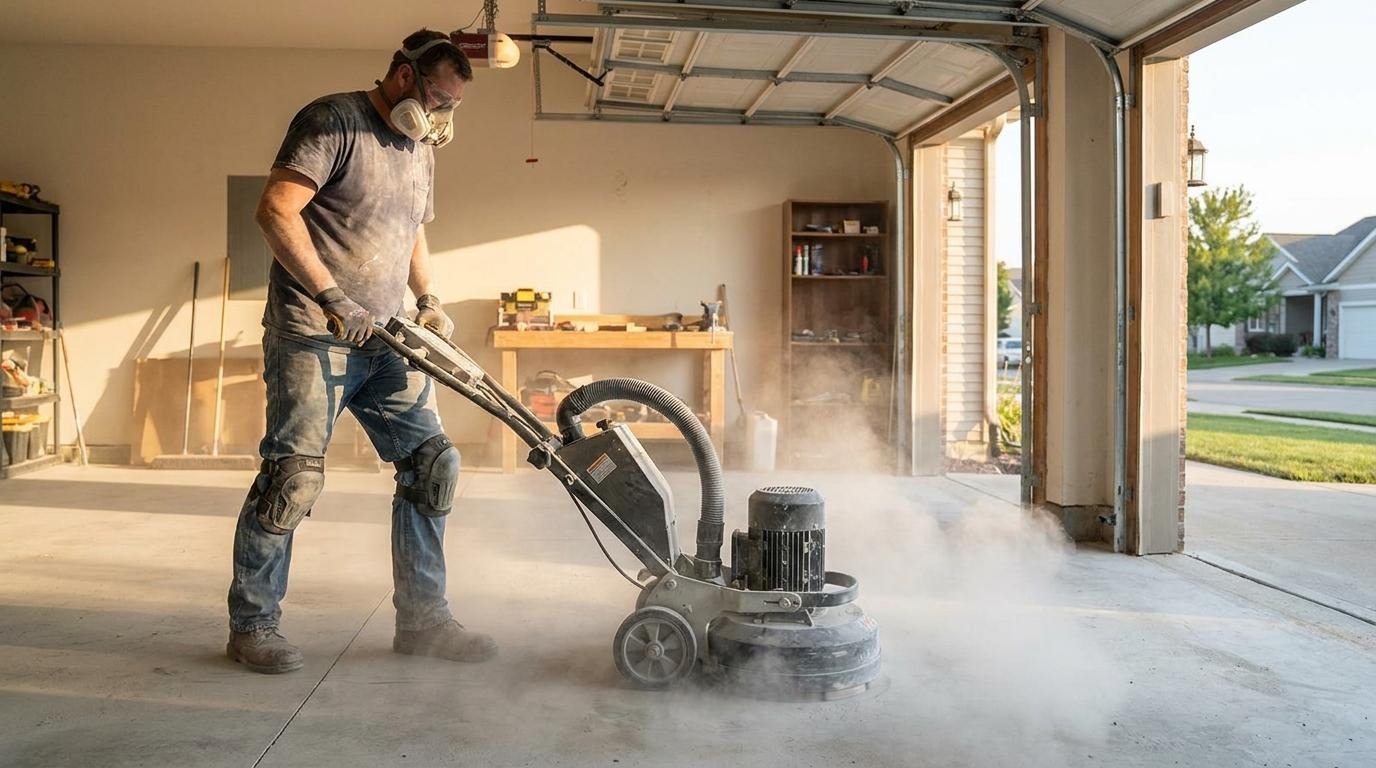
A two-year DIY failure and a fifteen-year professional install usually start with the same kind of concrete slab. What changes the outcome is the work that happens before the first layer of epoxy goes on: diamond grinding, crack repair, and a primer coat that locks the system into the slab. Skip those steps, and even premium materials peel within a couple of summers. Get them right, and a four-layer installation holds up under daily tire traffic, Charlotte humidity, and direct sun for well over a decade.
Titan Garage Floors handles the diamond grinding, crack repair, and four-layer installation across Charlotte, Mooresville, Concord, and the Lake Norman corridor. Call (910) 852-9266 or request a free estimate online.