Looking to Upgrade Your Garage Floors? Here's What to Look for in Garage Floor Coating Reviews
Garage floor coating reviews are useful only when you read past the stars and photos. The details that predict whether a floor reaches its warranty period sit inside the review, often through descriptions that mention prep work, warranty handling, and installer behavior. Titan Garage Floors has installed hundreds of polyaspartic systems across the Charlotte metro and tracks what reviewers consistently flag.
Most online coating reviews focus on appearance and the salesperson. Almost none mention the prep that determined whether the floor was still flat, sealed, and bonded after five years. That gap is why so many homeowners pick the wrong contractor from a five-star review and post their own one-star review eighteen months later. Titan's four-layer epoxy flake floor system is designed around the specific signals reviewers should be checking for. Five details inside the review separate the contractors who deliver from the ones whose floors fail at year two.
Why Star Ratings Don't Tell You Enough

A five-star average tells you a customer was happy at the moment of review. It says nothing about how the floor performed two summers later, whether the warranty was actually honored, or whether the prep work was completed at all. Reviews posted right after install usually read well.
The reviews that matter for predicting longevity; however, are the ones posted a year or more after the job. Most platforms bury those under the volume of recent reviews. That gap is also why hiring a flooring professional matters more than picking whichever company sits in the top ad slot.
The Five Details That Actually Matter in a Review
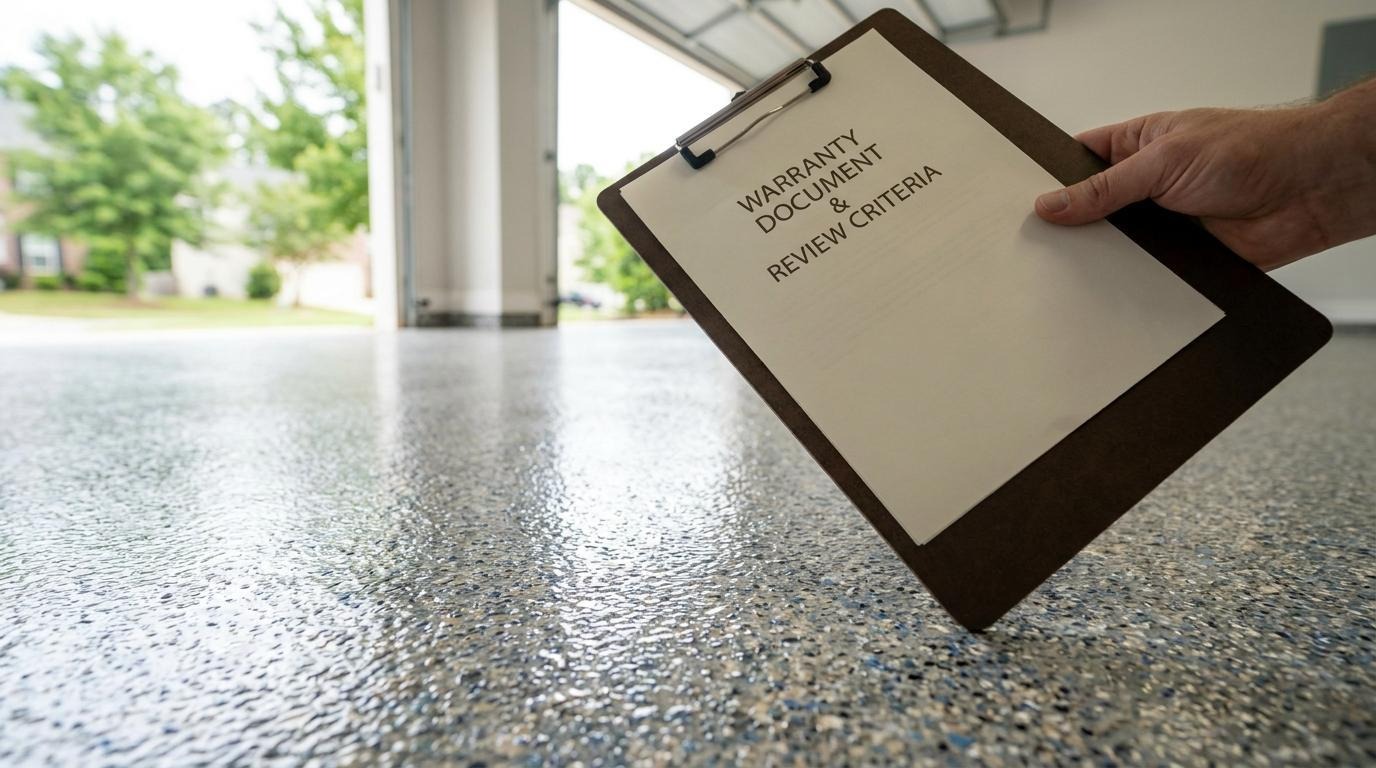
These are the specific phrases and observations worth searching for in any contractor's review section before you sign.
Mention of Diamond Grinding or Surface Prep
A reviewer who describes prep work (grinding, vacuuming, crack repair) confirms the contractor isn't skipping the most failure-prone step. Reviews that say “they didn't grind” or “they just rolled it on” are red flags worth taking seriously, no matter how many stars they average.
Warranty Length and Coverage Detail
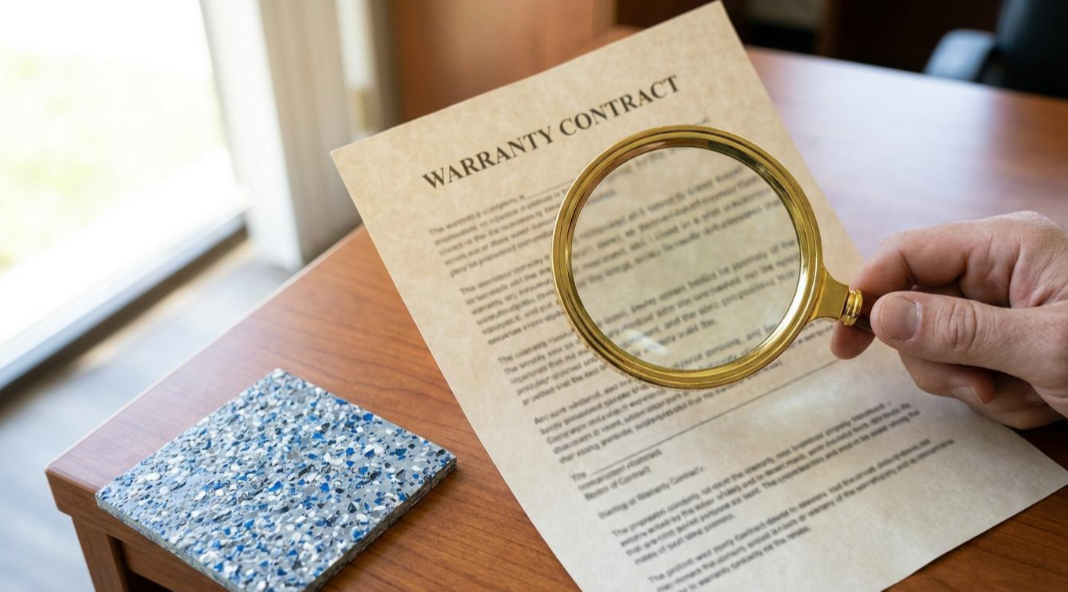
Specific warranty terms in a review (years covered, what's included, what isn't) signal the contractor actually has a written warranty. Vague claims like “they stand behind their work” carry no weight at year three.
Time Elapsed Since Install
The most useful reviews are posted one to three years after install. They confirm whether the floor held up through two Charlotte summers, full pollen seasons, and the freeze swings this region does see.
Owner Presence and Job Site Conduct
Reviews that name the owner, describe the owner working on site, or call out crew conduct (clean job site, daily cleanup, respectful behavior) predict whether the actual work matches the sales pitch. The Titan team behind every garage floor install shows up in person on every Charlotte job, and that fact tends to surface clearly in the review text.
Specific Failure or Recovery Mentions
Reviews that describe a problem and how the contractor handled it are more useful than reviews that describe a flawless install. Every job has moments. The recovery is the proof of warranty in action.
Where to Find Honest Reviews Beyond Stars

Cross-reference at least two sources before signing a contract. A single platform isn't enough to validate a contractor.
Prioritize Older Reviews for Performance
Sort Google Business Profile reviews by oldest first. The reviews posted more than a year after install reveal the floor's actual performance. Use manufacturer reviews to judge the chemical quality, but rely on local reviews to judge the contractor's surface prep. Most homeowners weigh manufacturer reviews too heavily.
Value Local Recommendations
Local word-of-mouth is the gold standard. Specific neighborhood and zip-code recommendations from homeowners who've lived with the floor for several years should carry far more weight than number of stars. Conversations on whether garage floor coatings are worth it hold the most credibility when they come from people who've moved a vehicle on the floor throughout multiple seasons.
Frequently Asked Questions
What is the best garage floor coating on the market?
The best garage floor coating system for most residential garages combines an epoxy basecoat with a polyaspartic urethane topcoat installed over a properly prepped slab. Any single-product 'best' answer ignores the prep step that determines actual longevity. Titan installs a four-layer system because no single resin handles everything epoxy, polyaspartic, and industrial pigment do together.
How long does garage floor coating last?
Garage floor coating carries manufacturer ratings in the 10- to 20-year range when professionally installed with full diamond grinding and a UV-stable topcoat. DIY epoxy kits can fail within one to three years because the prep step can't be replicated from a five-gallon bucket. Titan's epoxy floors are backed by a 15-year warranty.
Is epoxy or polyurea better for garage floors?
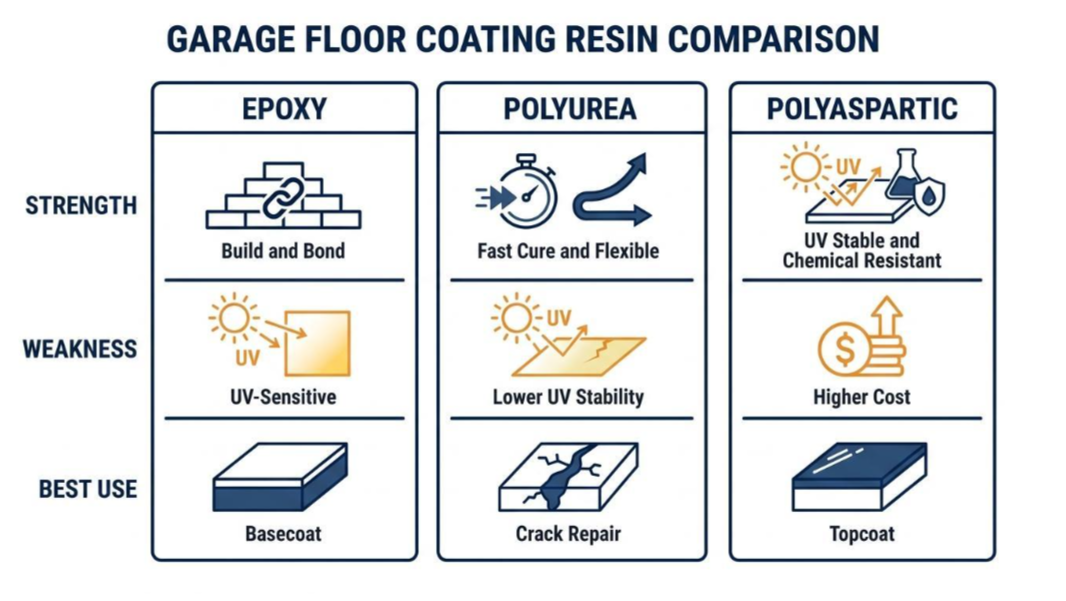
Neither epoxy nor polyurea is the right answer on its own for residential garage floors. Epoxy provides the build and color stability of the basecoat, while polyaspartic urethane (a polyurea cousin) provides the UV stability and chemical resistance of the topcoat. Titan's hybrid system uses both, which is why it outlasts single-resin installs in Charlotte's climate.
Read Reviews That Actually Matter for Your Garage Floor
Star ratings are a starting point. The right contractor's review section names diamond grinding, lists specific warranty terms, includes one- to three-year follow-up reviews, references the owner's actual presence on site, and describes how problems got resolved. When those five threads run through the review text, the floor under your car a decade from now is more likely to look the way it did on installation day.
For a Charlotte-area quote from an owner-operator team, request a Titan Garage Floors free estimate or call (910) 852-9266.