Epoxy Garage Floor vs Paint: Which Is the Better Option for Your Garage?
Choosing between epoxy and paint for your garage floor comes down to durability, cost, maintenance, and how you use the space. Garage floor paint offers an inexpensive way to refresh concrete, while a professionally installed epoxy coating system provides a thicker protective finish designed for regular vehicle traffic, spills, and everyday wear.
For homeowners throughout Charlotte, Concord, Huntersville, Mooresville, Fort Mill, and surrounding Charlotte Metro communities, local heat and moisture conditions are also worth considering.
Titan Garage Floors installs professional epoxy flake systems with a UV-stable polyaspartic topcoat, offering a longer-term alternative to basic garage floor paint.
What Is the Difference Between Epoxy and Garage Floor Paint?
Although both products can improve the appearance of concrete, their materials and performance characteristics differ.
Garage floor paint typically uses a relatively thin acrylic or latex-based film. Some products are marketed as epoxy-fortified paints, but they are not necessarily equivalent to a professional two-part epoxy coating.
Professional epoxy coatings use resin and hardener that chemically cure into a protective layer. The finished system's performance depends on product quality, surface preparation, and proper installation.
- Durability
Garage Floor Paint: Suitable for lighter use; may wear with regular traffic
Professional Epoxy Coating: Designed for heavier everyday garage use - Hot tire resistance
Garage Floor Paint: Some paints can soften or lift under hot tires
Professional Epoxy Coating: Suitable professional systems are formulated to resist hot tire pickup - Stain resistance
Garage Floor Paint: Varies by product; often less resistant to automotive fluids
Professional Epoxy Coating: Provides a more protective, easier-to-clean surface - Appearance
Garage Floor Paint: Solid-color painted finish
Professional Epoxy Coating: Decorative colors and flake finishes - Installation
Garage Floor Paint: Often suitable for DIY application
Professional Epoxy Coating: Requires more extensive surface preparation and precise application - Upfront cost
Garage Floor Paint: Generally lower
Professional Epoxy Coating: Higher investment in preparation, materials, and labor - Maintenance
Garage Floor Paint: May require touch-ups or repainting
Professional Epoxy Coating: Routine cleaning, with repairs as needed
Neither option eliminates the need to evaluate existing concrete damage or moisture conditions.
Why Garage Floor Paint Often Fails
The retiring article's most important point is that concrete paint and professional epoxy are not simply two versions of the same material.
Paint creates a relatively thin protective film. Under demanding garage conditions, that film can wear or lose adhesion, particularly if the concrete was not prepared correctly.
Hot Tire Pickup
After driving on hot pavement, tires can transfer heat and pressure to a painted garage floor.
Some paint formulations may soften or lose adhesion under these conditions. When the vehicle moves, portions of the paint can lift from the concrete.
Product selection, adequate curing, and preparation all affect the risk of hot tire pickup.

Moisture Beneath the Coating
Concrete slabs can contain moisture or allow moisture vapor to migrate from below.
When moisture exceeds a coating's tolerances, it can contribute to bubbling, blistering, or peeling.
This is not exclusively a paint problem. Professional epoxy coatings can also fail when installed over unsuitable moisture conditions.
The concrete should be evaluated before either product is applied, and active water intrusion should be corrected rather than covered.
Surface Wear and Chemical Exposure
Garage floors regularly encounter oil drips, cleaning products, vehicle traffic, dirt, and dropped tools.
Many basic concrete paints offer less abrasion and chemical resistance than professionally installed epoxy systems. Over time, high-use areas may become scratched, discolored, or worn through.
A thicker professional coating can provide better protection, although chemical resistance still depends on the products used and prompt cleanup.
How Charlotte's Climate Affects Garage Floor Coatings
Charlotte's hot summers, humid weather, and seasonal temperature changes make coating selection and installation particularly important.
Summer Heat and Vehicle Traffic
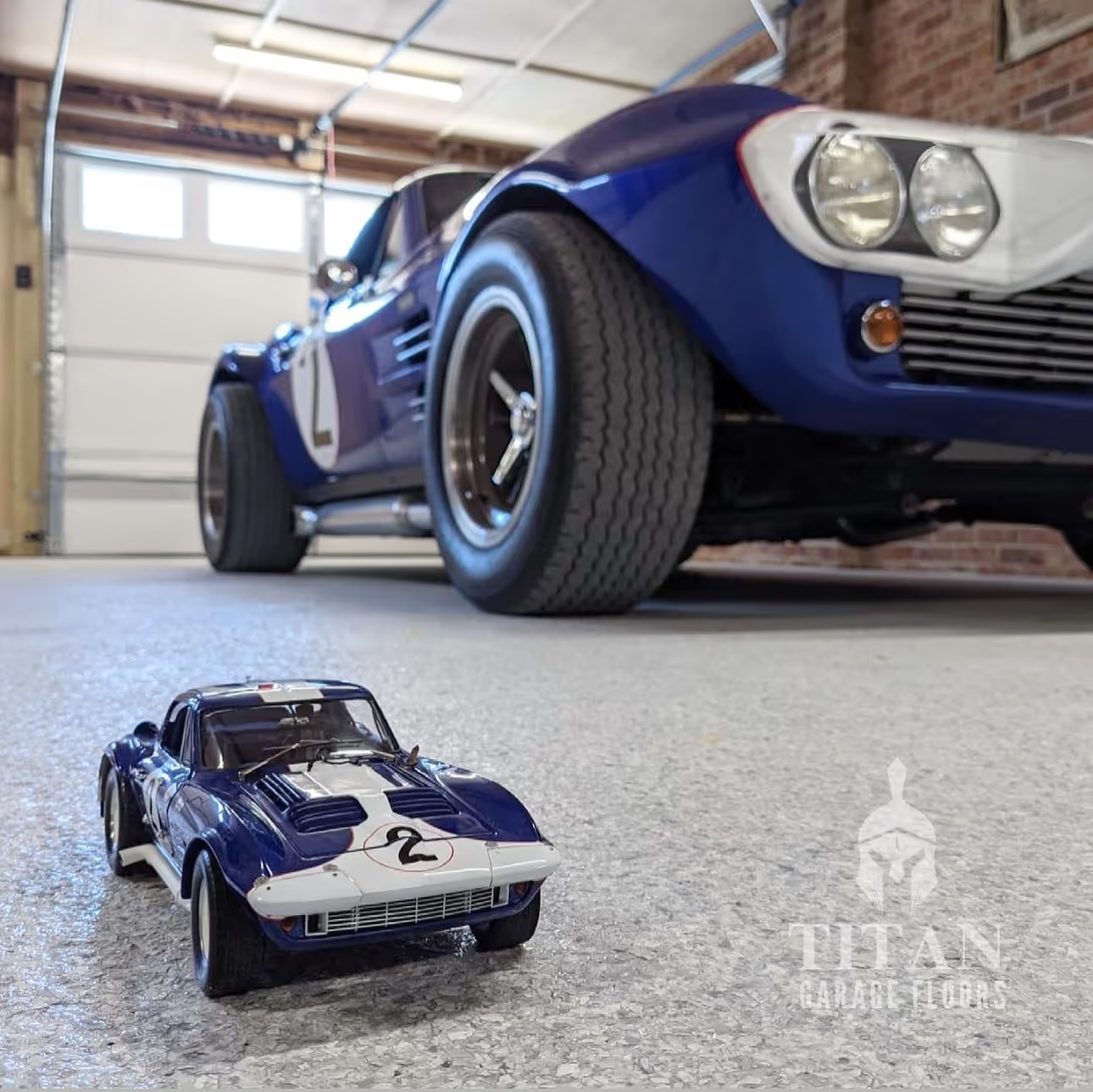
Vehicles returning to a garage after driving on hot roads can expose the floor to warm tires and repeated pressure.
A garage floor coating should be selected for regular vehicle use rather than appearance alone.
Professional epoxy systems designed for garage traffic are generally better suited to this exposure than basic interior concrete paint.
Humidity and Concrete Moisture
Charlotte's humid weather can affect application and curing conditions. However, high outdoor humidity does not automatically mean moisture is moving upward through a concrete slab.
The installer must consider the slab's actual moisture condition, surface temperature, and product requirements.
Proper moisture evaluation and surface preparation are essential regardless of which coating is selected.
Sunlight and UV Exposure
Garage floors near open doors can receive direct sunlight.
Some epoxy formulations may discolor under prolonged UV exposure. Titan Garage Floors addresses this with a UV-stable polyaspartic topcoat designed to resist sunlight-related yellowing.
Not all paint or epoxy products respond identically to UV exposure, so the specific finish matters.
What Titan Garage Floors' Professional System Includes
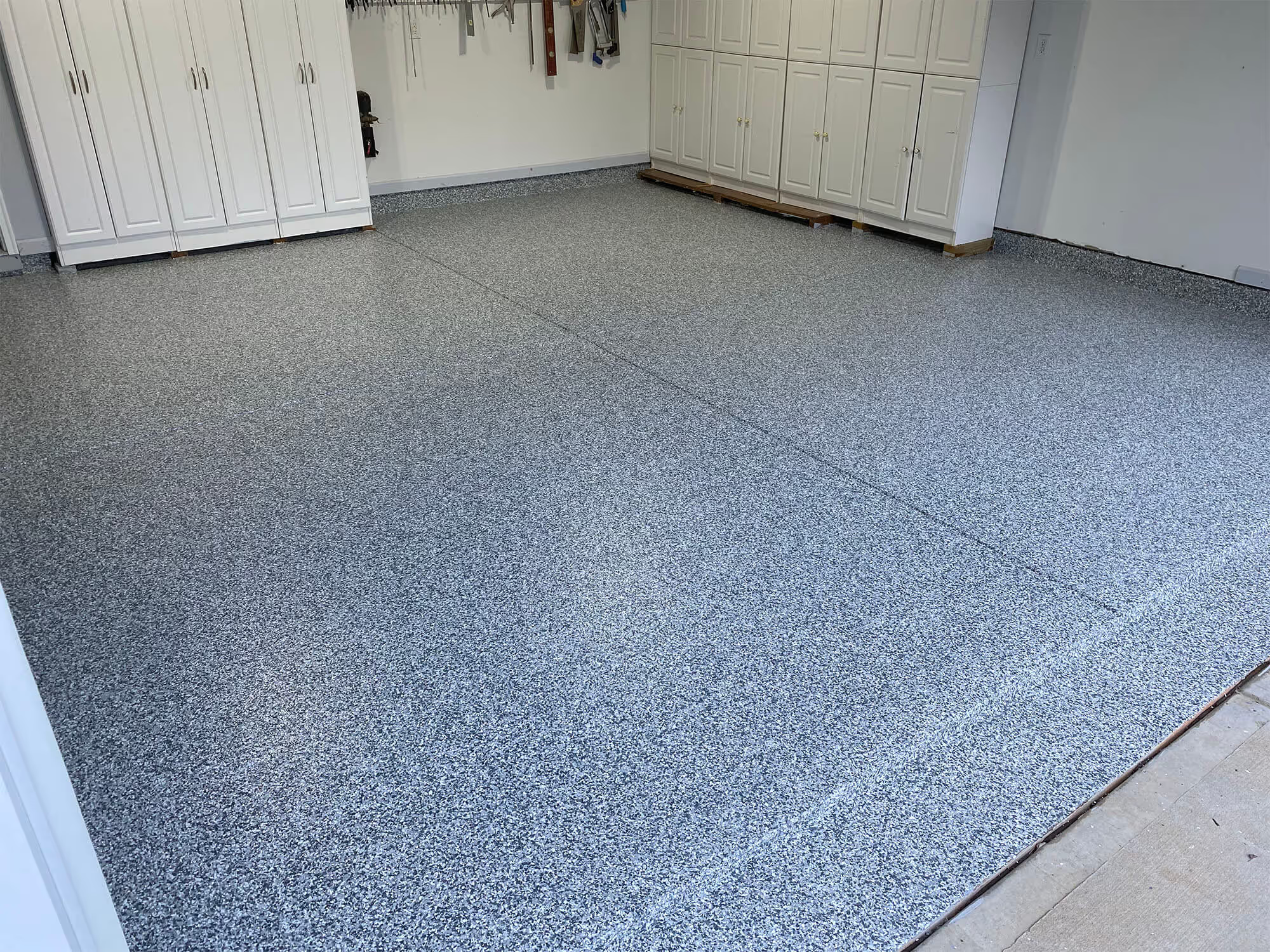
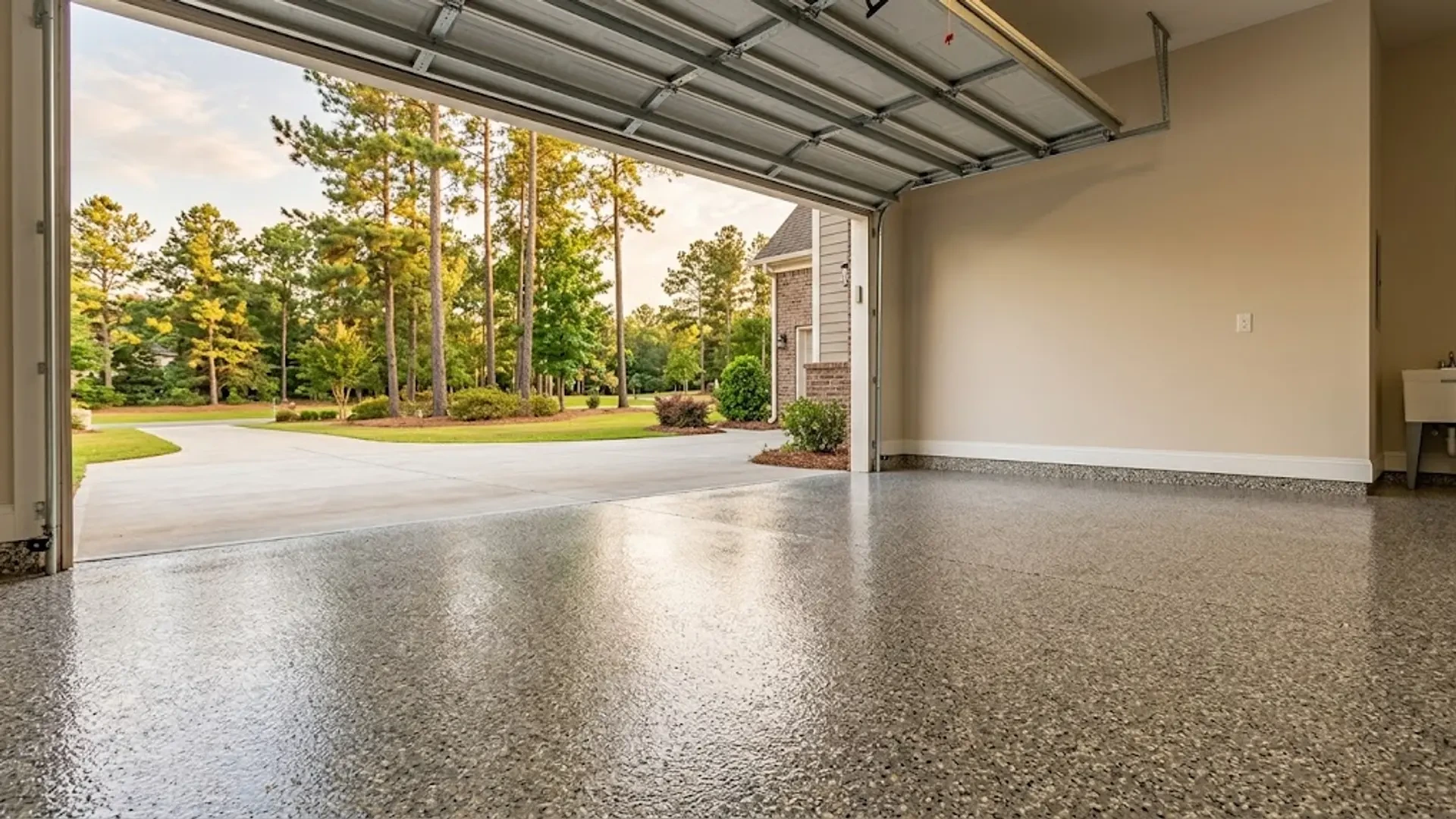
Titan Garage Floors installs a multilayer epoxy flake coating system instead of relying on a basic roll-on paint application.
Its garage floor coating process includes:
- Diamond grinding: Mechanically preparing the concrete and removing unsuitable existing coatings and surface contaminants.
- Concrete repairs: Addressing appropriate cracks, divots, and surface imperfections.
- Epoxy base coat: Applying a 100% solids epoxy coating to properly prepared concrete.
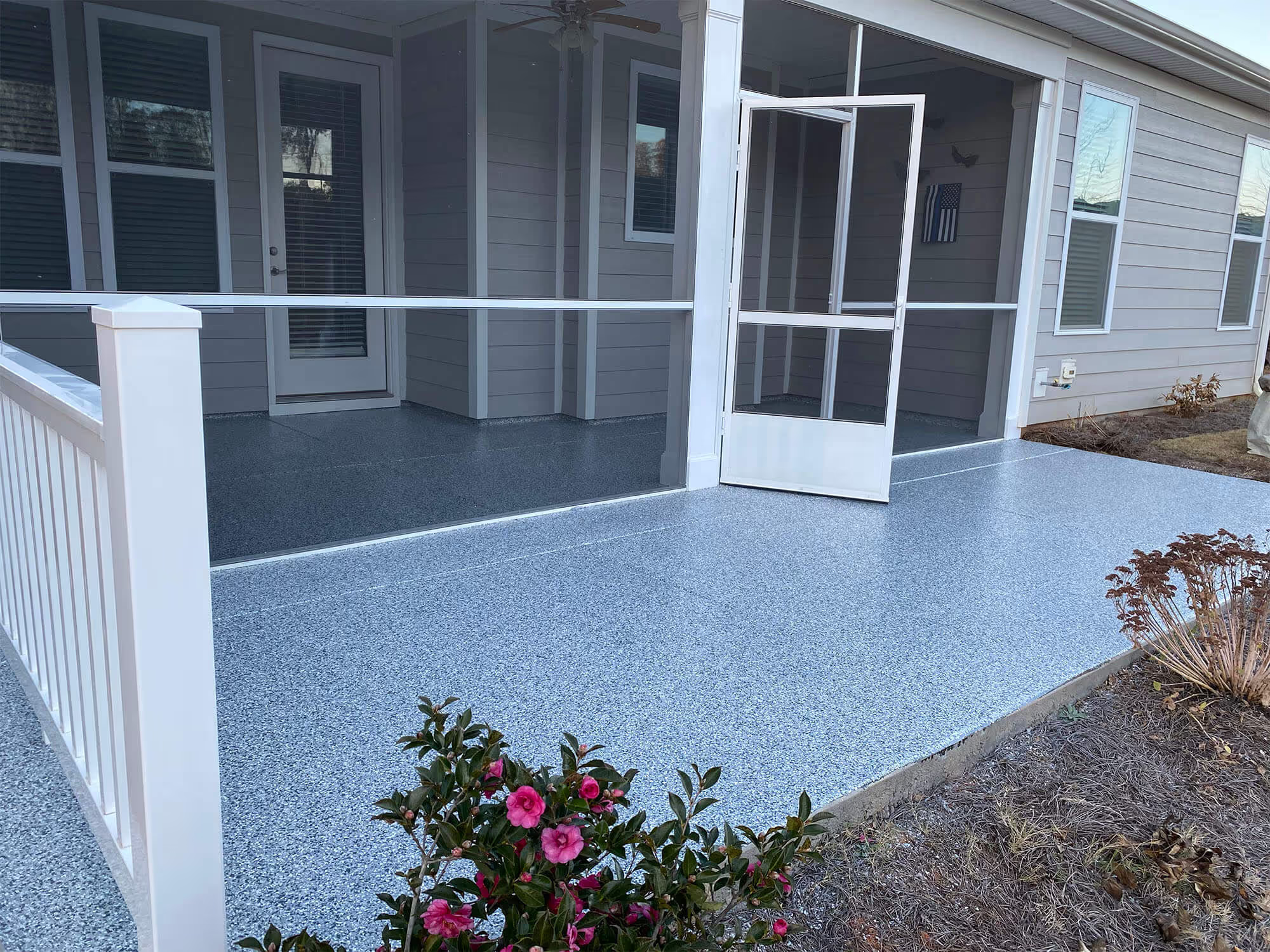
- Decorative flake broadcast: Creating a consistent decorative finish with added texture.
- Polyaspartic topcoat: Protecting the finished floor with a UV-stable coating designed for everyday garage use.
This system creates a durable surface that is easier to clean and maintain than uncoated or deteriorating concrete.
Many qualifying garage installations can be completed in one day, although the timing for returning vehicles and heavy items depends on the specific installation and curing requirements.

When Garage Floor Paint Still Makes Sense
Garage floor paint is not automatically a poor choice.
For homeowners who want an inexpensive cosmetic improvement, paint can make sense in certain situations:
- Low-traffic storage areas: Spaces that rarely experience vehicle traffic or abrasive wear.
- Limited budgets: Projects where a lower initial expense is more important than maximizing long-term durability.
- Temporary improvements: Areas where the homeowner understands that touch-ups or repainting may be needed sooner.
- Suitable dry concrete: Surfaces that meet the selected paint manufacturer's preparation and moisture requirements.
Paint is generally less attractive for garages used daily for parking, workshops, or activities involving frequent spills and heavy traffic.
The decision should reflect how the floor will actually be used, rather than assuming every homeowner needs the same solution.
Epoxy vs. Paint: Which Offers Better Long-Term Value?
Paint usually costs less upfront because the material is relatively inexpensive and some homeowners can apply it themselves.
A professional epoxy floor requires more preparation, specialized materials, and installation labor.
However, the initial price is only one part of the cost comparison.
If a painted garage floor requires repeated touch-ups or complete repainting, the additional materials, preparation, and time can reduce the initial savings.
A professionally installed epoxy coating may offer better long-term value for a garage with regular vehicle traffic, provided the concrete is suitable and the system is properly maintained.
Titan Garage Floors backs its qualifying professional garage floor installations with a 15-year written warranty. Its published guidance describes materials and labor coverage for eligible repairs, subject to the applicable warranty conditions and exclusions.
Homeowners can review Titan's garage floor warranty guide and request the written terms before committing to installation.
Frequently Asked Questions
Is Epoxy Better Than Paint for a Garage Floor?
For a garage with regular vehicle traffic, a properly installed professional epoxy coating system generally offers stronger abrasion resistance, easier cleaning, and greater durability than basic concrete paint.
Paint may still be suitable for lightly used areas or lower-budget cosmetic improvements.
Can You Apply Epoxy Over Existing Garage Floor Paint?
It depends on the existing paint, its adhesion, the underlying concrete, and the new coating manufacturer's requirements.
Peeling, damaged, or incompatible coatings typically need to be removed. Titan Garage Floors uses mechanical diamond grinding to prepare concrete before applying its professional coating system.
Does an Epoxy Floor Stop Moisture Problems?
No. A coating can protect the concrete surface from ordinary spills, but it does not automatically fix moisture vapor transmission, foundation problems, or active water intrusion.
Concrete moisture conditions must be assessed before installation.
Get a Free Epoxy Garage Floor Estimate in Charlotte
If you're deciding between garage floor paint and a professional epoxy coating, Titan Garage Floors can help you evaluate the existing concrete and understand the installation options.
The company serves homeowners throughout Charlotte, Concord, Huntersville, Mooresville, Lake Norman, Fort Mill, and the surrounding Charlotte Metro Area.
Titan's epoxy flake system combines mechanical concrete preparation, a 100% solids epoxy base coat, decorative flakes, and a UV-stable polyaspartic topcoat, supported by a 15-year written warranty subject to its terms.
Call (910) 852-9266 or contact Titan Garage Floors to request a free estimate for your garage floor project.