Epoxy Floor vs Vinyl Floor: Which Is Best for Your Charlotte Garage?
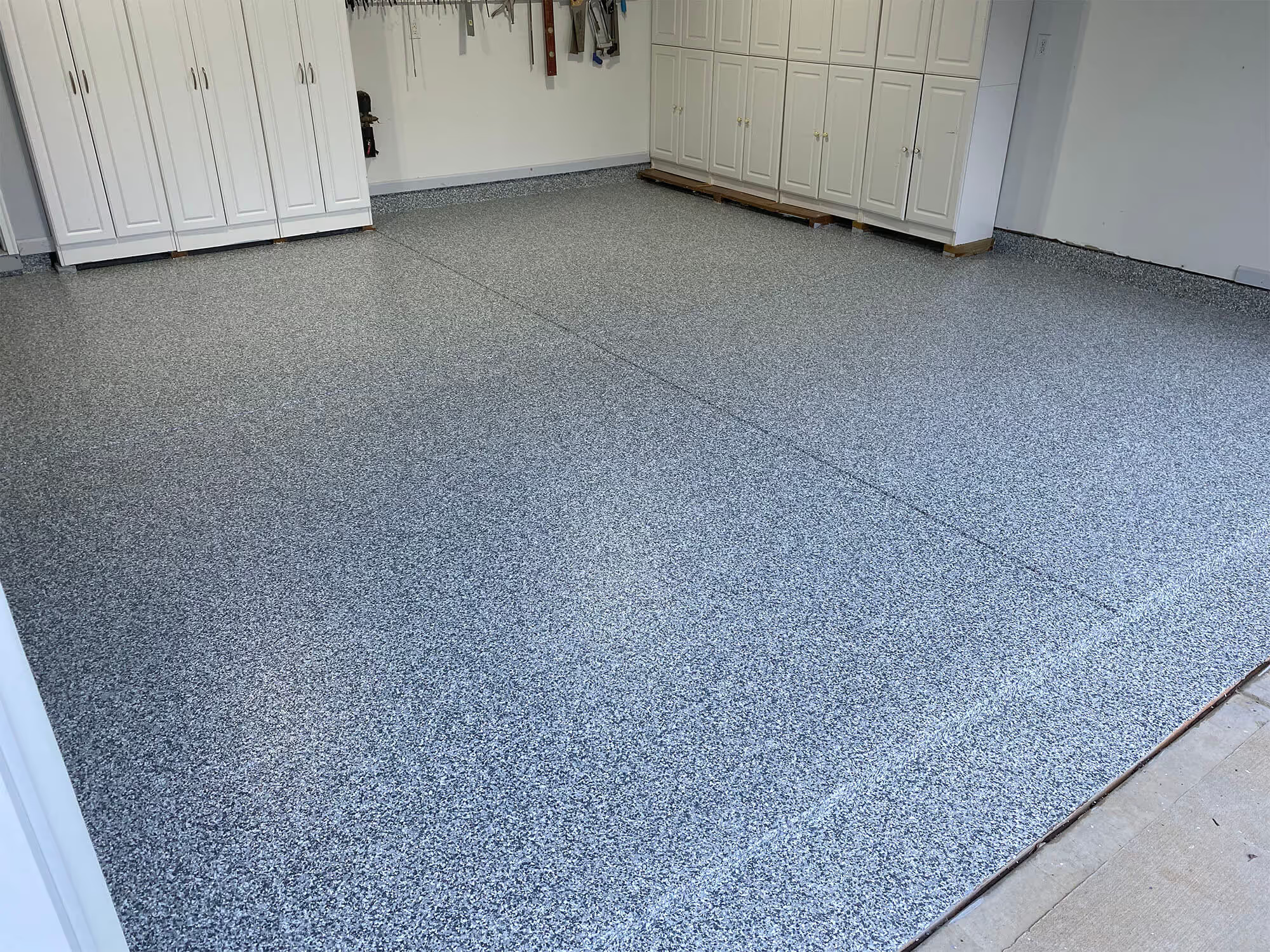
Choosing between an epoxy floor and a vinyl floor for a Charlotte garage means weighing chemistry versus coverage. Epoxy bonds to the slab as a coating system; vinyl plank floats on top of it as a layered product. Both are real options, but only epoxy is built for the heat, moisture, and chemical load a working garage puts on a floor. Titan Garage Floors installs epoxy flake flooring across the Charlotte metro, ground into the slab so the floor becomes part of the concrete rather than a layer sitting over it.
How each floor grips the finishing layer is what drives every performance gap that follows. In this blog post, we compare how each one is built, how both handle hot tires, humidity, and spills in a Charlotte garage, and how the cost, lifespan, and resale math actually pans out.
How Each Floor Actually Works
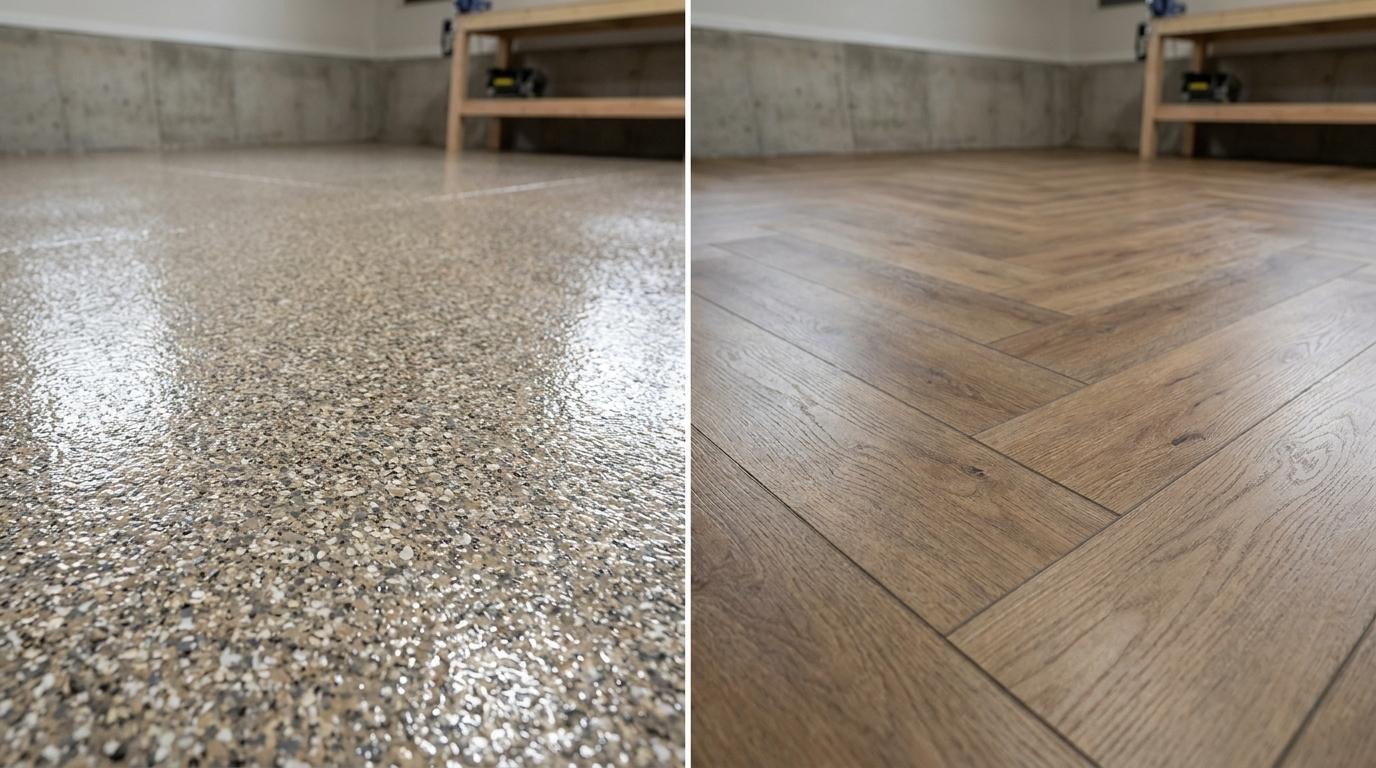
The two products solve different problems with different installation methods. Knowing how each one actually attaches to the slab explains most of the performance gap that follows.
Epoxy Flake Coating
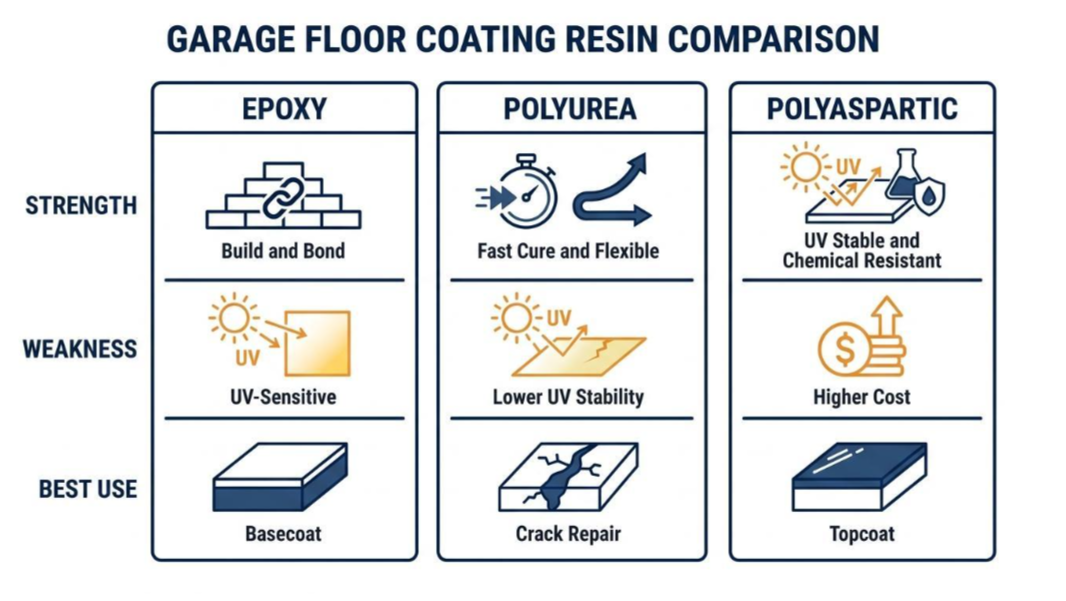
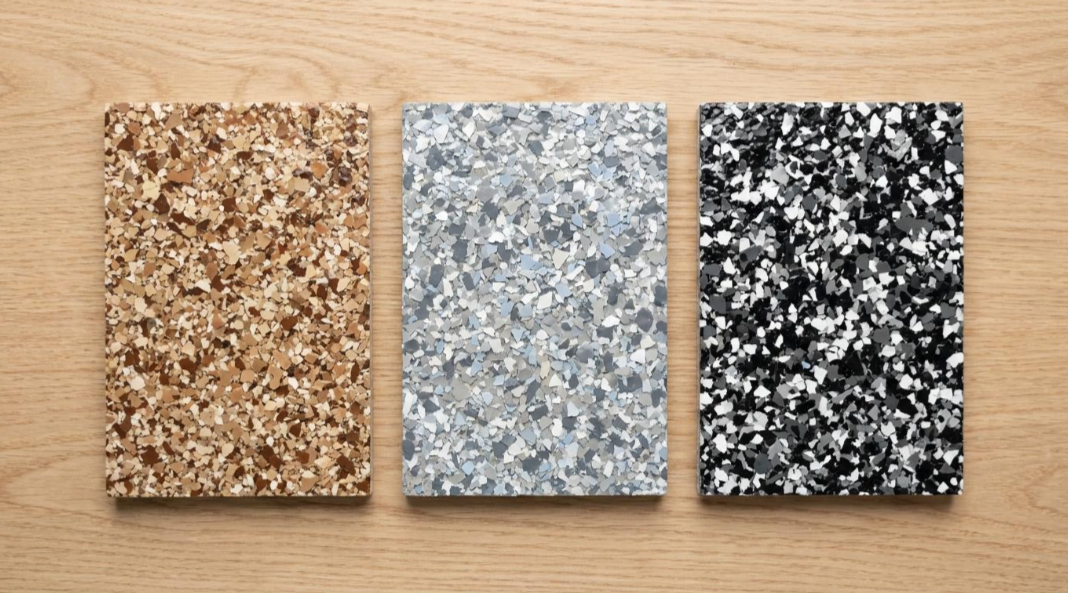
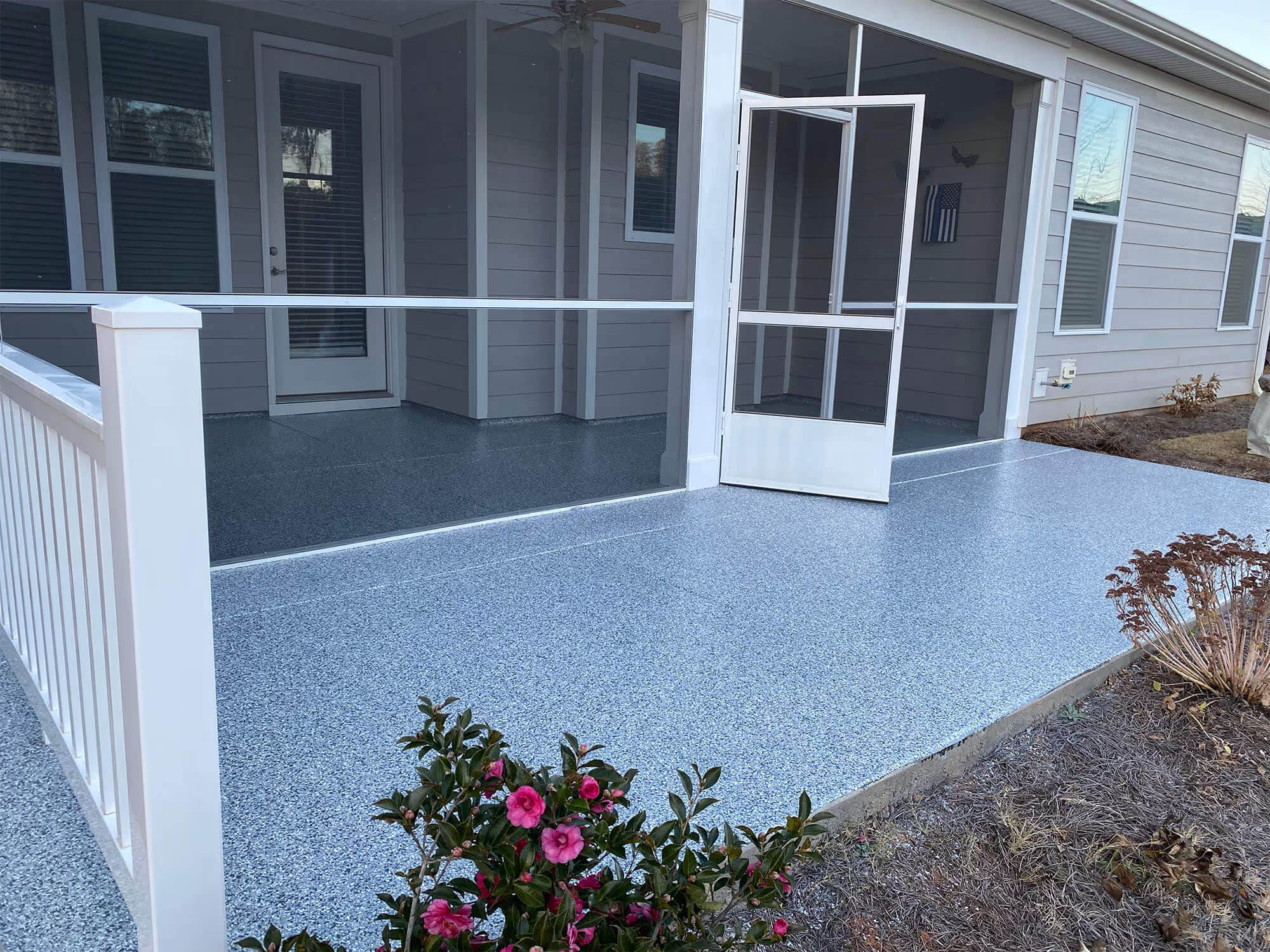
Epoxy forms a multi-layer bond to the slab. After diamond grinding, an epoxy basecoat is rolled across the surface, vinyl flake is broadcast across it to full coverage, and a polyaspartic urethane topcoat seals everything against UV, chemicals, and abrasion. The result is one continuous, seamless surface fused to the concrete. That's what a residential garage floor coating system delivers, backed by a 15-year warranty.
Vinyl Plank Floor (Not a Titan Service)
Vinyl plank flooring (luxury vinyl plank, or LVP) is a layered product. Individual planks click-lock together over a thin underlayment that floats on the slab. The system isn't bonded to the concrete and skips grinding entirely. Some contractors install LVP in garages as a budget option, though Titan does not offer vinyl installs. LVP performs well in basements and interior rooms, but garages introduce loads it wasn't designed for.
Performance in a Charlotte Garage Environment
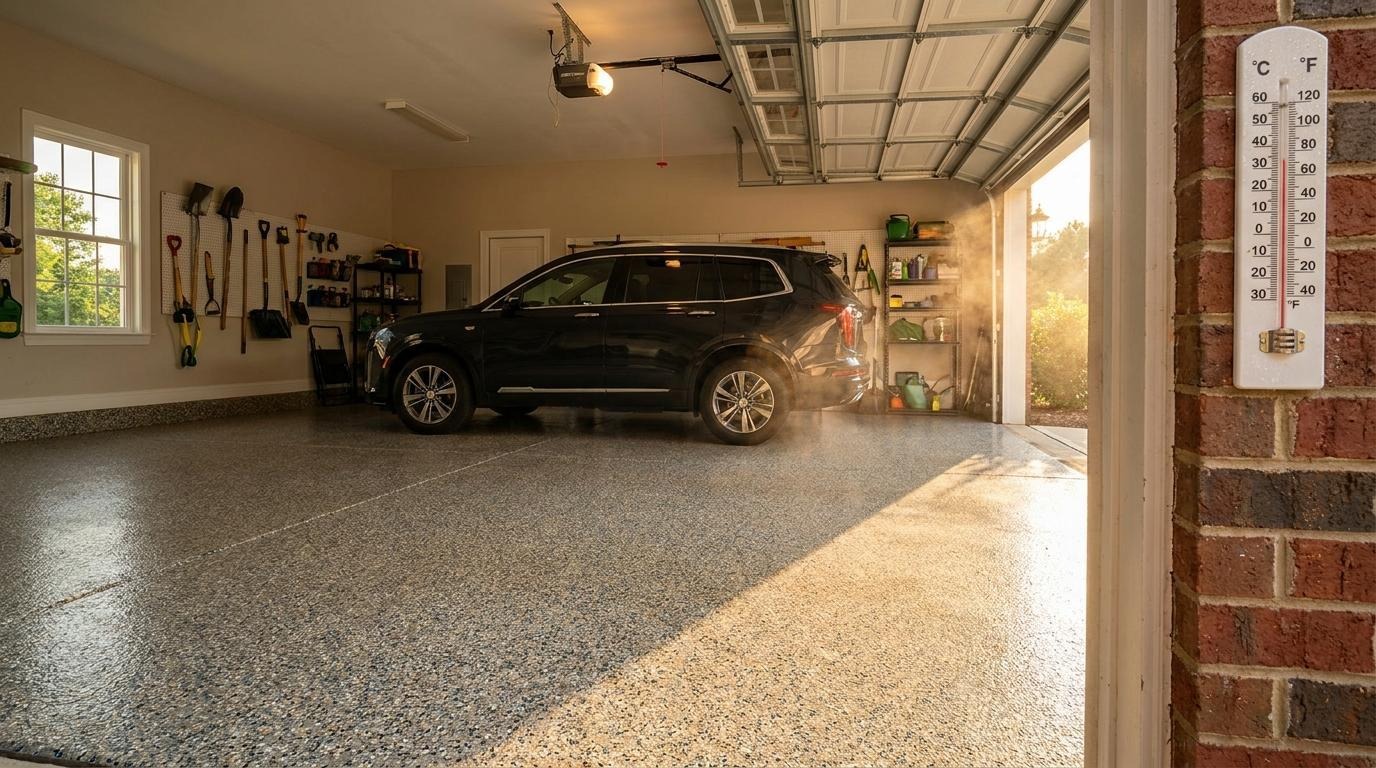
Three Charlotte-specific factors decide which surface holds up: hot tire pickup, humidity vapor, and chemical spills. Each one stresses vinyl plank in ways epoxy doesn't see.
Hot Tire Pickup
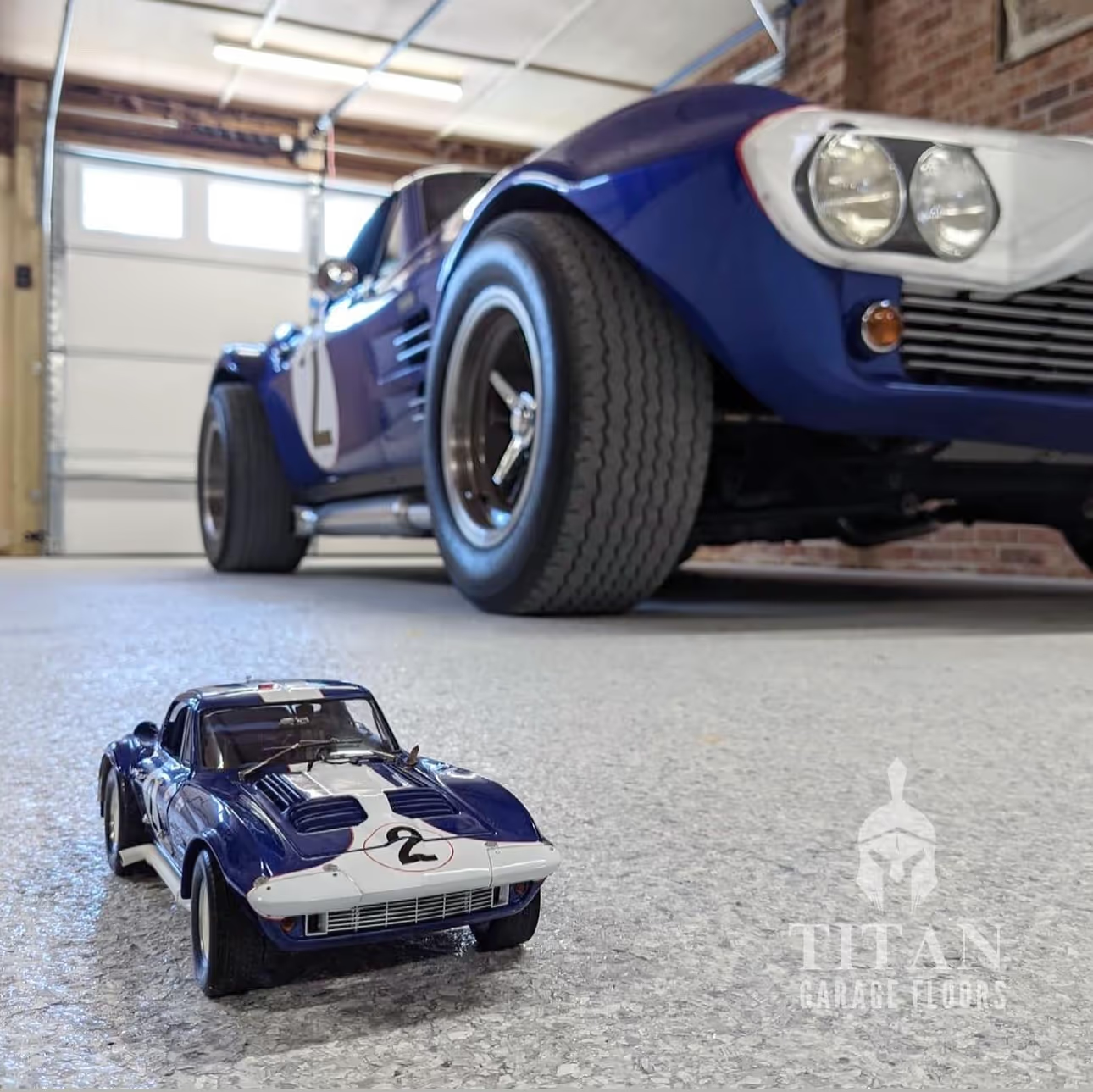
Hot tires regularly hit 120 to 140°F after a Charlotte summer drive. Vinyl plank softens under sustained heat and the click-lock seams can lift along the tire path. A polyaspartic-sealed epoxy surface is designed to resist those temperatures without tire transfer.
Humidity and Moisture Vapor
Carolina humidity drives moisture vapor up through concrete slabs year-round. Vinyl plank traps that vapor between the planks and the slab, which can warp the planks and feed mold underneath. Epoxy is moisture-resistant once sealed, and the controlled basecoat profile lets the slab manage vapor without lifting the coating.
Chemical Spills and Cleaning
Oil, gasoline, brake fluid, and battery acid are normal garage spills. Epoxy resists common garage chemicals that can stain vinyl plank, seep into seams, and soak the underlayment.
Cost, Lifespan, and Resale

Cost looks like vinyl's strongest argument. Lifespan and resale push back hard.
Spread across the expected service period, the math often reverses. A vinyl install replaced around year eight can approach the same total cost as an epoxy install that reaches its warranty period.
Frequently Asked Questions
Is vinyl plank flooring good for a garage?
Vinyl plank flooring is not designed for garage use because the heat from parked tires, moisture vapor from the slab, and oil spills exceed what the product was engineered to handle. LVP performs well in interior rooms and basements. In a garage, the seams lift, the underlayment traps moisture, and the warranty rarely covers vehicle traffic.
Which is more durable, epoxy or vinyl?
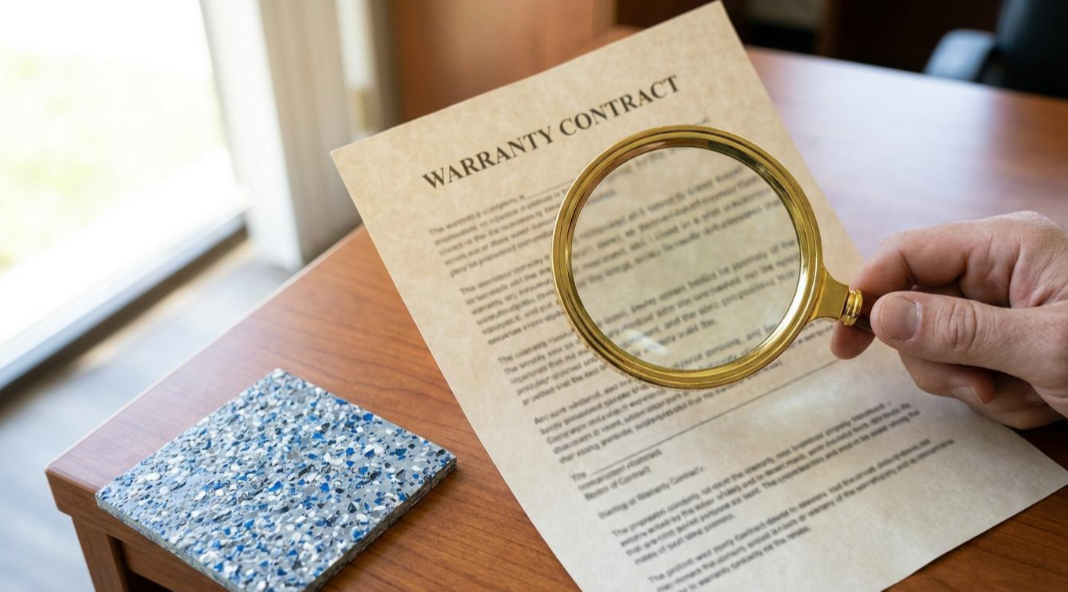
Epoxy is more durable than vinyl in a garage application because the coating bonds to the slab and resists chemicals, heat, and abrasion at industrial levels. Vinyl plank carries shorter expected service life in garage conditions than in indoor rooms where loads are lighter. A professionally installed epoxy floor can carry manufacturer ratings and warranty terms in the 10- to 20-year range.
Can you put vinyl flooring over a garage floor?
You can install vinyl flooring over a garage slab, but the result is not engineered for the chemical, heat, and tire loads a garage produces. Without proper moisture barriers, vinyl seams can lift within one to three Charlotte summers. The slab itself stays untouched, which means a future epoxy install is still possible after tearing out the vinyl.
Choosing the Right Floor for Your Charlotte Garage
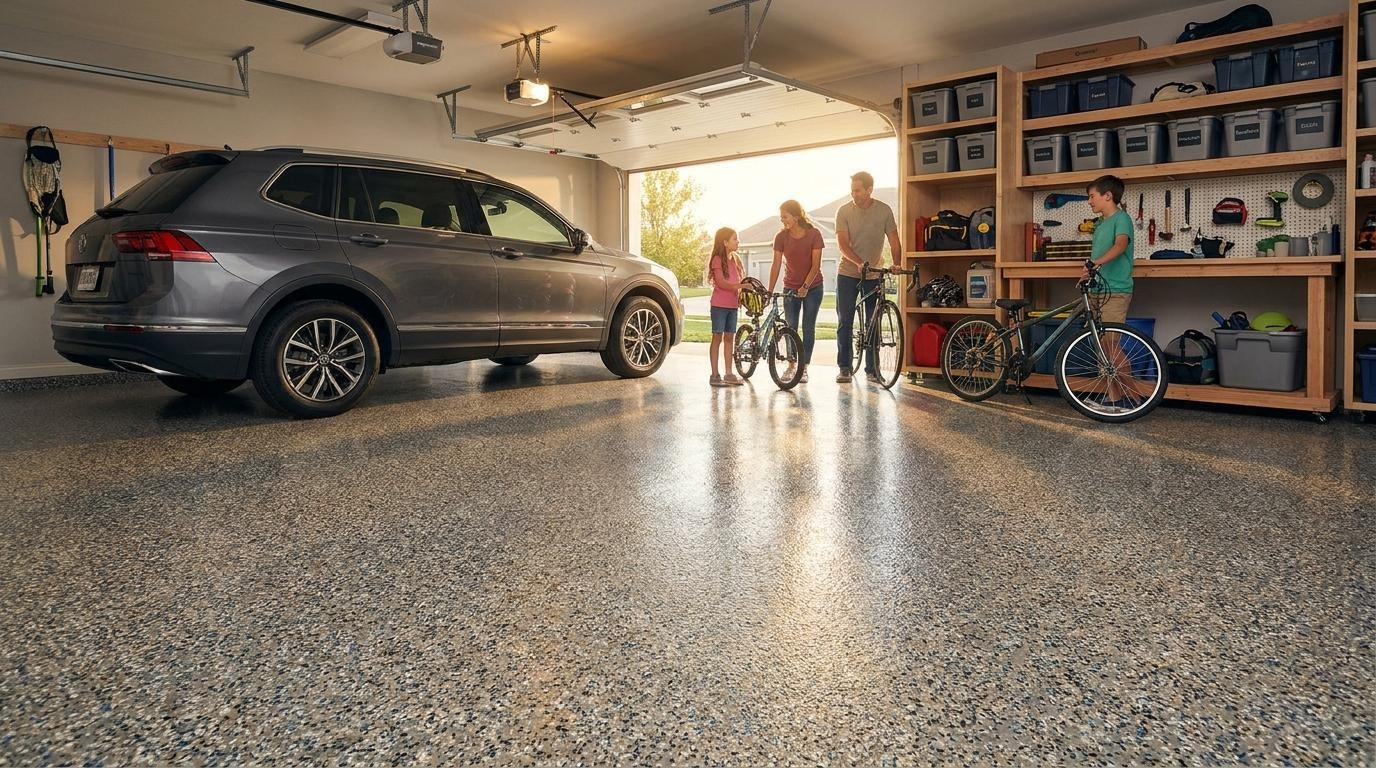
The right floor depends on how the space actually gets used. If the garage is a clean storage room that rarely sees a vehicle, vinyl plank can work. If you're parking on the floor and working on cars while the surface handles humid summers and cold snaps, epoxy is the system designed for those conditions. Our 15-year warranty makes the choice even easier.
For a Charlotte-area epoxy quote, request a Titan Garage Floors free estimate or call (910) 852-9266.