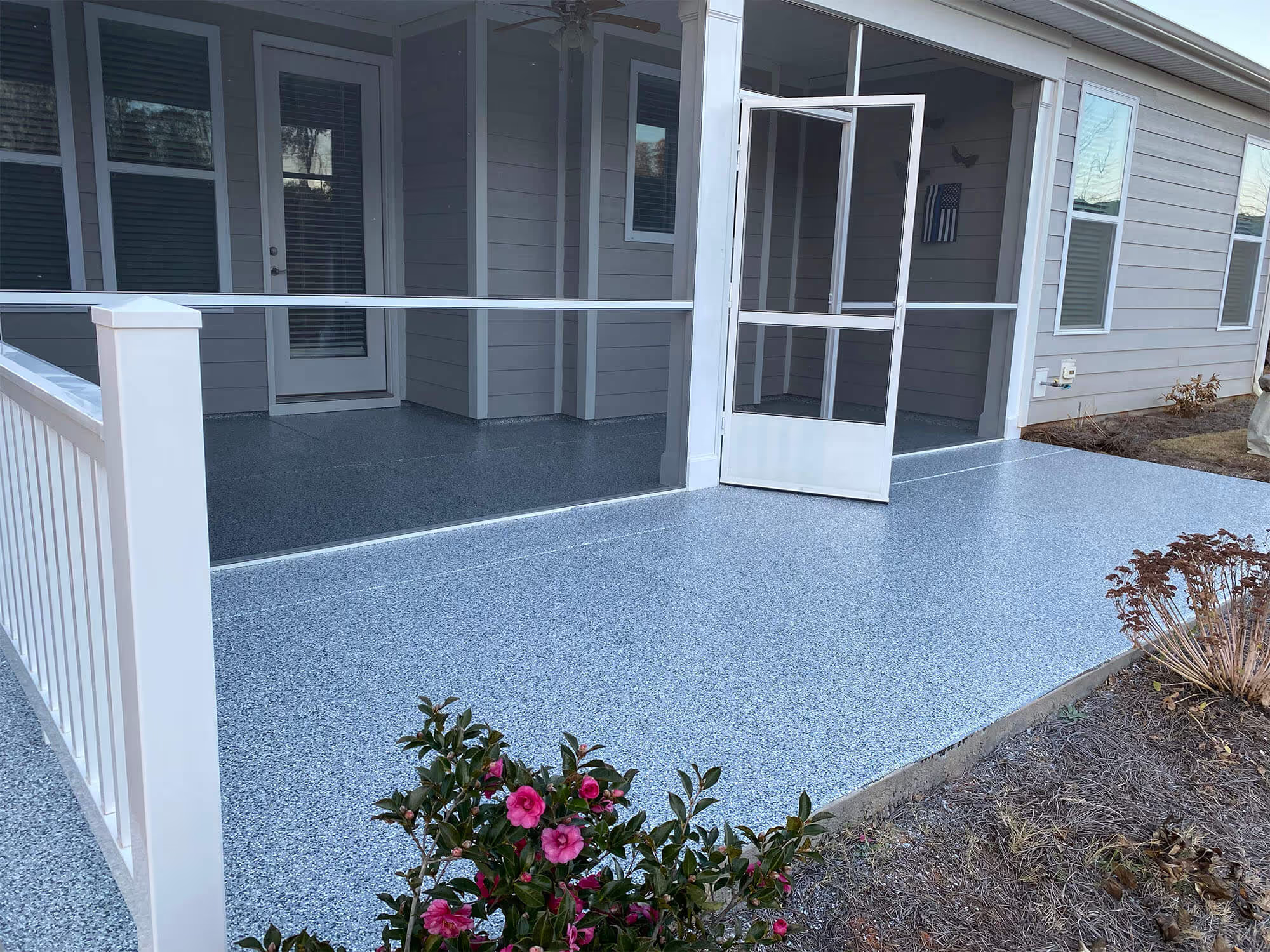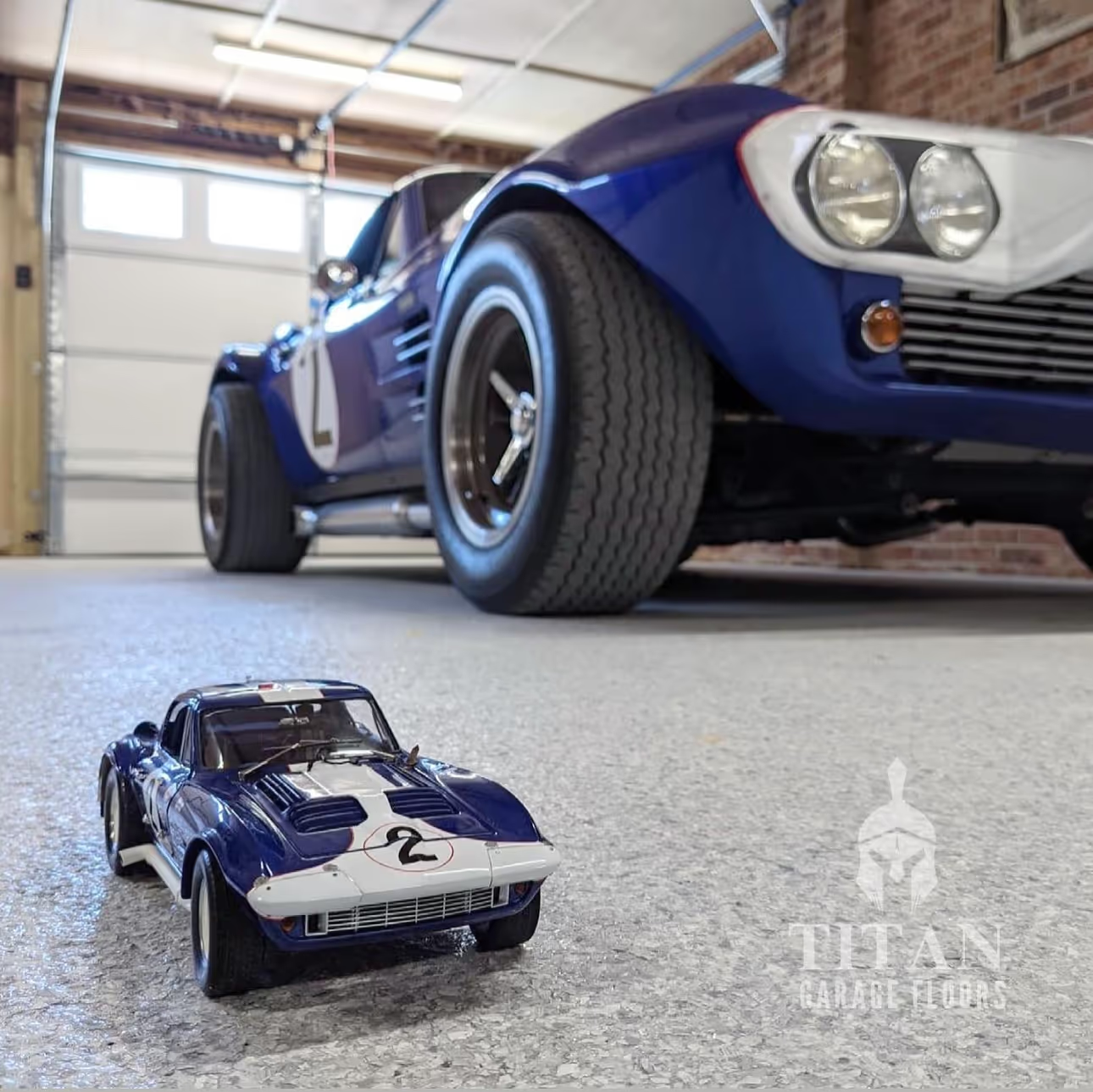
Epoxy Floor Over Concrete: What Homeowners Should Know
An epoxy floor coating over concrete lasts only when the slab underneath is properly profiled, dry, and crack-free before the first coat goes down. Prep, not the epoxy itself, decides whether the floor reaches its rated lifespan or starts peeling within a couple of years. At Titan Garage Floors, every Charlotte slab gets diamond-ground down to clean, open concrete before any resin is mixed.
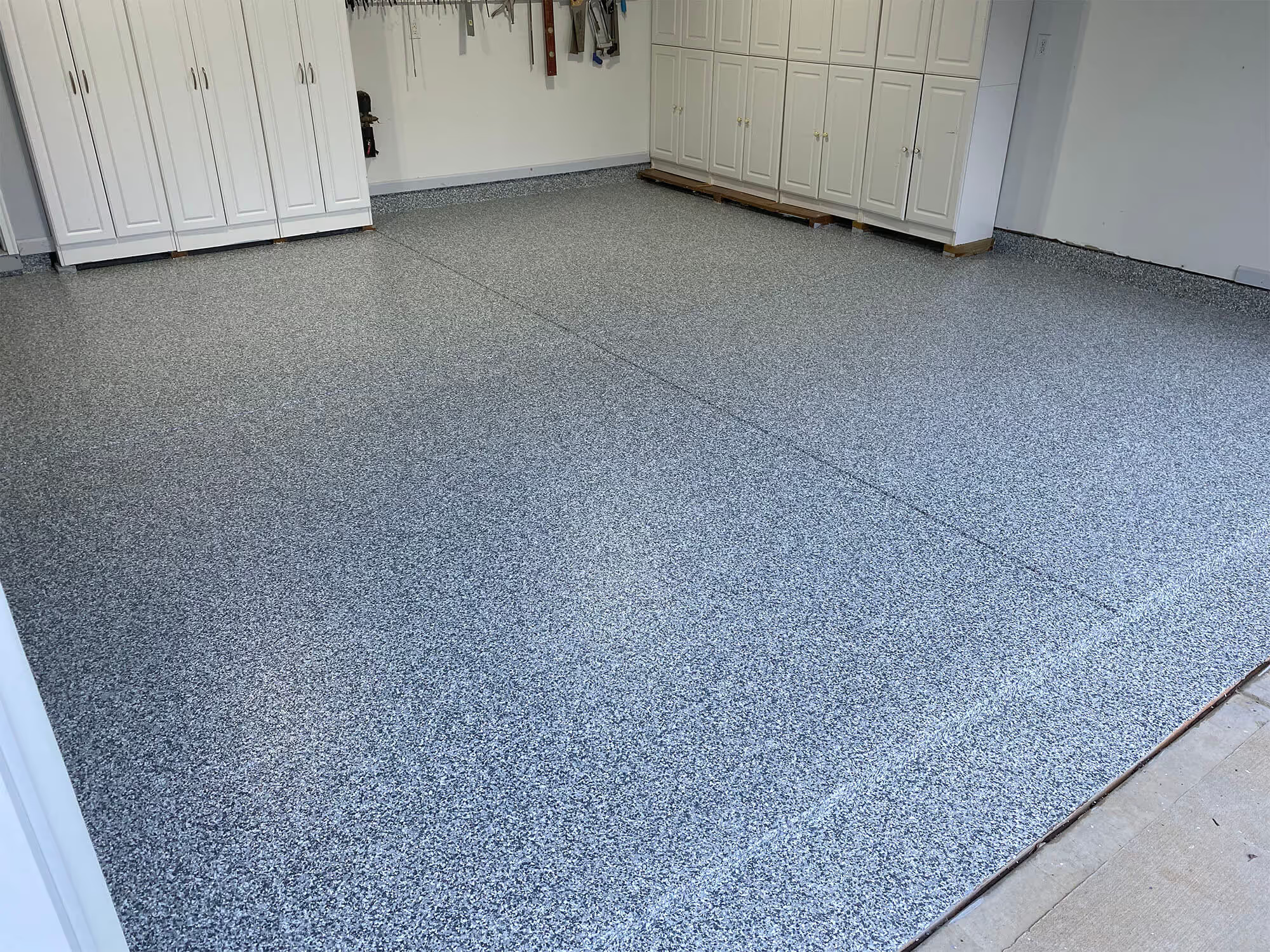
After installing countless epoxy flake flooring around the Charlotte metro, we’ve noticed how failures follow a pattern: floors that peel in the first two years almost always skipped one of three prep steps, while the ones still holding up well past a decade had all three handled before the basecoat went on. That's why a four-layer epoxy flake system starts with grinding rather than a stronger resin.
Take a closer look at why prep decides how long a coating lasts, the three tests a slab should pass first, and what a professional install looks like from start to finish.
Why Concrete Prep Decides Coating Longevity
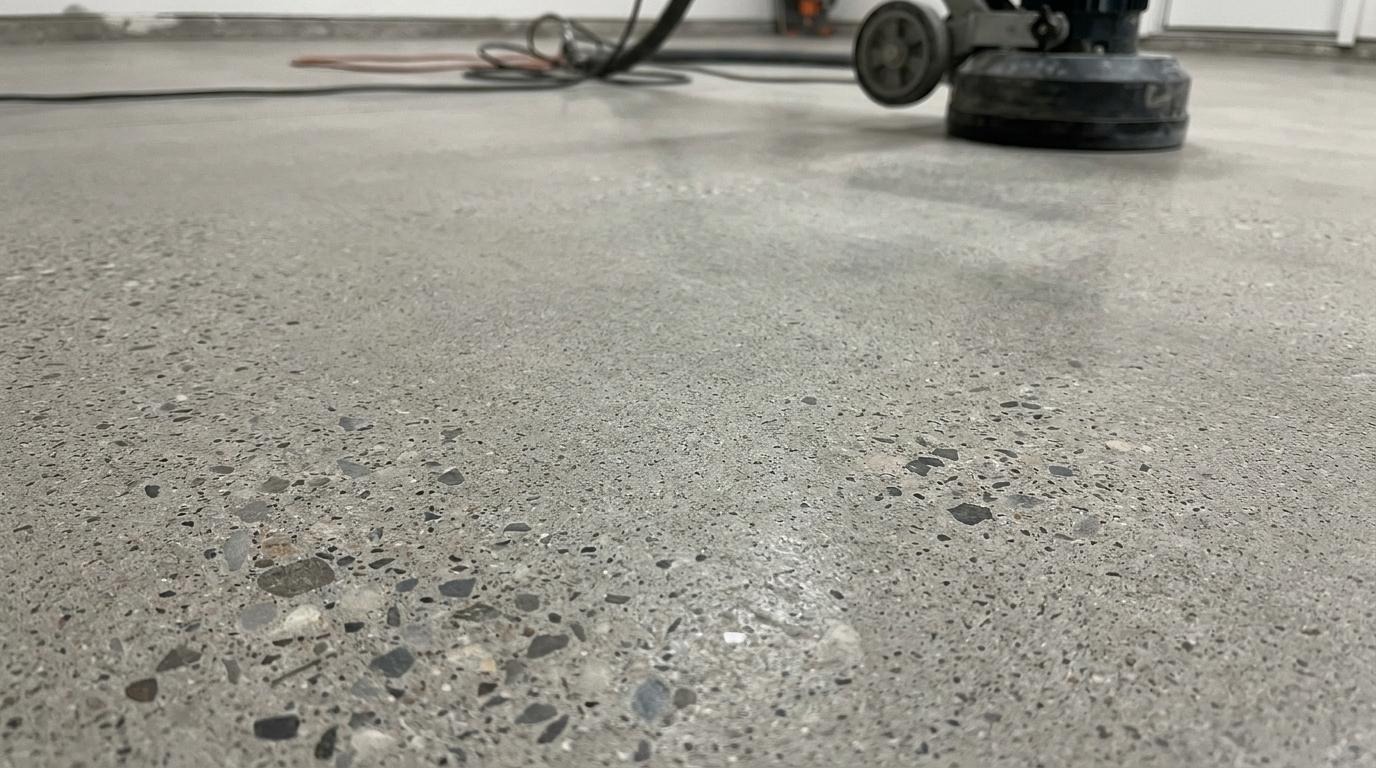
Concrete is porous. It absorbs moisture, holds the residue of whatever's been spilled on it for years, and develops microscopic surface contamination from foot traffic and tire rubber. A coating applied to that surface without preparation bonds to the contaminants, not the concrete. When the contaminants release, the coating goes with them.
That's the mechanism behind most early epoxy failures. The product itself didn't fail. The bond underneath did. Diamond grinding strips the contaminated top layer and exposes fresh concrete with an open profile that epoxy can mechanically grip.
Creating that optimal open profile is the foundation we build under every garage floor project.
The Three Tests Concrete Should Pass Before Coating
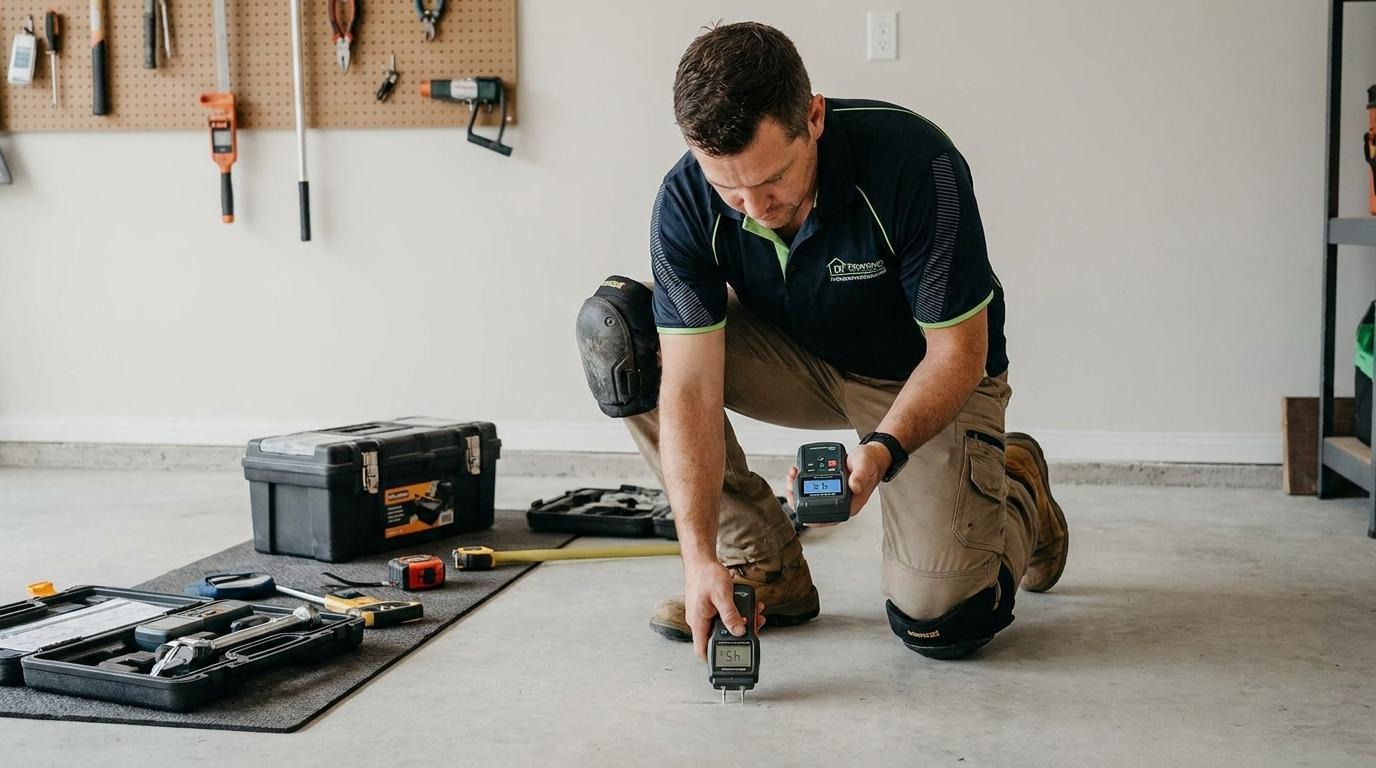
Every Charlotte slab Titan coats has to clear three checks first. Skip any one and the floor is more likely to lose years of service life.
Moisture Vapor Test
Charlotte's humidity drives vapor up through concrete slabs. A calcium chloride or relative humidity test confirms the slab is dry enough to coat, and identifies slabs that need a vapor barrier primer first. Skip this step in this region and moisture damages epoxy floors within months.
Surface Profile and Crack Repair
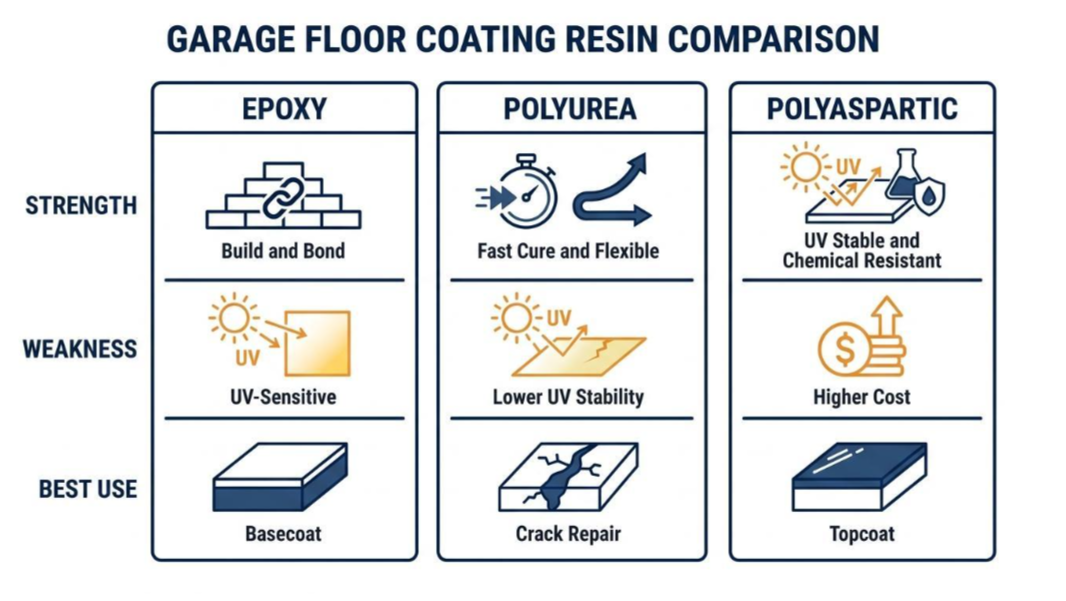
All structural cracks, control joints, and divots get filled with a flexible polyurea compound before any coating goes down. After grinding, the slab also needs a measurable surface profile (roughly CSP 2 to 3 for residential garages). Too smooth and the coating won't bond mechanically. Too rough and the basecoat won't level out.
Contaminant Removal
Oil stains, paint drips, and old penetrating sealers all need to be neutralized or ground away before any new resin touches the slab. Light pressure washing isn't enough. Diamond grinding is the only reliable method, and it's why every Titan project starts there regardless of how clean a slab looks at first glance.
What a Professional Install Looks Like Step-by-Step
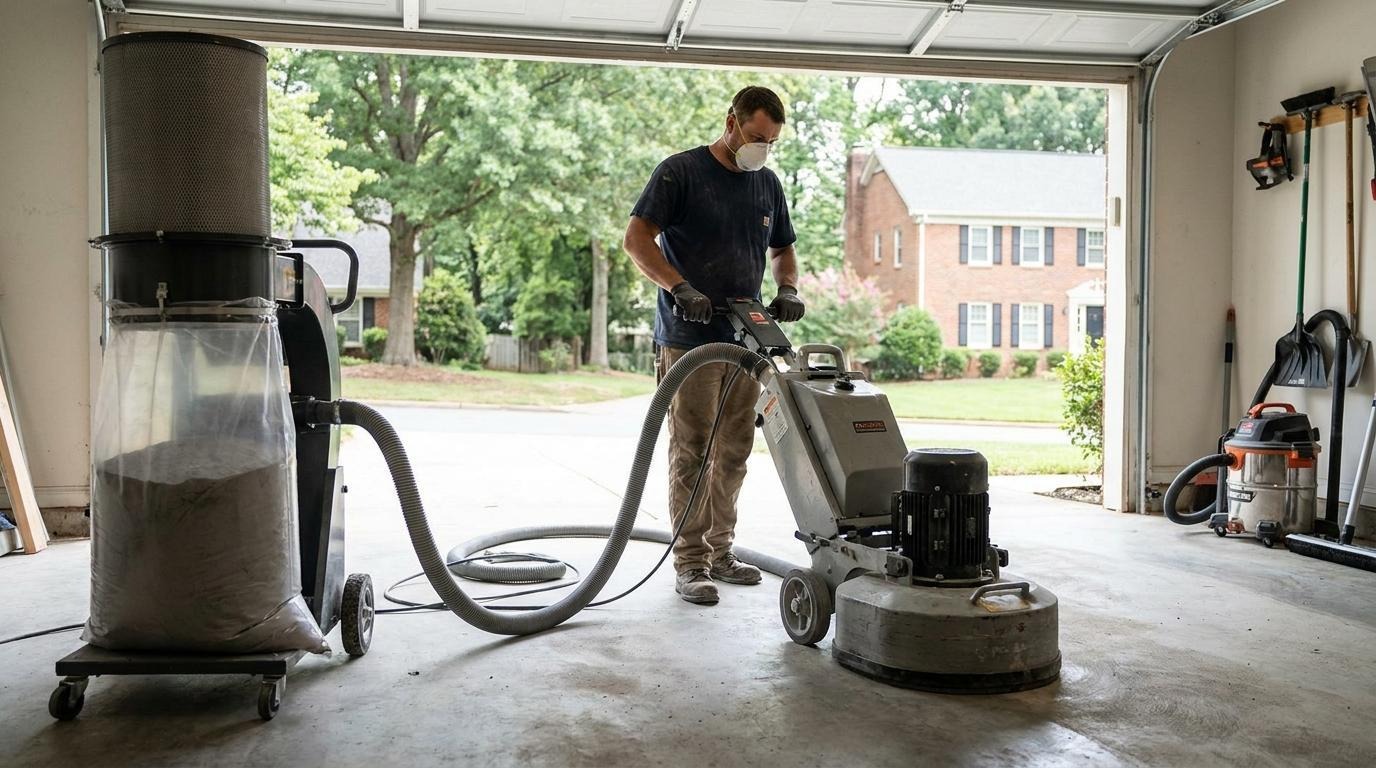
A standard Titan install runs in this sequence. The full timeline for a two-car garage is one day, with the floor back in service after the topcoat reaches its return-to-use window.
- Diamond grind the entire slab to remove contaminants and open pores
- Repair every crack, divot, and joint with a flexible compound
- Apply a primer coat for bond strength on porous concrete
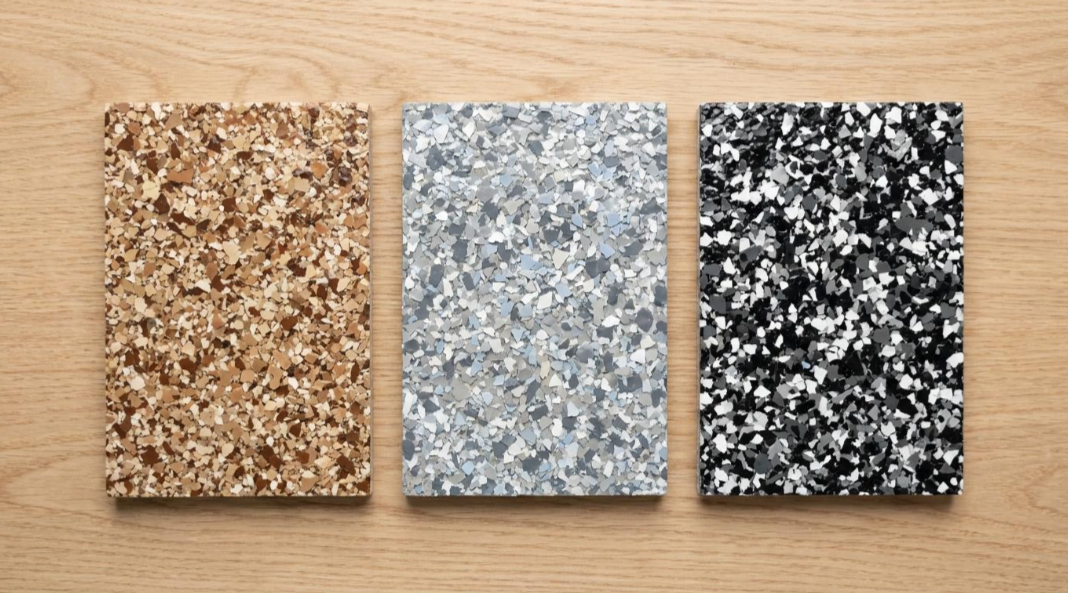
- Roll the epoxy basecoat and broadcast vinyl flake to full coverage
- Scrape excess flake after cure for a flat, seamless surface
- Apply the polyaspartic urethane topcoat for UV stability and chemical resistance
That sequence is what separates a professional install from a store-bought kit. For homeowners weighing whether to coat their own slab, the gap between DIY epoxy kits and professional installation shows up most clearly in the prep steps a kit can't replicate.
Frequently Asked Questions
Can you put epoxy directly on concrete?
Epoxy goes directly on concrete only after the slab has been diamond-ground to expose a clean, profiled surface. Applying epoxy to untreated concrete, even brand-new concrete, traps surface contaminants and seals laitance into the bond line. The coating then adheres to a weak layer that releases within months under normal use.
How do you prepare concrete for epoxy?
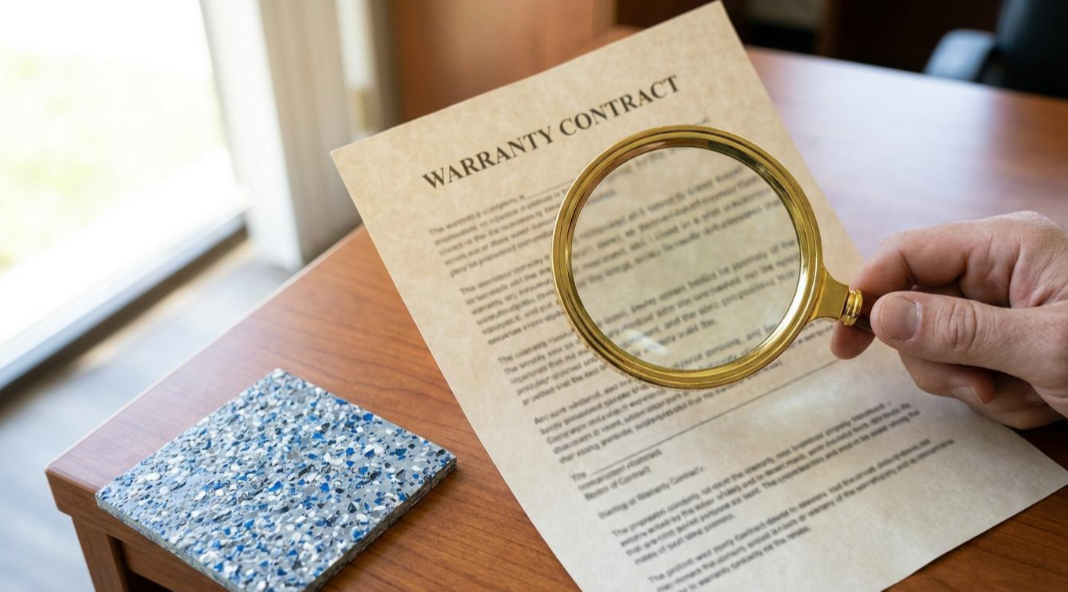
Preparing concrete for epoxy starts with diamond grinding, which removes surface contamination and creates the mechanical profile the resin needs to bond. Cracks and joints get filled with a flexible repair compound, and moisture content is measured before the basecoat is mixed. Titan's standard prep workflow is what makes the 15-year warranty possible.
Does concrete need to be sealed before epoxy?
No, concrete does not need a separate penetrating sealer before epoxy because the epoxy basecoat itself acts as the seal once the surface is properly profiled. Adding a sealer underneath actually reduces epoxy adhesion. The exception is high-moisture slabs, where a dedicated vapor barrier primer replaces the sealer before the basecoat goes down.
Get Concrete Prep Right the First Time
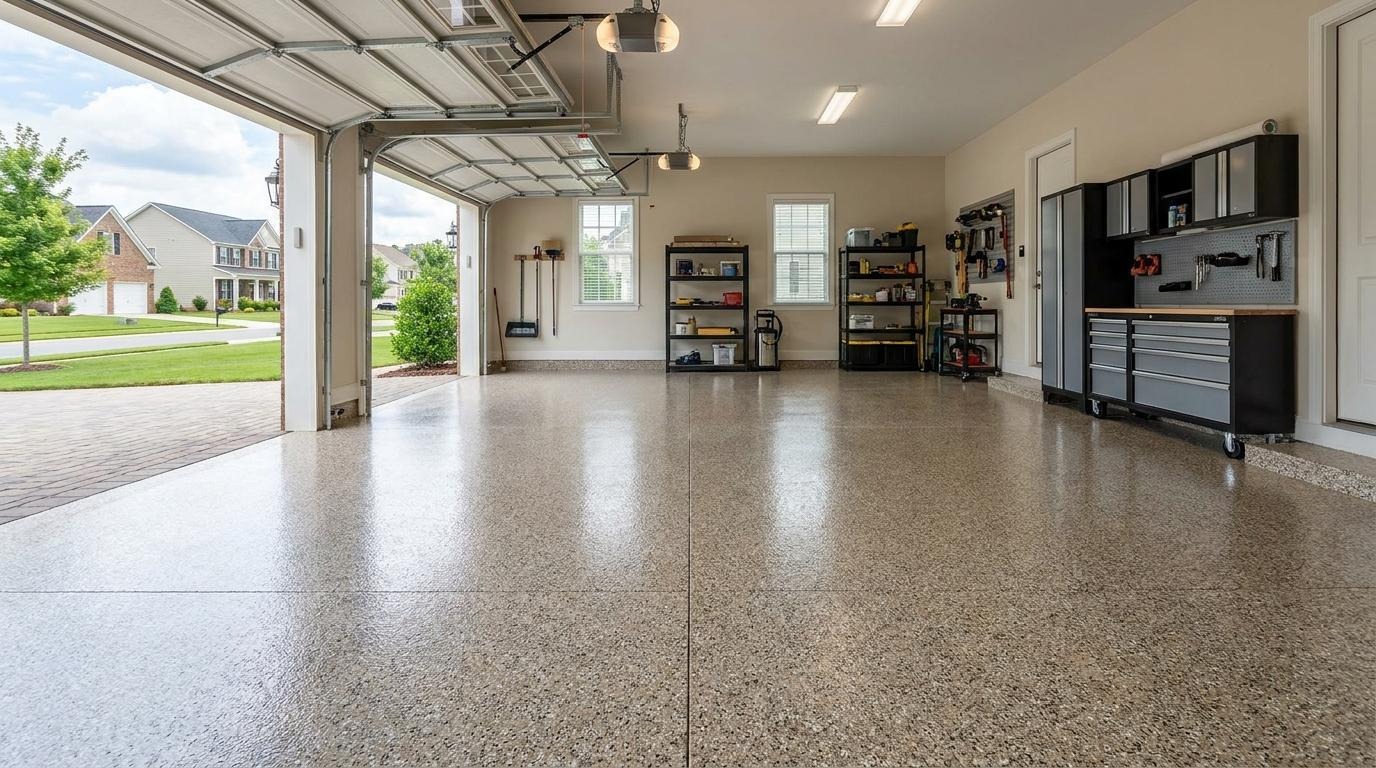
What goes on top of a Charlotte garage floor matters far less than what happens underneath it. A top-tier polyaspartic system over poorly prepped concrete will still fail, while a mid-grade epoxy over a properly ground, dry, and repaired slab will outlast it. The coating gets the attention, but the prep is what determines the lifespan.
For a fully prepped install across the Charlotte metro, request a free estimate from Titan Garage Floors or call (910) 852-9266.