Basement Epoxy Floor Ideas for Homes
A basement epoxy floor costs $3 to $12 per square foot installed and turns a dusty concrete slab into a finished, sealed surface that can handle furniture, foot traffic, gym equipment, and the occasional spilled drink. Charlotte homeowners have two main options: a clear grind-and-seal finish ($3 to $7 per square foot) that preserves the natural concrete look, or a full epoxy flake system ($6 to $12 per square foot) that adds color, texture, and decorative flake patterns. Both protect the slab against the single biggest issue Charlotte basements face: moisture. They also eliminate concrete dusting in spaces where people spend their time.
Titan Garage Floors installs both basement coating systems across Mecklenburg County and the surrounding Charlotte metro. Every job starts with a moisture test and diamond grinding before the first coat is applied. This article discusses when each system makes sense, what the four-layer flake build looks like, and how Charlotte's humidity and clay-heavy soil affect which system is the right call for your basement.
Clear Grind-and-Seal for a Natural Concrete Look
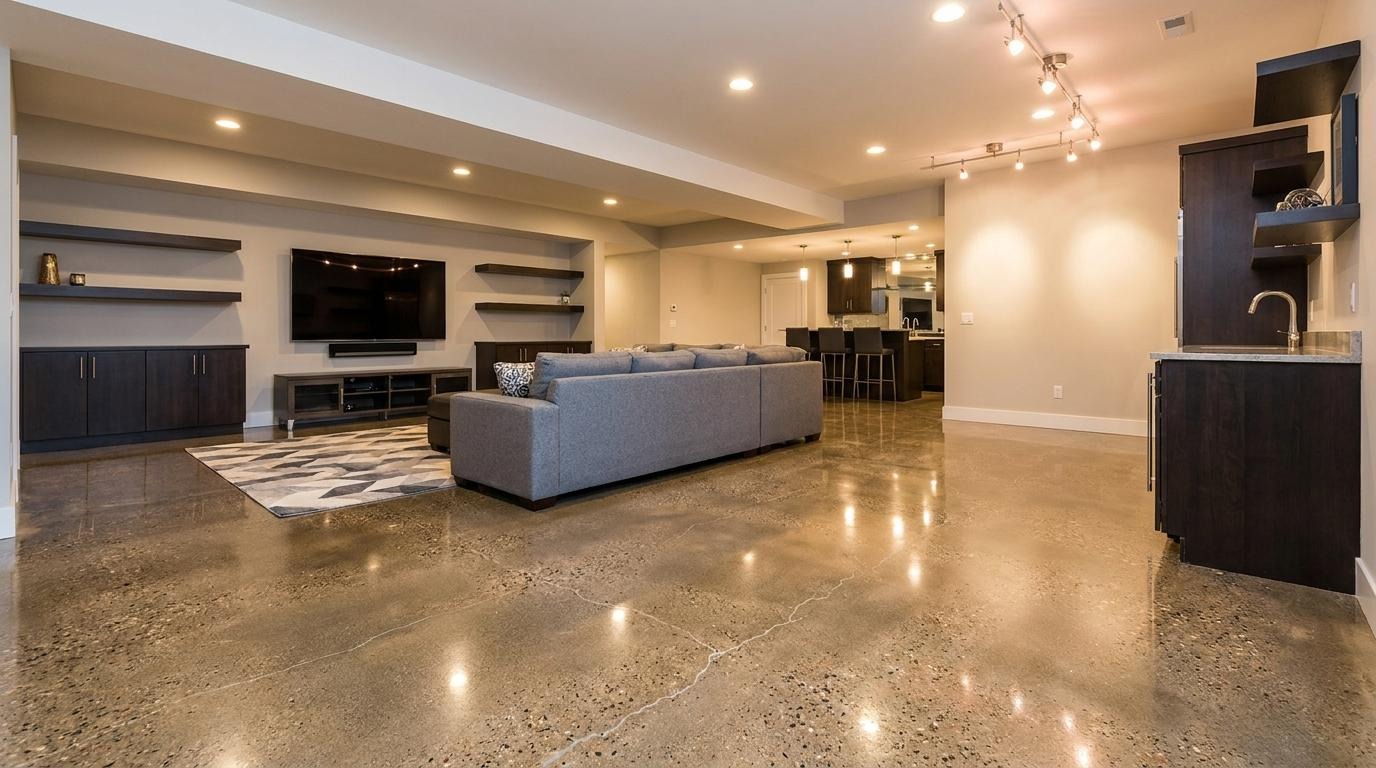
A clear grind-and-seal finish uses a solvent-based polyaspartic urethane applied directly over diamond-ground concrete. The coating slightly darkens the slab and adds a low-sheen finish that highlights the concrete's natural texture without covering it up. This system works well in basements used as foyers, laundry rooms, entryways, and home offices where the industrial-modern concrete look fits the design.
The clear system stops concrete dusting, which is both an aesthetic problem and a health concern. Bare concrete sheds fine particles that settle on furniture and can irritate lungs over time. Once sealed, the floor is non-porous and easy to clean with a damp mop. Lifespan depends on traffic, but five to ten years before a recoat is typical for residential basement use.
Epoxy Flake Systems for Finished Basements
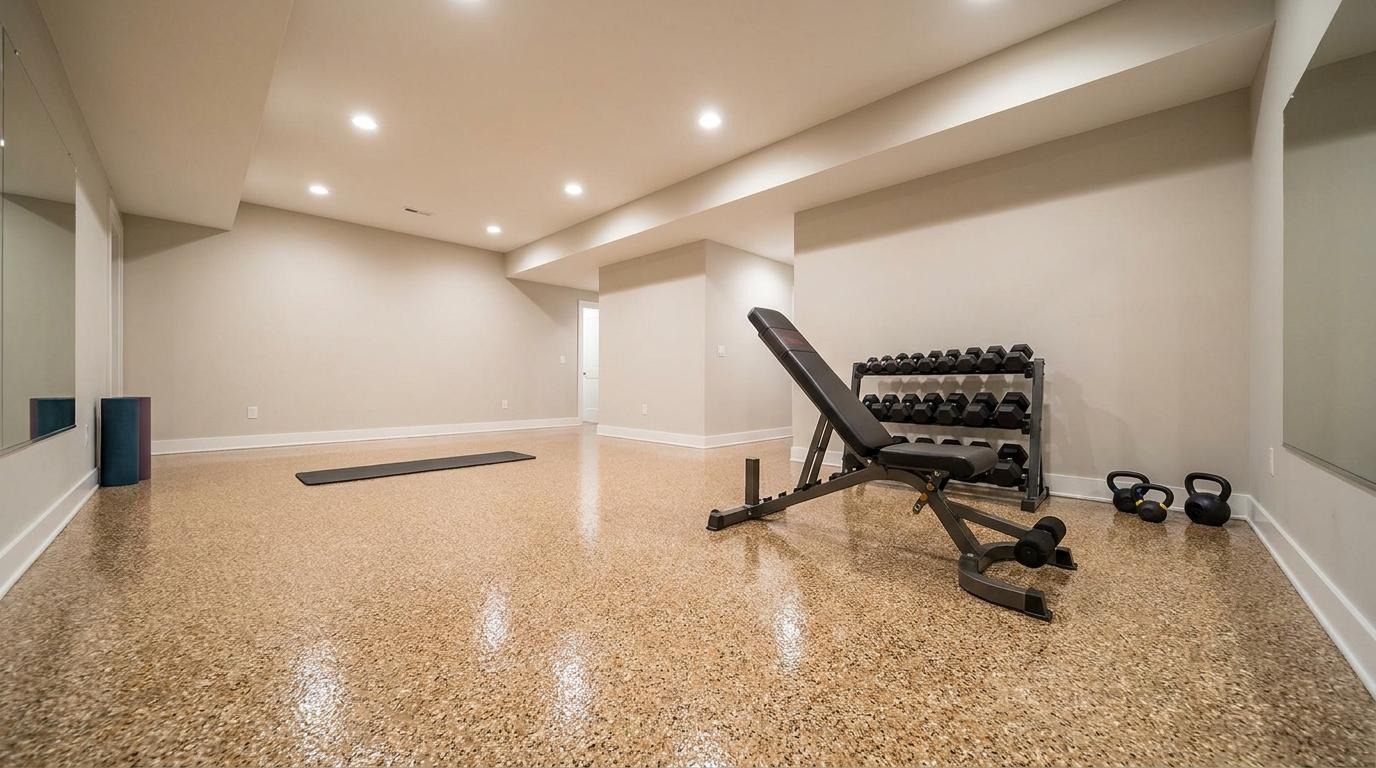
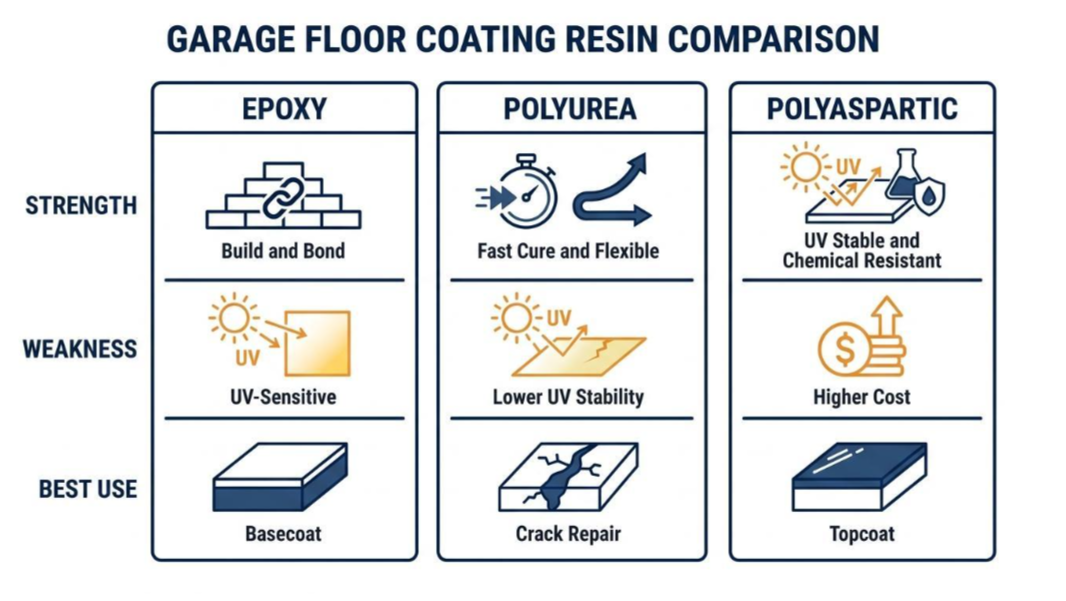
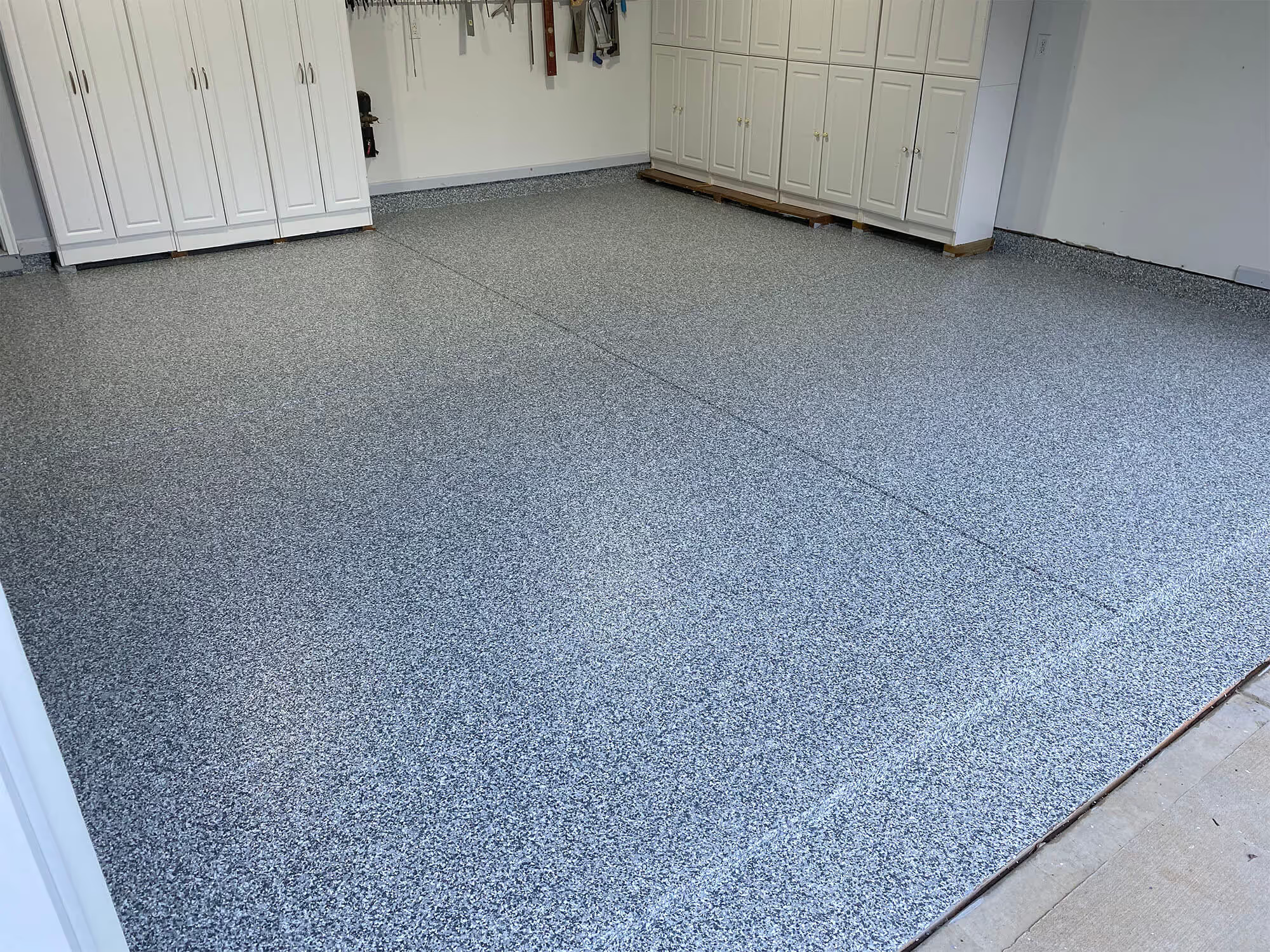
An epoxy flake system gives a basement the same durable, decorative finish used on garage floors. The four-layer build starts with diamond grinding, followed by a primer coat, an epoxy basecoat with vinyl flake broadcast, and a polyaspartic urethane topcoat. The result is a thick, seamless surface that resists moisture, stains, and impact.
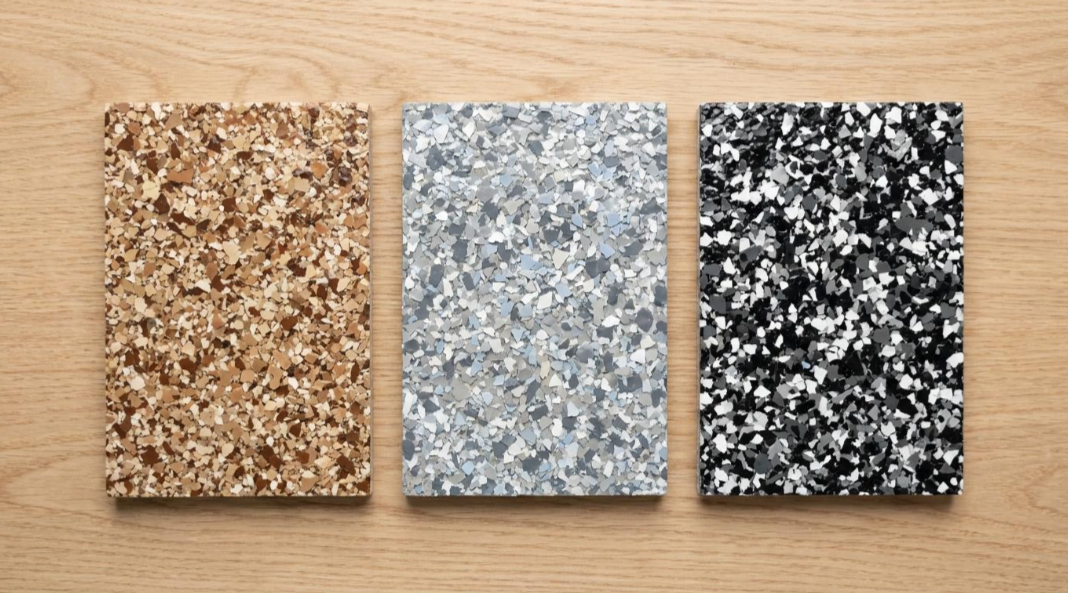
Flake systems work well in basements used as rec rooms, home gyms, playrooms, and workshops. The flakes add texture that helps with traction on a surface that might see spilled drinks, gym equipment, and bare feet. Color blends like Outback and Shoreline from Titan Garage Floors give basements a warmer look than bare gray concrete. This system costs more than a clear seal but delivers a longer lifespan and better protection in high-use spaces. The trade-off pays off in homes where the basement receives constant use.
Managing Basement Moisture in Charlotte
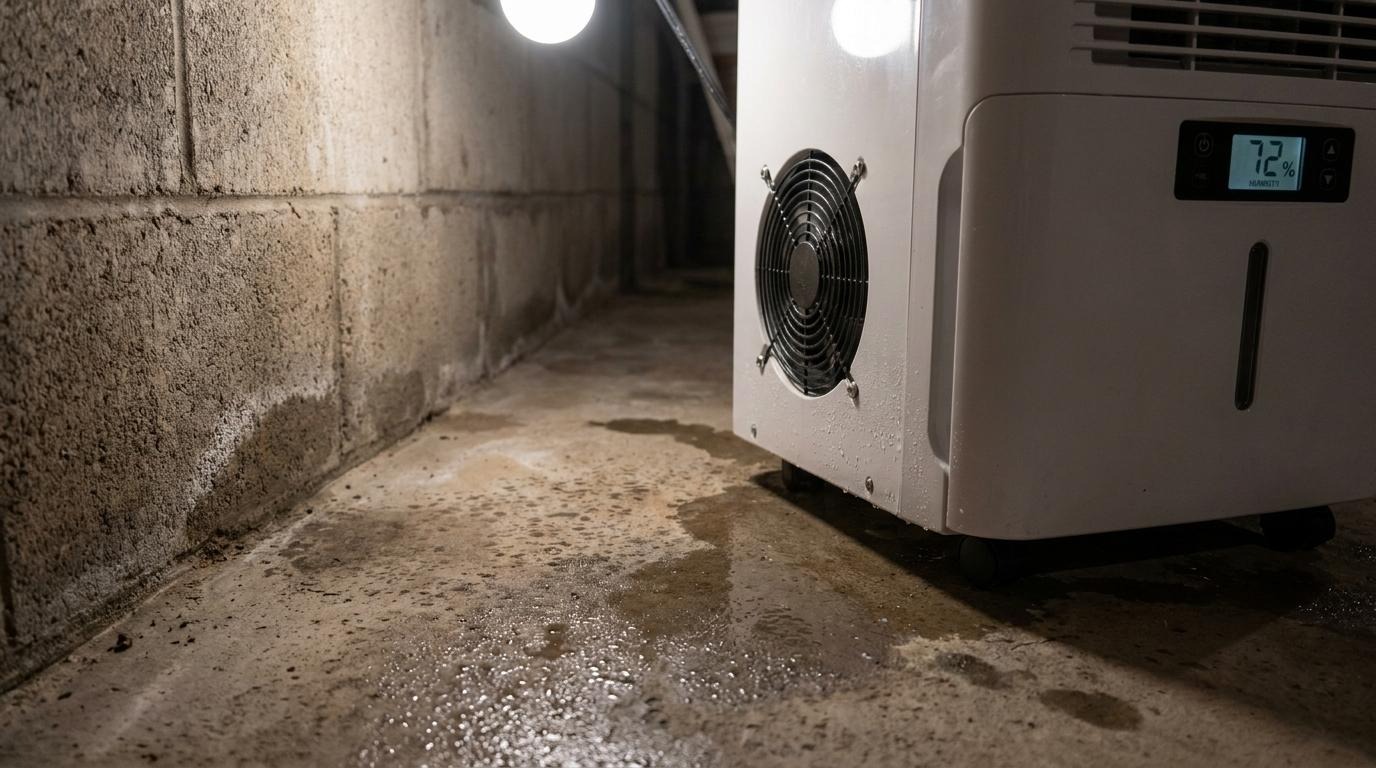
Charlotte's summer humidity regularly exceeds 70%. That moisture affects basements more than any other room in the house. Below-grade concrete slabs absorb moisture from the surrounding soil, pushing vapor upward through the slab. If a coating is applied without addressing this moisture, it can bubble, delaminate, or trap water beneath the surface—the same moisture-under-epoxy failure that causes the bulk of basement coating issues.
Every Titan basement installation starts with a moisture test and diamond grinding. The grinder opens the concrete's pores so the coating bonds mechanically, and the moisture test determines whether the slab's vapor emission rate is within acceptable limits. If the rate is too high, a moisture mitigation primer is applied before the main system goes down. Charlotte homeowners in Waxhaw, Indian Trail, and the southern suburbs deal with clay-heavy soil that holds more water than sandy soils, making moisture testing especially important in those areas.
Frequently Asked Questions
Is epoxy good for basement floors?
Epoxy is one of the best coatings for basement floors because it seals the concrete against moisture vapor, eliminates concrete dusting, and creates a non-porous surface that resists stains and spills. Titan Garage Floors installs both clear grind-and-seal and epoxy flake systems on Charlotte-area basements. The key requirement is proper moisture testing and diamond grinding before the coating is applied.
How much does it cost to epoxy a basement floor?
Basement epoxy floor coatings in the Charlotte area typically cost $3 to $12 per square foot for professional installation, depending on the system and the condition of the concrete. A clear grind-and-seal finish costs less than a full epoxy flake system. For a 500-square-foot basement, expect to pay roughly $1,500 to $6,000 depending on prep needs and finish type.
Can you epoxy a basement floor with moisture problems?
You can epoxy a basement floor with moisture issues if the moisture vapor emission rate is addressed before the coating goes down. A calcium chloride test or relative humidity probe measures the slab's moisture level. If the rate exceeds the coating manufacturer's threshold, a moisture mitigation primer is applied first to create a vapor barrier between the slab and the epoxy system.
Turn Your Basement Into a Room You'll Actually Use
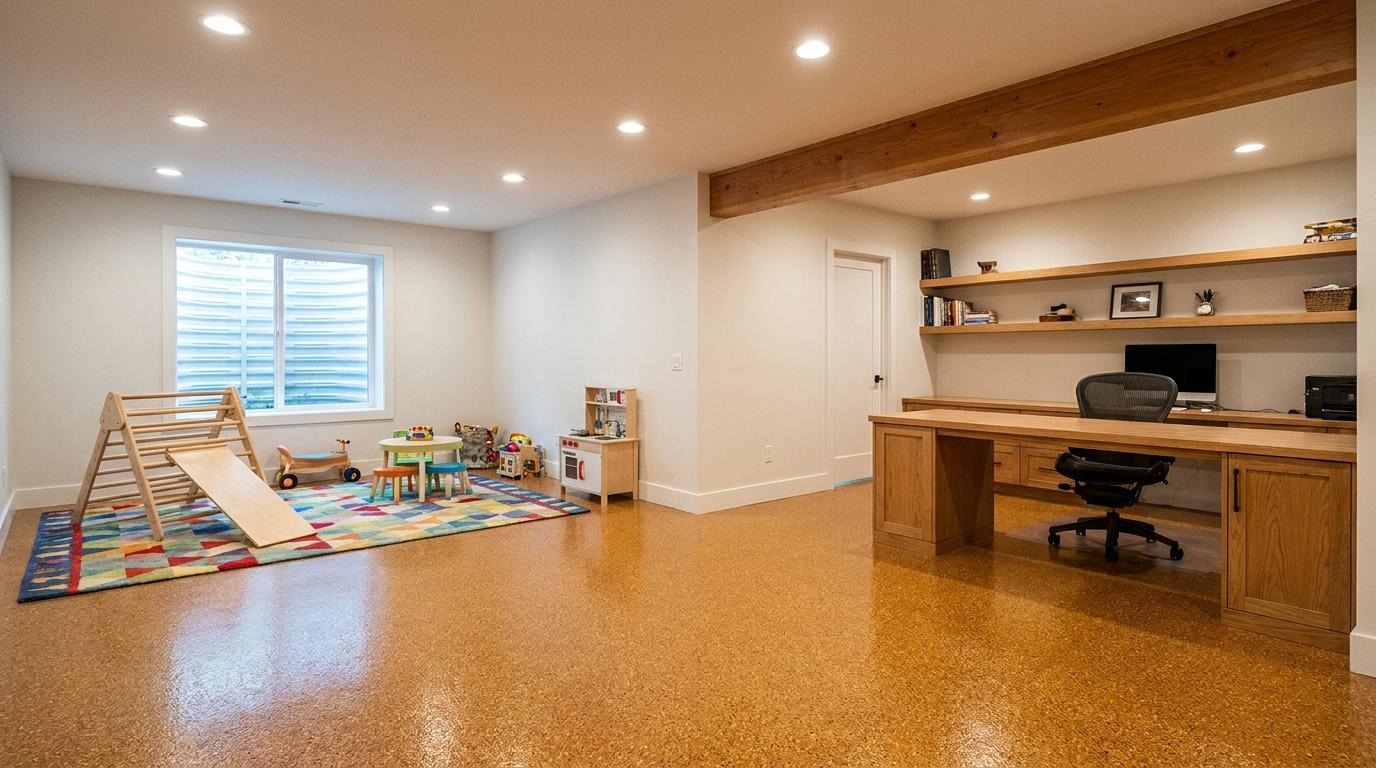
A sealed basement floor turns unused square footage into an inviting living space. Whether the goal is a clean, modern concrete look or a fully finished rec room with color and texture, the right coating system protects the slab and the investment. Coatings applied without moisture testing or diamond grinding fail in the first two years (usually faster in a Charlotte basement).
Titan Garage Floors installs basement coatings across Charlotte, Waxhaw, Indian Trail, and the surrounding metro, with every project starting with a moisture test before any coating goes on the slab. Call (910) 852-9266 or request a free estimate online. Most quotes come back within 24 hours, and the moisture test is included at no extra cost.